Showing posts with label SchoolSafety. Show all posts

Monday, March 18, 2024

In Case You Missed It – March 18, 2024

Here are links to last week's articles receiving the most attention on NEIFPE's social media accounts. Keep up with what's going on, what's being discussed, and what's happening with public education.

Be sure to enter your email address in the Follow Us By Email box in the right-hand column of our blog page to be informed when our blog posts are published.
QUOTE OF THE WEEK

"Believing the pandemic brought harmful policy shifts, causing school quality to decline, [Hanushek] sees abandoning standardized test accountability as number one on his pantheon of bad moves. Teachers unions pushing for their preferred education policies seems wrong to Hanushek. After all, what do teachers know about good education? They are not trained MIT economists, like he is!

"...Learning-loss is not the big danger facing America’s students. The real danger is the likes of McKinsey, NWEA, CREDO and research leaders like Eric Hanushek."
-- Tom Ultican in Subterfuge and Learning Loss Baloney.

THE STUPIDITY OF RANKING SCHOOLS BY TEST SCORES

School Ratings and Rankings Cause Educational Redlining and Resegregation

Children, teachers, and schools are more than just the sum of their test scores.

From Jan Resseger
Having attended school in a small Montana town, where we all went to the same middle school and high school, and having parented two children who attended our neighborhood elementary and middle school and came together at our community’s only high school here in a Cleveland, Ohio inner suburb, I prefer the old and more radical solution to the whole problem of school choice driven by metrics published in the newspaper or school report cards. In fact, for the majority of families in the United States, neighborhood schools are still the norm. A system of neighborhood schools embodies the idea that parents’ responsibility is to help their children embrace the opportunities at the school where they are assigned.

As parents when my children were in elementary school, we used the PTA meetings as places to strategize about how we could better support innovations and special programs to make school more fun and challenging for all the students. A district-wide school support agency in our community provides a tutoring program for students who need extra help, and there is a community supported, district-wide music camp for a week in June when the high school orchestra director and his staff, along with a raft of graduates from the high school music program, help students from across the middle schools to prepare for joining the high school band and orchestra. People from across the school district turn out for the concert that culminates the summer music camp.

This kind of community involvement connects parents with the community’s public schools in a qualitative way. When people engage personally with a school, the teachers and the students, parents can learn so much more about a school than any metric can expose.

LEARNING LOSS BALONEY

Subterfuge and Learning Loss Baloney

There is a widespread panic over "learning loss" from the COVID-19 pandemic. Tom Ultican talks us off the ledge...

From Tultican
Crazy pants Eric Hanushek claims COVID “learning-loss” could cost American students $31 trillion in future earnings. He burst onto the education world’s consciousness with his 1981 paper, claiming “there is no relationship between expenditures and the achievement of students and that such traditional remedies as reducing class sizes or hiring better trained teachers are unlikely to improve matters.” This played well with billionaires from the Walton family but had no relationship with reality. Likewise, his January 2024 “learning-loss” claims were straight up baloney.

Learning-Loss Reality

In the summer and fall of 2020, NWEA, McKinsey, CREDO and others produced unfounded analysis of looming learning-loss disaster caused by school closures. Since there was no data, summer learning-loss was used as a proxy, a bad one. In 2019, Paul von Hippel’s investigation threw great doubt on the 1982 Baltimore study that powerfully supported summer learning-loss belief. He showed using modern testing analysis, learning-loss was doubtful and in some cases, students gained during the summer. This data, used to trumpet a national education crisis, had no validity.

Unfortunately, billionaire-financed organizations, out to undermine public schools, do not care.

CLOSING SCHOOLS DOES NOT FIX THEM

John Thompson: The Failure of “Fixing” Schools by Closing Them

Did school closures help students learn?

From Diane Ravitch
John Thompson, historian and retired teacher in Oklahoma, explains what happened when “reformers,” led by Secretary of Education Arne Duncan, advocated for school closures.

He writes:

When non-educators watch Abbott Elementary, the television comedy, they are likely to find it hilarious, but I suspect it takes a teacher to fully understand the accuracy of its portrayal of the weird corporate reforms imposed on Philadelphia schools. But, recent research helps explain why many of even the most fervent advocates for test-driven, competition-driven school turnarounds now acknowledge their failures (even though they don’t apologize for them.).

The third-year premiere of Abbott gave a shout out to the respected journal, Chalkbeat. And, Chalkbeat is again reporting on failed turnarounds in Philadelphia, Tennessee, and elsewhere, as well as why former supporters of school takeovers are repudiating the reward-and-punish method for rapid, transformative change.

Chalkbeat analyzed the Philadelphia mandate, the 2010 Renaissance Initiative. It “strove to turn around about 10% of Philadelphia’s low-performing district schools by ceding them to charter organizations that promised to do better.” By 2023, however, “the Renaissance charter schools as a group mostly performed worse in standardized tests for elementary and middle schoolers than the district averages.”

Donna Cooper, executive director of Children First explained, “The goal was to prove that charters would work with any kid, not just about parents who were highly motivated to enter a lottery, and to show that a neighborhood school turned over to a charter organization would do better than if run by the school district.” But, “As far as I can tell, the data didn’t result in that.”

KENTUCKY GOP PUSHES VOUCHERS

Kentucky: GOP Passes Bill to Nullify Parts of State Constitution to Allow Vouchers

From Diane Ravitch
State Senator Tina Bojanowski, teacher and legislator (@TinaforKentucky), tweeted:

KY House passes HB2, a bill to change our Constitution to allow vouchers and charters by creating an amendment that allows future legislation to disregard SEVEN sections of our Constitution. @kyhousedems

FORT WAYNE AREA NEWS

Fort Wayne Community Schools takes 'giant step forward' with planned early childhood center

From the Fort Wayne Journal Gazette**
Fort Wayne Community Schools’ quest to build an early childhood center on the city’s southeast side marked a milestone this week that should fuel the district’s fundraising efforts for the $14.7 million project.

The school board on Monday approved options to purchase two adjacent parcels totaling 3.5 acres at the northeast intersection of Queen Street and Werling Drive near McMillen Park from the city of Fort Wayne Department of Redevelopment and Village Premier LP.

The 26,700-square-foot facility will be part of Village Premier, a multiphase mixed-use project that broke ground last year, said Joe Giant, the city’s redevelopment administrator. He told the Fort Wayne Redevelopment Commission on Monday afternoon that the early childhood center will help combat the lack of child care in the city’s southeast quadrant.

Fort Wayne Community Schools prepares weapons detection expansion

From the Fort Wayne Journal Gazette**
The Fort Wayne Community Schools board agreed Monday to spend $1.4 million on weapons detection systems, but the district likely won’t expand its security screenings to every middle and high school until next academic year.

That’s because the Ceia Opengate weapons detection systems likely won’t be ready until late this academic year, said Matt Schiebel, executive director of safety and community partnerships.

Implementation is also dependent on having student advocates in place, because the devices require additional personnel, he said, referring to a new staff position funded by the Safer FWCS referendum.

FWCS piloted the weapons screening device at South Side High School, where no guns have been found this year, Schiebel said.

**Note: The Fort Wayne Journal Gazette is behind a paywall. Digital access, home delivery, or both are available with a subscription. Staying informed is essential; one way to do that is to support your local newspaper. For subscription information, go to fortwayne.com/subscriptions/ [NOTE: NEIFPE has no financial ties to the Fort Wayne Journal Gazette]

Note: NEIFPE's In Case You Missed It is posted by the end of the day every Monday except after holiday weekends or as otherwise noted.

###

Monday, November 20, 2023

In Case You Missed It – November 20, 2023

Here are links to last week's articles receiving the most attention on NEIFPE's social media accounts. Keep up with what's going on, what's being discussed, and what's happening with public education.

Be sure to enter your email address in the Follow Us By Email box in the right-hand column of our blog page to be informed when our blog posts are published.

NOTE: NEIFPE's In Case You Missed It will not be published next week. We'll be back with more updates on December 4, 2023. Thanks for supporting Public Education.

QUOTE OF THE WEEK

"The Finnish and Estonian education systems are far from perfect, and Finland’s PISA scores have dipped a bit in recent years. But both countries have done more than just achieve high rates of high performers — they’ve achieved some of the world’s lowest rates of low performers, with remarkably small performance gaps between schools and between richer and poorer students. Being disadvantaged is less of a disadvantage in Finland and Estonia than almost anywhere else." -- by Adam Grant in What Most American Schools Do Wrong

INTERNATIONAL ASSESSMENTS

Adam Grant: What We Can Learn from International Assessments

Using techniques developed in the USA, other countries are showing educational performance gains.

From Diane Ravitch
I have been critical of the focus on international tests because real life teaches us that the test scores of 15-year-old students do not predict future economic success for nations. I find it bizarre that people say that America is a great country but its schools are no good. That doesn’t make sense.

Adam Grant, a contributing opinion writer for the New York Times, injects a dose of common sense into that newspaper’s education coverage:

He writes:

Which country has the best education system? Since 2000, every three years, 15-year-olds in dozens of countries have taken the Program for International Student Assessment — a standardized test of math, reading and science skills. On the inaugural test, which focused on reading, the top country came as a big surprise: tiny Finland. Finnish students claimed victory again in 2003 (when the focus was on math) and 2006 (when it was on science), all while spending about the same time on homework per week as the typical teenager in Shanghai does in a single day.

Just over a decade later, Europe had a new champion. Here, too, it wasn’t one of the usual suspects — not a big, wealthy country like Germany or Britain but the small underdog nation of Estonia. Since that time, experts have been searching for the secrets behind these countries’ educational excellence. They recently found one right here in the United States.

NPE VIDEOS AVAILABLE

Network for Public Education 2023 Conference Videos

Videos from the Network for Public Education’s D.C. conference are out! Watch keynote speakers as well as seven of forty-four panels and highlights of previous conferences.

From the Network for Public Education


Watch This! Gloria Ladson-Billings Speaks at NPE Conference about Attacks on Public Schools

From Diane Ravitch
If you missed the 10th annual conference of the Network for Public Education, you missed some of the best presentations in our ten years of holding conferences.

You missed the brilliant Gloria Ladson-Billings, Professor Emerita and formerly the Kellner Family Distinguished Professor of Urban Education in the Department of Curriculum and Instruction at the University of Wisconsin-Madison.

Ladson-Billings gave an outstanding speech that brought an enthusiastic audience to its feet.
PRIVATIZATION

A Useful Guide to the Privatization Movement: Please Add Your Nominees!

From Diane Ravitch
Maurice Cunningham, a retired professor of political science and an expert on dark money in education elections, prepared A CITIZEN’S GUIDE TO SCHOOL PRIVATIZATION.

It is posted on the website of the Network for Public Education.

It is a glossary of the organizations and individuals who lead the effort to privatize education.

Please open the guide and see if you have names and groups to add.

FORT WAYNE LOCAL NEWS

FWCS board OKs security vehicles purchase after successful referendum

Referendum money at work...

From the Fort Wayne Journal Gazette**
The Fort Wayne Community Schools board on Monday approved a request that voters made possible only days earlier – the purchase of four security vehicles.

The Ford Explorers will be funded by the safety and well-being referendum, which will generate up to $96 million in additional property tax dollars over eight years or up to $12 million annually. Unofficial results showed 53% of voters last week supported the initiative.

The district budgeted a $7.2 million spending plan for 2024, and officials are laying the groundwork now to ensure those plans become reality. Matt Schiebel, executive director of safety and community partnerships, described those efforts after the board meeting.

“It was important to us to show people meaningful change quickly and also to be responsible, fiscally responsible, with the money that we will be given,” he said.

FWCS’ job listings now include student advocate, a new referendum-funded position responsible for a school’s safety and security. The district eventually wants 56 total student advocates, but Schiebel said it is planning to start with 24, with priority on the middle and high schools.
**Note: The Fort Wayne Journal Gazette is behind a paywall. Digital access, home delivery, or both are available with a subscription. Staying informed is essential; one way to do that is to support your local newspaper. For subscription information, go to fortwayne.com/subscriptions/ [NOTE: NEIFPE has no financial ties to the Fort Wayne Journal Gazette]

Note: NEIFPE's In Case You Missed It is posted by the end of the day every Monday except after holiday weekends or as otherwise noted.

###

Monday, October 16, 2023

In Case You Missed It – October 16, 2023

Here are links to last week's articles receiving the most attention on NEIFPE's social media accounts. Keep up with what's going on, what's being discussed, and what's happening with public education.

Be sure to enter your email address in the Follow Us By Email box in the right-hand column of our blog page to be informed when our blog posts are published.

QUOTE OF THE WEEK

"In our society, teaching is not a high status position. It used to be considered women’s work, probably still is by many people. How wonderful it would be if we had fully transcended the cruelty of the old joke: “Those who can, do; those who can’t, teach; those who can’t teach, teach gym.” But we haven’t. I regularly hear legislators in my state explaining that if someone who knew what he was doing were put in charge, teachers would be forced to improve test scores immediately. The implication, of course, is that teaching is simply a matter of the production of test scores, and teachers don’t produce.

"The tragedy of this kind of thinking is that the same teachers whom people attack and insult are the human beings to whom we trust the formation of our children. The opinion polls tell us that we handle this contradiction by learning to know, respect, and appreciate our own child’s teacher even as we fail to protest the barrage of attacks on teachers in general." -- Jan Resseger in Sylvia Allegretto Documents Large and Persistent Teacher Pay Penalty

TEACHERS' PAY PENALTY GROWS

Sylvia Allegretto Documents Large and Persistent Teacher Pay Penalty

Why is it okay to pay teachers less than other professionals with similar training? Is it because most teachers are women? Is it because we don't really care about our children after all?

From Jan Resseger
In the introduction to her annual report on the teacher pay penalty, published last week by the Economic Policy Institute (EPI) and the Center for Economic and Policy Research, Sylvia Allegretto acknowledges the challenges teachers face: “Teachers have one of the most consequential jobs in the country—they have the future of the U.S. in front of them every day. But teaching is becoming a less appealing career choice for new college graduates. Not only are levels of compensation low, but teaching is becoming increasingly stressful as teachers are forced to navigate battles over curriculum and COVID-19 related mandates as well as rising incidence of violence in schools. Low pay makes recruiting and retaining highly qualified teachers difficult.

Here are Allegretto’s conclusions about the trend in teachers’ wages and compensation through 2022:
  • “The pay penalty for teachers—the gap between the weekly wages of teachers and college graduates working in other professions—grew to a record 26.4% in 2022, a significant increase from 6.1% in 1996.
  • “Although teachers tend to receive better benefits packages than other professionals do, this advantage is not large enough to offset the growing wage penalty for teachers.
  • “On average, teachers earned 73.6 cents for every dollar that other professionals made in 2022. This is much less than the 93.9 cents on the dollar they made in 1996.”
Allegretto explains: “Because public school teachers must attain at least a bachelor’s degree to teach in the U.S., this research compares teachers with college graduates working in other professions… Over the past two decades, the weekly wages and total compensation of public school teachers have fallen further and further behind… Recent high inflation has significantly reduced the average weekly wages of teachers but has had less of an effect on other college graduates… The erosion of relative weekly wages for teachers continued apace in 2022.” “Teachers generally receive a higher share of their total compensation as benefits than other professionals do, partially offsetting the weekly wage penalty.” But, “the benefits advantage for teachers has not been enough to offset the growing wage penalty.”
SUPPORT PUBLIC EDUCATION

The Plot to Take Down Public Schools

From Diane Ravitch
Recently the Network for Public Education and the Education Law Center sponsored a zoom conversation with Nick Surgey. Nick is an experienced investigative journalist who works with an organization called Documented, which digs into the Dark Money groups undermining Public schools and other democratic institutions. Nick has done the legwork that identified the money and people behind the home schooling movement, as well as the rightwing Alliance for Defending Freedom. He has worked with the Center for Media and Democracy and other pro-democracy organizations.

This is a discussion you should definitely tune into.

INDIANA AND FORT WAYNE LOCAL NEWS

Five of our articles this week come from the Fort Wayne Journal Gazette. Please consider subscribing to this important local source of news and information. Remember "all politics is local," and education is funded through politics. See the link at the end of this post.

FWCS referendum will help in coping with school — and life

FWCS works to help students cope with mental health issues.

From the Fort Wayne Journal Gazette
On Oct. 7, The Journal Gazette’s editorial board questioned the need for Fort Wayne Community Schools’ safety and well-being referendum on the Nov. 7 ballot, asking the question: “Should schools go even deeper into providing for student mental health and wellness?”

The answer from the SAFER FWCS Political Action Committee is simple:

If not us, then who?

The most recent Indiana KIDS COUNT data from the Indiana Youth Institute paints a bleak picture. In 2021, more than 1 in 4 high school students reported having seriously considered attempting suicide, and nearly half of all high school students reported being sad or feeling hopeless every day for at least two weeks.

These statistics are not surprising to educators, who saw a significant decline in student mental health during and after the COVID-19 pandemic. The same report showed teachers at 62% of schools tried to increase student knowledge on suicide prevention in a required course in grades 6-12. That is up from fewer than 20% of schools doing so in 2012.

Should schools be responsible for solving this mental health crisis? Maybe not, but Fort Wayne Community Schools has never been a district to throw up its hands and say, “It’s not our fault. There is nothing we can do. Someone else needs to fix it.”

FWCS is already seeing what its plan can do in a pilot at South Side High School.

In voting to put the referendum on the ballot, the FWCS Board of School Trustees sent a message: Not on our watch. FWCS will not stand by when there are steps that can be taken inside schools to create an even safer learning environment.

New Indiana law stokes worries for LGBTQ+ students

The new laws affecting LGBTQ+ students impact the daily lives of real people.

From the Fort Wayne Journal Gazette
Snider High School’s gay-straight alliance no longer takes attendance or maintains a membership roster, and participants are mindful about what’s visible to their faculty advisers during the club’s weekly one-hour meetings.

Known as the Rainbow Connection, the group wants to reduce the risk of teachers seeing members’ deadnames – names used before a gender transition – because of state legislation that took effect July 1. It requires school districts to notify a student’s parent or guardian if the student requests a name or pronoun change.

The new rule interferes with Rainbow Connection’s priority of keeping members safe and letting them be true to themselves, participants say. Students might have parents who are unsupportive or could potentially endanger them for not being cisgender – a term meaning not transgender – or straight, said Phoenix Bodner, co-president.

“Adjusting to it when the school year started actually delayed Rainbow Connection’s opening by a couple weeks because we needed to find a way to work around the fact that it posed a serious risk to the safety and security of our members,” Bodner said by email.

Critics, including the American Civil Liberties Union of Indiana and the Indiana Educational Equity Coalition, raised such concerns when legislators proposed the bill. It also prohibits schools from teaching human sexuality before fourth grade.

South Side sees success with piloted Safer FWCS initiatives

From the Fort Wayne Journal Gazette
The South Side High School that student Olivia Soto attends as a senior is different from the South Side that welcomed her as a freshman.

The atmosphere has transformed from a place where students would walk through hallways with their heads down – phones out and earbuds in – to a vibrant school where teens smile, wave and high-five others.

“You feel seen and present at the school,” Soto told the Fort Wayne Community Schools board Monday during a presentation about safety updates. “You’re not just there to learn. You’re there making connections, and you’re in this community at South Side.”

Although the safety presentation included districtwide information, South Side received much of the focus because it is piloting elements that FWCS would like to expand to other schools with referendum funding.

Enrollment growth prompts Northwest Allen County Schools to eye redistricting

From the Fort Wayne Journal Gazette
Enrollment growth in Northwest Allen County Schools this fall exceeded a demographer’s forecast by about 35%, and a surge in elementary students has prompted the district to reexamine its attendance areas.

Superintendent Wayne Barker stressed to the school board Monday that the overall 2.7% enrollment increase – an addition of 217 students – is positive, especially considering many Indiana districts are experiencing declining enrollment.

“This is a good thing for Northwest Allen County Schools,” he said.

FWCS proposal would boost teacher pay, including starting salary

FWCS has the lowest starting teacher salaries in the county. Increases would put the largest school system in the county in line with the others.

From the Fort Wayne Journal Gazette
A tentative two-year teachers contract would increase Fort Wayne Community Schools’ starting salary to $46,627 – making the district more competitive with its Allen County neighbors.

As proposed, the salary schedule will increase by 3% this academic year and 1% next year. But depending on how educators progress on the salary schedule – which considers performance and education levels – their pay could increase between 5.8% and 9.9% over two years.

The school board discussed these and other details Monday, two weeks before the elected leaders are expected to ratify the contract.

“I’m happy to pay them every penny we can,” board member Steve Corona said.
October is ADHD Awareness Month. Click for a link to the ADHD Awareness website.

**Note: The Fort Wayne Journal Gazette is behind a paywall. Digital access, home delivery, or both are available with a subscription. Staying informed is essential; one way to do that is to support your local newspaper. For subscription information, go to fortwayne.com/subscriptions/ [NOTE: NEIFPE has no financial ties to the Fort Wayne Journal Gazette]

Note: NEIFPE's In Case You Missed It is posted by the end of the day every Monday except after holiday weekends or as otherwise noted.

###

Monday, July 31, 2023

In Case You Missed It – July 31, 2023

Here are links to last week's articles receiving the most attention on NEIFPE's social media accounts. Keep up with what's going on, what's being discussed, and what's happening with public education.

Be sure to enter your email address in the Follow Us By Email box in the right-hand column of our blog page to be informed when our blog posts are published.
QUOTE OF THE WEEK

"The people of America deprive us of every privilege—they turn round and taunt us with our inferiority!—they stand upon our necks, they impudently taunt us, and ask the question, why we don’t stand up erect? they tie our feet, and ask us why we don’t run? that is the position of America in the present time, the laws forbid education, the mother must not teach her child the letters of the Lord’s prayer; and then while this unfortunate state of things exist they turn round and ask, why we are not moral and intelligent; and tell us, because we are not, that they have the right to enslave [us]." -- Frederick Douglass

FLORIDA: WHERE HISTORY GOES TO DIE

Florida Governor Ron DeSantis claimed that he "wasn't involved" in writing the state's 2023 Social Studies standards, but he defended them nonetheless. In response, former U.S. Rep. Will Hurd of Texas tweeted that slavery "wasn't a jobs program that taught beneficial skills."

Florida Attempting to Revive the “Happy Slave” Myth as Real History

Beneficial skills don't matter when you don't "own your own body."

From Gadfly on the Wall Blog
Frederick Douglass was widely considered the most photographed American in the 19th century, though he never smiled in a single portrait.

He stares out of the frame with a look of quiet dignity, but never joviality or contentment.

The reason for this is simple – he didn’t want to perpetuate the myth of the “Happy Slave.”

Douglass was born into bondage until he fled to the North at age 20. He was considered a fugitive for nine more years until 1845 when English friends raised $711.66 to buy his freedom. He was already a famous orator, author and abolitionist.

But he knew the power of a picture and how a still image of him grinning ear-to-ear might be used by slaveholders to indicate that people of color enjoyed their own servitude.

Now 158 years after the Civil War, the Florida Department of Education is trying to perpetuate that same myth with its new guidelines for Black history curriculum in public schools.

Among other things, the guidelines suggest that American slavery was not all bad because enslaved people developed skills that “could be applied for their personal benefit.”

Letters from an American: July 22, 2023

Heather Cox Richardson analyzes the new Florida Social Studies standards.

From Letters from an American by Heather Cox Richardson
The Florida Board of Education approved new state social studies standards on Wednesday, including standards for African American history, civics and government, American history, and economics. Critics immediately called out the middle school instruction in African American history that includes “how slaves developed skills which, in some instances, could be applied for their personal benefit.” (p. 6). They noted that describing enslavement as offering personal benefits to enslaved people is outrageous.

But that specific piece of instruction in the 216-page document is only a part of a much larger political project.

Taken as a whole, the Florida social studies curriculum describes a world in which the white male Founders of the United States embraced ideals of liberty and equality—ideals it falsely attributes primarily to Christianity rather than the Enlightenment—and indicates the country’s leaders never faltered from those ideals. Students will, the guidelines say, learn “how the principles contained in foundational documents contributed to the expansion of civil rights and liberties over time” (p. 148) and “analyze how liberty and economic freedom generate broad-based opportunity and prosperity in the United States” (p. 154).

TIME TO END TESTING

Bob Shepherd: Past Time to End Our Obsession with Standardized Testing

The entire post is below...

From Bob Shepherd, quoted by Diane Ravitch
"I have come to believe that there is one way and one way only that we will eliminate the federal testing mandate, which has had such blood-sucking costs over the years, direct costs and opportunity costs in loss learning, and which has brought about a dramatic devolution in our curricula and pedagogy.

"The tests will remain in place until the national teachers’ unions take up the cause of ending them, until they call a national strike to do that. This would take real guts, real leadership. But until the teachers’ unions do that, until they institute a national action to end the testing, they are COMPLICIT IN CHILD ABUSE. I mean that. It’s not hyperbole. The testing is child abuse. It robs kids of large percentages of the time that they could be spending learning. And it robs them of coherent curricula and pedagogy. Instead, they get random exercises on random “skills” from the puerile Gates/Coleman “standards” bullet list and its progeny around the country.

"ENOUGH. It’s been an utter failure. It’s been devastating. Time to end it."

NACS BOARD FEARS CONTENT OF LIBRARY CONFERENCE

Northwest Allen County Schools board pauses vote on library conference attendance request

The last sentence in the quote below says it all. School Board members are afraid of what a keynote speaker might say. As they see it, it's their job as "thought police" to protect staff members from wrong thinking which they might bring back to students. The professionalism of the employee doesn't matter.

We agree that there are professional conferences that the School Board might question paying for. Still, with the recent history of this board, and the current "culture war" atmosphere in Indiana and around the nation, there's reason to believe that the refusal to pay for this conference might be based on political rather than educational reasons.

From the Fort Wayne Journal Gazette**
The Northwest Allen County Schools board wants more information about a November library conference before voting on an employee’s request to attend.

The board tabled Terri Uchtman’s professional development proposal in a 3-1 vote Monday. Members said they wanted more information about the activities planned for the Indiana Library Federation’s annual conference in Indianapolis.

The agenda posted online includes information about some speakers and indicates details about the 12 breakout sessions will be available soon.

“We don’t even know what the content is going to be,” member Darren Vogt said. “For me to approve something where I don’t know what the content is, I’m going to vote no.”

...This isn’t the first time a professional development request has divided the board. A split vote in January 2022 denied staff from attending a conference about students’ emotional well-being. Members feared what a keynote speaker might say, particularly about critical race theory.

FWCS BOARD OKs $10 MILLION IN IMPROVEMENTS

Fort Wayne Community Schools board OKs financing for $10 million in improvements

From the Fort Wayne Journal Gazette**
Fort Wayne Community Schools’ plan to finance about $10 million in safety and accessibility improvements with general obligation bonds got the board’s final blessing Monday.

The elected leaders also agreed to hire two businesses to provide services for the accessibility projects, which will affect 11 buildings.

The pre-construction services contract with FCI Construction totals $28,125. The design services agreement with Martin Riley Architects and Engineers is estimated at $449,400.

The work will be funded with general obligation bonds – a common tool districts use to pay for projects outside the operations fund.

The accessibility upgrades have an overall construction budget of $6 million. They will affect Young Early Childhood Center; Adams, Harrison Hill, St. Joseph Central and Weisser Park Elementary Schools; Jefferson, Kekionga, Lane, Northwood and Portage Middle Schools; and the Center for Academic Success at Nebraska.

**Note: The Fort Wayne Journal Gazette is behind a paywall. Digital access, home delivery, or both are available with a subscription. Staying informed is essential; one way to do that is to support your local newspaper. For subscription information, go to fortwayne.com/subscriptions/ [NOTE: NEIFPE has no financial ties to the Fort Wayne Journal Gazette]

Note: NEIFPE's In Case You Missed It is posted by the end of the day on Mondays except after holiday weekends or as otherwise noted.

###

Tuesday, May 30, 2023

In Case You Missed It – May 30, 2023

Here are links to last week's articles receiving the most attention on NEIFPE's social media accounts. Keep up with what's going on, what's being discussed, and what's happening with public education.

Be sure to enter your email address in the Follow Us By Email box in the right-hand column of our blog page to be informed when our blog posts are published.
QUOTE OF THE WEEK

"Expanding school choice was a key part of GOP legislators’ education program, but it wasn’t the only part. The supermajority also passed what the ACLU referred to as a “slate of hate”: laws to ban gender-affirming care for trans youth, set the stage for banning books and prosecuting school librarians, ban teaching about sex in early grades, and force schools to out trans kids to their parents." -- Steve Hinnefeld in School Matters: Charter schools made big gains in legislative session

YOU GET WHAT YOU PAY FOR

Hanushek Backs Down: Spending on Schools DOES Make a Difference

Nearly all public school workers -- and probably most of the students -- know that money matters when it comes to helping students succeed in school. From hiring qualified and sufficient staff members to providing support systems and supplies, schools work better when they are fully funded.

The Chicago Teachers Union knew this back in 2012 when they published The Schools Chicago's Students Deserve 2.0. In it, they provided evidence for full funding, and wrote,

"The problems in education were the result of too-large class sizes, limited curricula, inadequate facilities, not enough support personnel, and lack of adequate funding."

Eleven years later public schools are still being underfunded. In Indiana, money for public education is being diverted to private religious schools and privately run charter schools while the constitutionally mandated public schools are scrambling for dollars (see the next two articles).

In this article from Chalkbeat*, posted by Diane Ravitch, we learn, yet again, that funding matters.

From Diane Ravitch
The paper, set to be published later this year, is a new review of dozens of studies. It finds that when schools get more money, students tend to score better on tests and stay in school longer, at least according to the majority of rigorous studies on the topic.

“They found pretty consistent positive effects of school funding,” said Adam Tyner, national research director at the Fordham Institute, a conservative education think tank. “The fact that Hanushek has found so many positive effects is especially significant because he’s associated with the idea that money doesn’t matter all that much to school performance.”

CHARTER SCHOOLS GROW RICHER

Charter schools made big gains in legislative session

The Indiana General Assembly has chosen, once again, to favor privatization and donors over the vast majority of Indiana's children who attend public schools.

From School Matters
All told, the budget and student funding formula will provide about $671 million in state funds over the next two years for brick-and-mortar charter schools and another $112 million for virtual charter schools. That doesn’t include the local property tax funding that charter schools in four counties will receive.

House Speaker Todd Huston, R-Fishers, said at the start of the session that expanding school choice would be a priority. Growing the voucher program was on the table from the start, but it wasn’t until the last day of the session that charter school funding bills took their final shape.

As Chalkbeat reported, a $500,000 campaign by charter supporters, including catchy TV and Facebook ads attributed to the Indiana Student Funding Alliance, certainly helped. The Institute for Quality Education, an Indianapolis organization that promotes vouchers and charter schools, helped pay for the ads. Its political action committee, Hoosiers for Quality Education, gave over $1.3 million to Republican campaigns in 2020-22. Another pro-charter group, Hoosiers for Great Public Schools, gave over $1 million. Arguably no other special interest did more to keep the Statehouse in solid GOP control.
MCCSC WANTS TO REPLACE FUNDING STATE DIVERTED TO PRIVATIZATION

State won’t properly fund education. Voters can.

One Indiana school system has decided to take funding matters into its own hands. This is great for them...because their community can afford it. Not every school system in Indiana has the tax base to raise sufficient funds to make up for the millions of dollars the state is diverting from public education to private religious schools and privately run charter schools.

From School Matters
If the state won’t do it, we will. That’s the attitude driving a proposed property-tax referendum in the Monroe County Community School Corp.

Superintendent Jeff Hauswald laid out the rationale at a meeting Wednesday. He said the referendum will pay for free or reduced-price pre-kindergarten and cover educational costs that families now pay out of pocket, such as fees for Advanced Placement exams and career and technical education classes.

The MCCSC school board voted unanimously Tuesday to authorize Hauswald to go forward with plans for the referendum, which would raise property taxes by up to 8.5 cents per $100 assessed property value. It comes on the heels of a referendum that voters approved last November. The 2022 referendum raised teacher and staff pay while the 2023 vote will be “family-centered and community-focused.”

...“To be clear, there’s nothing equitable about school funding in Indiana,” Hauswald said. “We would rather have full and adequate funding at the state level … But the state has said, nope, we’re not going to do that.”

And if the state won’t, and we can afford it, why shouldn’t we?

THERE IS NO "SCIENCE OF READING"

Literacy Experts: There Is No “Science of Reading”

The "reading wars" have heated up again.

From Diane Ravitch
...we do not see convincing evidence for a reading crisis, and certainly none that points to phonics as the single cause or a solution. We are skeptical of any narrowly defined science that authoritatively dictates exactly how reading should be taught in every case. Most of all, we are concerned that ill-advised legislation will unnecessarily constrain teachers’ options for effective reading instruction.

As for a crisis (always useful for promoting favored causes), the National Assessment of Educational Progress (NAEP) has been tracking reading achievement in the United States since 1972. Until the coronavirus pandemic began in 2020, the scores were mostly flat for decades, even trending slightly upward before covid-19 shut down schools. The decline since the pandemic is a clear example of how societal factors influence reading achievement. Given the nation’s increasing linguistic and cultural diversity and widening economic disparities, that upward trend might even suggest encouraging progress.

Less absurd, but no less arbitrary, is using NAEP scores to argue that two-thirds of students are not proficient in reading. Diane Ravitch, a former member of the NAEP governing board, has equated scores at the proficient level with a solid A. Peggy Carr, commissioner of the National Center for Education Statistics, which administers NAEP, has said that basic level is generally seen as grade-level achievement. Adding students who achieve at a Basic level (interpreted as a B) or above, two-thirds of students have solid reading skills. In other words, the argument only holds if we expect every student to get an A. We can always do better, but there is neither no convincing evidence of a crisis nor magic that eliminates inevitable variation in achievement.
TECHNO-BASED SAFETY FOR FWCS SWIMMERS

New safety technology on tap for Fort Wayne Community Schools' natatorium

Technology will improve safety for FWCS swimmers.

From the Fort Wayne Journal Gazette**
Fort Wayne Community Schools lifeguards will soon have new technology to help them spot swimmers in trouble.

The Ellis Aquatic Vigilance System will replace the outdated Poseidon drowning-detection system, which the Helen P. Brown Natatorium has used since 2001.

“We’re relying on a system that’s not working for us,” natatorium Director Liz Caywood told the school board Monday.

The new technology combines the use of cameras that cover activities in the pool and on the deck with an operator in a distraction-free room, Caywood said. An artificial intelligence system helps detect unusual behavior, she added, and the system can provide alerts through programmable alarms.

*Note: Financial sponsors of Chalkbeat include pro-privatization foundations and individuals such as Bloomberg Philanthropies, Gates Family Foundation, The Walton Family Foundation, and others.

**Note: The Fort Wayne Journal Gazette is behind a paywall. Digital access, home delivery, or both are available with a subscription. Staying informed is important, and one way to do that is to support your local newspaper. For subscription information, go to fortwayne.com/subscriptions/ [NOTE: NEIFPE has no financial ties to the Fort Wayne Journal Gazette]

Note: NEIFPE's In Case You Missed It is posted by the end of the day every Monday except after holiday weekends or as otherwise noted.

###

Monday, February 27, 2023

In Case You Missed It – February 27, 2023

Here are links to last week's articles receiving the most attention on NEIFPE's social media accounts. Keep up with what's going on, what's being discussed, and what's happening with public education.

Be sure to enter your email address in the Follow Us By Email box in the right-hand column to be informed when our blog posts are published.
THIS WEEK

Republicans in the legislature are working against public education. News about charters, vouchers, and Ron DeSantis -- a full menu of horrible updates.

ICPE UPDATE

2023 Legislative Update – The Sucker Punch

ICPE, the Indiana Coalition for Public Education, provides an update on the damage that the Republicans in the Indiana legislature are proposing for the state's public education systems.

From the Indiana Coalition for Public Education
2023 Legislative Update We’re well into the 2023 legislative session, and some of us are asking:
  • Do our legislators understand that public schools* are essential infrastructure in communities across Indiana—rural, urban, and suburban?
  • If so, why do they keep moving bills that would defund public schools?
  • Why do they want to send more public funds to private and privately managed environments, with little or no public oversight?
  • Who is the supermajority working for?
Damaging bills this session fall into two broad categories. The first has to do with money. Adequate funding is necessary to maintain a vibrant and well-resourced school system, so attacks on school funding are also attacks on the quality of our public schools.

ARE CHARTERS PUBLIC SCHOOLS?

This Potential SCOTUS Case Could Change the Course of US Charter Schools

Charters like to brag that they're "just public schools" until they run up against requirements that public schools must follow...then they become "private corporations."

Can school officials force girls to wear skirts or dresses?

From Jacobin
Can public school officials, acting under state authority, forbid girls from wearing pants? Bonnie Peltier didn’t think so.

In 2015 Peltier, the mother of a Leland, North Carolina kindergartener, complained about a rule at her daughter’s charter school compelling girls to wear skirts or dresses. Baker Mitchell, owner of the private, for-profit company that manages the school, responded by explaining that the policy was designed to preserve “chivalry” — which he later characterized as a code of conduct wherein women are “regarded as a fragile vessel that men are supposed to take care of.”

The following year, three future “fragile vessels” — Peltier’s daughter, a fourth grader, and an eighth grader — became plaintiffs in an ACLU lawsuit alleging that Charter Day School (CDS) had violated the US Constitution by imposing a rule that made it harder for girls to stay warm, feel comfortable, and play freely. An extensive legal battle followed, with a federal court ultimately deciding that CDS had indeed run afoul of the Fourteenth Amendment, which prohibits gender-based discrimination, by making the girls wear skirts.

DEMS SUPPORT FOR CHARTERS WANING

Hakeem Jeffries Will Downplay His Support for Charters Now That He Is Party Leader

Are Democrats really supporters of authentic public schools or is it just because Republicans are pro-privatization?

From Diane Ravitch
For a time, during the Obama years, Obama and his Secretary of Education Arne Duncan sold charters as a “progressive” idea that would nurture innovation. After thirty years, the charter claims dimmed. Too many scandals, too little innovation. Too many charter chains making profits or paying outlandish salaries. Too many charters that opened and closed within three years. Too many charters that believed harsh discipline was “innovative.”

The charter lobby considered Hakeem Jeffries one of its best friends, but that was before Trump chose Betsy DeVos as Secretary of Education. She was an outspoken friend of School choice, including charter schools. In recent years, red states have embraced charters and vouchers in their frenzy to privatize public schools and transfer public funding to private organizations.

Now, it’s clear to most Democrats that Republicans own the issue of charters and vouchers, not Democrats.
VOUCHERS ARE NOT ABOUT CHOICE

Peter Greene: Vouchers, “Choice,” and the End of Public Schools

School choice: where the school gets to choose the students.

From Diane Ravitch
Vouchers are not about choice. Just look at Florida, which has worked to disrupt, defund and dismantle public schools for years, while simultaneously shutting down and limiting what choices schools are allowed to offer. Look at every state’s voucher law; they all enshrine a private “education provider’s” right to deny and discriminate as they wish, thereby denying choice to any students they wish to deny choice to. One of the biggest limiters of school choice is not the public system, but the private system’s unwillingness to open their doors to all these students who, we hear, are just thirsting for choices.

We know what a free market education system looks like–it looks like the US post-secondary education system. Occasional attempts at free-to-all schools are beaten down by racist and classist arguments, along with charges of socialist indoctrination. You get as much choice as you can afford, the private schools only accept (and keep) the students they want, and those who aspire to certain levels of schooling have to sink themselves in debt to get it. Meanwhile, state’s slowly but surely withdraw financial support from the few “public” universities left.

RESEARCHERS: VOUCHERS ARE A SWINDLE

Researchers: Vouchers Swindle Taxpayers, Students, and Families

At one point Indiana Republicans told us that public schools were failing and that students needed vouchers to go to "better quality" private schools. It turns out that vouchers damage public schools and don't deliver a better product. Instead, we should fully fund public education...

As of this writing, the Republican supermajority in the Indiana General Assembly is set ready to increase money spent on religious and private education

From Diane Ravitch
School vouchers are a taxpayer swindle that fails to raise achievement while eroding public schools and the principle of equal protection under the law outlined in the U.S. Constitution. If more states adopt school voucher systems, most parents will find their top choice — a neighborhood public school — largely defunded and unable to recruit and retain high-quality teachers due to a transfer of funds into unregulated private schools.

Americans from all backgrounds have fought to gain access to public schools, including freed slaves, immigrants and people with disabilities. These struggles have led to a free universal public education system that propels each child into our democracy, communities and economy. Public schools also serve as community hubs where neighborhoods gather to vote, watch sports, participate in townhalls, among many other public events.

Vouchers jeopardize all of this because they transfer money from public schools to individual parents through grants, savings accounts or scholarships to pay private school tuition. It is a system where self-interest replaces the common good, culminating in separate education systems for children living on the same street in the same community.
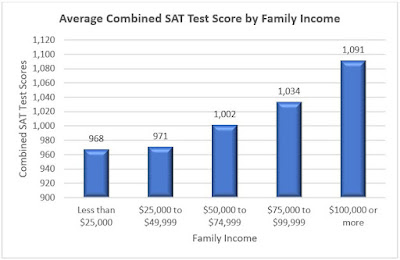
What does academic testing really measure?


FLORIDA STILL FIGHTING COLLEGE BOARD

Florida: State Officials Consider “Classical, Christian” Test as Replacement for the SAT

Not that we love the SAT...

From Diane Ravitch
Governor DeSantis is unhappy with the College Board because it had the nerve to disagree with him. He said he might find an alternative for the Board’s products, the SAT and AP courses. The Miami Herald says that the state is in discussions with a new test vendor whose was designed for Christian schools and home schools...

Will there be another test for students who are not Christian?

FWCS ASKS FOR FUNDING FOR SAFETY, SECURITY

Fort Wayne Community Schools to ask voters to fund safety, security initiatives

From the Fort Wayne Journal Gazette**
Fort Wayne Community Schools plans to ask voters to support a safety and security referendum as early as this fall, Superintendent Mark Daniel announced at a Wednesday news conference.

It is too early to quantify the additional property tax dollars FWCS will seek to collect over eight years through a possible November referendum, or ballot measure, Daniel said. He stressed the value of investing in safety measures, such as increasing the number of student resource officers and installing devices that can alert officials to an open door.

“If you don’t pay it up front now,” Daniel said, “you’re going to pay forever.”

The superintendent recognized that making schools safer can’t be entirely achieved with money, however. Other aspects – including mentors, mental health counseling and discipline practices – also contribute, he said.

**Note: The Fort Wayne Journal Gazette is behind a paywall. Digital access, home delivery, or both are available with a subscription. Staying informed is important, and one way to do that is to support your local newspaper. For subscription information, go to fortwayne.com/subscriptions/ [NOTE: NEIFPE has no financial ties to the Fort Wayne Journal Gazette]

Note: NEIFPE's In Case You Missed It is posted by the end of the day every Monday except after holiday weekends or as otherwise noted.

###

Monday, August 23, 2021

In Case You Missed It – August 23, 2021

Here are links to last week's articles receiving the most attention on NEIFPE's social media accounts. Keep up with what's going on, what's being discussed, and what's happening with public education.

Be sure to enter your email address in the new Follow Us By Email box in the right-hand column to be informed when our blog posts are published.
THIS WEEK

This week we're in the midst of the annual school beginning rollouts. Many schools have already started in Indiana and we're facing a not unexpected pushback from some parents on masks, vaccines, and student (and staff) safety in our public schools.

We also include two articles from last week, which grew in readership during this week.

To begin, though, we start with a discussion of infrastructure and Critical Race Theory.

CRITICAL RACE THEORY

Highways And Critical Race Theory

From Sheila Kennedy
Opponents of (a dramatically-mischaracterized) Critical Race Theory are essentially arguing against the recognition of just how deeply racism has affected American law and culture. They argue–and some undoubtedly believe–that civil rights laws created a level playing field, and that it’s now up to minority folks to stop complaining and make use of their equal opportunities.

The problem with that belief–even if we leave aside the sociological effects of two hundred plus years of history–is that it is wrong.

As a society, we are just beginning to appreciate the extent to which racial animus has been baked into our laws and customs. (I was shocked to read The Color of the Law, for example, which documented how deeply the federal government was implicated in redlining and the segregation of America.) Only because I was involved in an effort to modify plans for rebuilding Indiana’s interstates within Indianapolis’ downtown did I become aware of the degree to which the original placement of those highways was the result of racist motives and assumptions.

MASKS, VACCINES, AND SCHOOL SAFETY

Indiana’s governor backing schools on face mask mandates

Unlike other Republican governors, Indiana's Eric Holcomb is practicing actual conservative values in supporting local control over school mask mandates.

From AP News
Indiana’s governor gave his support Monday to the growing number of school districts across the state issuing mask mandates for students and staff as they try to head off more COVID-19 outbreaks.

Several of the state’s largest school districts in the Indianapolis area began requiring masks for indoor areas on Monday after starting the school year without such requirements, reacting to a growing number of COVID-19 infections among students as the more transmissible delta variant continues surging in the state.

Republican Gov. Eric Holcomb said he would continue his policy of allowing local officials to impose mask rules and other steps to stem the coronavirus spread even as several school boards have faced vocal — and sometimes misleading — opposition to such actions.

“I think the schools that are putting mask mandates into place are making a wise decision when the facts warrant it,” Holcomb said. “I’m not surprised by the pushback having lived through the last year and a half.”
Biden orders Education Department to take action against governors who ban school mask mandates

The President pushes back against governors who are attempting to stop local school boards from doing what they need to do to protect the health and safety of students.

From the Answer Sheet
President Biden ordered Education Secretary Miguel Cardona on Wednesday to take action against governors who have banned universal masking in public schools, taking a tough stand against those who he said are trying to “block and intimidate” local schools officials.

At a news conference, Biden said his administration would not “stand by” and allow governors to prevent local districts from “keeping students safe” with masking mandates for the new academic year as cases from the delta variant of the coronavirus are skyrocketing.

He did not name any specific governor, but Republican governors Ron DeSantis of Florida, Greg Abbott of Texas and Doug Ducey of Arizona, are among those state leaders who have threatened to withhold funding from districts or take other action against those districts that defy them. In Florida, Miami-Dade County Public Schools, the fourth largest district in the country, on Wednesday passed a universal masking mandate — with only a medical opt-out — as did Hillsborough County Public Schools.

“I’m directing the secretary of education to take additional steps to protect our children,” Biden said. “This includes using all of his oversight authorities and legal action if appropriate against governors who are trying to block and intimidate local schools officials and educators.”

The Centers for Disease Control and Prevention has said masking is one of the strongest tools that can be taken to protect the spread of the delta variant, which has caused a rise in pediatric coronavirus cases. The agency this summer, in a shift in guidance, recommended everyone over the age of 2 — even those who are vaccinated — wear masks inside school buildings.

But a handful of Republican governors and legislatures have banned mask mandates in schools.

Why Does Your Right to Unmask Usurp My Child’s Right to a Safe School?
John B. Finch, the great constitutional amendment advocate, was wont to settle this point by a single illustration. He said, “I stand alone upon a platform. I am a tall man with long arms which I may use at my pleasure. I may even double my fist and gesticulate at my own sweet will. But if another shall step upon the platform, and in the exercise of my personal liberty I bring my fist against his face, I very soon find that my personal liberty ends where that man’s nose begins.”
Where does one's right to remain unmasked or unvaccinated end?

From Gadfly on the Wall Blog
We talk about rights so much we seem to have lost entirely the idea of responsibilities. They go hand-in-hand.

Yes, you have the freedom to do whatever you like so long as it doesn’t hurt another person.

When your actions do hurt others, you have a responsibility to stop. And if you won’t do that, the government has a responsibility to stop you.

But in this anti-intellectual age, we’ve almost completely given up on that idea.

If people take precautions by masking up and getting vaccinated, the worst that will happen is they’ll be unduly inconvenienced. If my daughter and I are forced to exist in the same spaces with people not taking the proper precautions, we could get sick and die.

It’s not like we’re talking about two equal sides here. This is people who believe the overwhelming scientific majority vs. those who get their answers from YouTube videos and political figures. It’s doctors, researchers and immunologists vs. conspiracy theorists, internet trolls and the MyPillow guy.

Classroom instruction vital, but so is safety

Masks are required in Fort Wayne Community Schools, but the other school systems in the county are "mask-optional." 

Keeping our students safe should not be "optional."

From the Fort Wayne Journal Gazette**
Educators continue to tout the value of classroom instruction, and data released last week by the Indiana Department of Education reiterates the point as schools wade into a second academic year surrounded by coronavirus concerns.

Among Hoosier students last year, according to the department, those who attended in-person lessons fared better in math and English than counterparts whose families chose remote school options. Data show that in-person students outpaced virtual learners on test scores in both subjects.

"Educators across the state continue to lead this important work, and yet in order to overcome impacts of the pandemic, schools cannot do this alone," Indiana Secretary of Education Katie Jenner said in a statement. "This requires all of us working together : community partners, schools and families : to keep our focus on growth and improved outcomes for our Hoosier students."

A communal approach to ensuring in-person learning is key. But only one of Allen County's four public school districts : Fort Wayne Community Schools : is opting to follow Centers for Disease Control and Prevention guidance calling for universal mask wearing, regardless of vaccination status. Buy-in on preventive measures from families, teachers and staff at East Allen County Schools, Northwest Allen County Schools and Southwest Allen County Schools will be more important than ever.

Schools were largely successful in 2020-21, when masks were mandatory. Nearly 50% of Indiana schools had more than 90% of their students attending in-person, state officials said.

LEFTOVERS FROM LAST WEEK

Koch Network Infiltration of Public Schools 'Harms Students, Teachers, and Our Democracy': Report

Read the report!

From Common Dreams
A new report published Wednesday reveals how the Koch network—a shadowy group of wealthy capitalists acting to push the U.S. in a more conservative direction—is methodically working to undermine and privatize public education for financial gain.

The report (pdf), entitled The Koch Network and the Capture of K-12 Education, was compiled by the advocacy groups UnKoch My Campus and Save Our Schools Arizona (SOSAZ) and examines tactics employed by the plutocrats' cabal—which is led by billionaire Charles Koch, and whose members pay at least $100,000 per year—"to destabilize and abolish public education."

Charter Schools Are Not Public Schools (Ex. #152,377)

Charter schools are not public schools.

From Curmudgucation
In North Carolina, Charter Day School back in 2016 was sued by parents who objected to a dress code requiring girls to wear skirts, jumpers, or skorts. They just won that suit, sort of, but revealed somethiung about themselves in the winning.

...In 2019, a federal judge passed down the ruling that any public school in the country would have expected-- a dress code requiring skirts for girls is unconstitutional. The school quietly retired the item in the dress code.

But that wasn't the end of it. Monday (Aug 9) a federal appeals court tossed out the 2019 ruling--sort of-- in a 2-1 ruling.

The two judges, both Trump appointees, ruled that contrary to the assertion of the lower court, that charter schools should not be considered state actors, and are therefore not subject to the Equal Protection Clause of the 14th Amendment. This is yet another way for the courts to work their way around to declaring that charter schools are free to discriminate in any ways they wish. But it also makes one thing perfectly clear--

Charter schools are not public schools. They are not state actors.

**Note: The Fort Wayne Journal Gazette has changed its online access and is now behind a paywall. Digital access, home delivery, or both are available with a subscription. Staying informed is important, and one way to do that is to support your local newspaper. For subscription information, go to fortwayne.com/subscriptions/

###