Showing posts with label Legislature. Show all posts

Monday, November 4, 2024

In Case You Missed It – November 4, 2024

Here are links to last week's articles receiving the most attention on NEIFPE's social media accounts. Keep up with what's going on, what's being discussed, and what's happening with public education.

Be sure to enter your email address in the Follow Us By Email box in the right-hand column of our blog page to be informed when our blog posts are published.
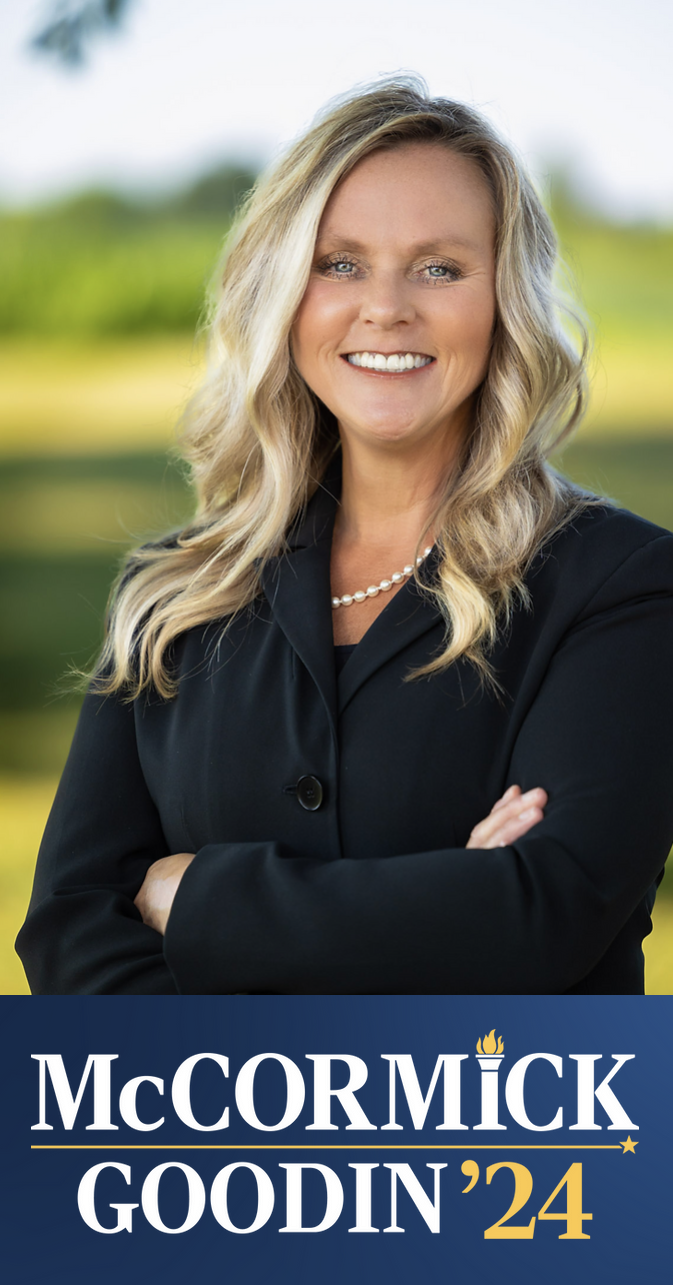
This week's post focuses on Tuesday's (November 5, 2024) election.

QUOTE OF THE WEEK

"Braun claims to want to raise teacher salaries, but he also wants tax cuts that will make that all but impossible. Look closely at his agenda, and you’ll see he wants to increase funding for some schools and teachers, those that he deems effective. In other words, teachers and public schools will fight each other – and private schools – for what money is available.

In his TV ads, Braun says he will “fix the schools” – an extraordinary admission that Indiana schools are broken after 14 years of Republican rule and one supposed fix after another."
-- Steve Hinnefeld in School Matters Blog post, Teachers should lead charge for McCormick, Wells

JENNIFER MCCORMICK FOR GOVERNOR

The 2024 election in Indiana will determine the direction of public education for the next two to four years. Republicans have controlled the governor's office and both of Indiana's legislative houses for the last two decades. Each election season they promise to "fix" the public schools with privatization schemes (vouchers and charters) and laws stripping autonomy and power from the state's experts in education -- its teachers.

It's ironic then, that Republican Gubernatorial candidate (and current U.S. Senator) Mike Braun is still talking about "fixing" the schools.

We have given the Republicans enough time. Give Democrats a chance at the Governor's office and legislature. Support public education in Indiana.

Teachers should lead charge for McCormick, Wells

From School Matters
Twelve years ago, Hoosier teachers and their families and friends rose up and got a Democrat elected to a state office, the last time that’s happened. Outraged at the policies and rhetoric of Republican Tony Bennett, Hoosiers ousted him as superintendent of public instruction and chose Glenda Ritz.

The same thing should happen on Nov. 5. Mike Braun, the GOP candidate for governor, and Todd Rokita, the Republican seeking re-election as attorney general, would be much worse for public schools and educators than Bennett ever was.

Braun, a current U.S. senator and former state legislator, just doesn’t seem interested in education. He’s outsourced his policy proposals to a political action committee headed by conservative super-lawyer Jim Bopp. His top plan is to “expand school choice,” extending public funding of private school tuition to the very wealthiest families.

Braun claims to want to raise teacher salaries, but he also wants tax cuts that will make that all but impossible. Look closely at his agenda, and you’ll see he wants to increase funding for some schools and teachers, those that he deems effective. In other words, teachers and public schools will fight each other – and private schools – for what money is available.

In his TV ads, Braun says he will “fix the schools” – an extraordinary admission that Indiana schools are broken after 14 years of Republican rule and one supposed fix after another.

The Indiana GOP's forgotten word

From John Crull in the Statehouse File dot com
At the last Indiana gubernatorial debate, Libertarian candidate Donald Rainwater made a telling point.

The Republican candidate, U.S. Sen. Mike Braun, R-Indiana, had tried to blame Hoosier Democrats—and Democratic standard-bearer Jennifer McCormick in particular—for the defects in state public policy.

Rainwater replied by saying, in effect, “That’s rich.”

Then he pointed out that Republicans such as Braun have occupied the governor’s office for the past 20 years. The GOP has owned a supermajority in the Indiana House of Representatives for the past decade and the same supremacy in the Indiana Senate for even longer.

NATIONAL ELECTION

On November 5, vote for the well-being of children

From the Network for Public Education
Earlier this year, the Board of Directors of the Network for Public Education Action endorsed Kamala Harris for President and Tim Walz for Vice President of the United States.

Our endorsement was as much a rejection of Donald J. Trump as it was an embrace of the Harris/Walz pro-public education ticket. There can be no romanticization of the Trump years. His choice of Betsy DeVos as Secretary of Education, a zealot for private school vouchers, damaged the public’s faith and allegiance to public schools. They sought to slash federal education funding in every budget proposal. Ms. DeVos has made it clear she would be eager to return to the job to dismantle the Department of Education and public education itself.

Brookings Institution: What Project 2025 Means for Education

Just say "NO!" to Project 2025.

From Diane Ravitch
A group of scholars at the Brookings Institution analyzed Project 2025’s proposals for education and their implications.

What struck me as most bizarre about Project 2025 was not its efforts to block-grant all federal funding of schools, nor its emphasis on privatization of K-12 schools. (Block-granting means assigning federal funding to states as a lump sum, no strings attached, no federal oversight).

No, what amazed me most was the split screen between the report’s desire to hand all power over education to states and communities, and the report’s insistence on preserving enough power to punish LGBT students, especially trans students and to impose other far-right mandates, like stamping out critical race theory. You know, either you let the states decide or you don’t. The report wants it both ways.

It’s also astonishing to realize that the insidious goal of the report is eventually abandon federal funding of education. That’s a huge step backward, taking us to 1965, before Congress passed the Elementary and Secondary Education Act, whose purpose was to raise spending in impoverished communities. I essence, P2025 says that decades of pursuing equitable funding “didn’t work,” so let’s abandon the goal and the spending.

LOCAL NEWS

Fort Wayne Community Schools board advances $12 million in various projects

From the Fort Wayne Journal Gazette**
About $12 million in various Fort Wayne Community Schools capital improvements – including upgrades at three high school auditoriums – advanced this week with board approval of the projects’ architect/engineer...

..The board didn’t elaborate Monday on the proposed work, which was described in meeting documents as eight projects addressing building envelopes, general building systems and mechanical and electrical needs, among others.

Together, the construction contracts are estimated to cost nearly $12 million, with individual projects ranging from $271,300 for flooring at unspecified locations to $2.48 million for heating, ventilation and air conditioning improvements at the Helen P. Brown Natatorium.
**Note: The Fort Wayne Journal Gazette is behind a paywall. Digital access, home delivery, or both are available with a subscription. Staying informed is essential; one way to do that is to support your local newspaper. For subscription information, go to fortwayne.com/subscriptions/ [NOTE: NEIFPE has no financial ties to the Fort Wayne Journal Gazette]

Note: NEIFPE's In Case You Missed It is posted by the end of the day every Monday except after holiday weekends or as otherwise noted.

###

Monday, September 16, 2024

In Case You Missed It – September 16, 2024

Here are links to last week's articles receiving the most attention on NEIFPE's social media accounts. Keep up with what's going on, what's being discussed, and what's happening with public education.

Be sure to enter your email address in the Follow Us By Email box in the right-hand column of our blog page to be informed when our blog posts are published.
QUOTE OF THE WEEK

"Fourteen states and counting have now passed legislation creating voucher (or education savings account) programs that share some key properties. They are universal (or nearly universal), meaning that all families are eligible. They involve no meaningful public accountability or way to judge their success. They allow private schools to charge tuition over and above the voucher amount. And, finally, they are flexible in that funds can be used even to cover homeschooling expenses and other educational goods and services, such as computers and tutoring." -- in The new and radical school voucher push is quietly unwinding two centuries of U.S. education tradition by Douglas N. Harris at the Brookings Institute.

VOUCHERS HURT PUBLIC SCHOOLS

The Evidence Continues To Mount

"[The] majority of the families in the Indiana voucher program today were previously paying for private school on their own...Yet the state stepped in to offer a financial subsidy to parents who didn’t need it ― a costly decision critics say is hurting public schools, which educate more than 90% of the approximately one million K-12 students in Indiana."

From Sheila Kennedy
Inequality.org recently took an in-depth look at the Right-wing’s increasingly successful effort to destroy public education. In an article titled “Private Fortunes Vs. Public Education,” the article began
The United States essentially invented public education. Back in the 1780s, notes the Center on Education Policy, federal legislation “granted federal lands to new states and set aside a portion of those lands to be used to fund public schools.” By the 18th century’s close, most Americans had embraced the notion of “using public funds to support public schooling for the common good.”

In the mid-20th century, amid growing levels of economic equality, that public financial support for public schools would expand mightily. The results would be impressive. By 1970, graduation rates from American high schools — institutions, notes historian Claudia Goldin, themselves “rooted in egalitarianism” — had quadrupled over 1920 levels.

But that era of growing equality and expanding public education would start fading in the 1970s. Over recent years, a new U.S. Senate report makes clear, that fade has only intensified.
The article went on to report that, during the last decade, funding for the nation’s public schools has “barely increased,” while “state spending on tax breaks and subsidies for private schools has skyrocketed by 408 percent.”

A report from the Brookings Institution found that universal voucher programs “are unwinding two centuries of tradition in U.S. public education” and that the programs “violate basic traditions of church-state separation, anti-discrimination, and public accountability.” As the researcher concluded, even if the courts -ignoring over fifty years of precedents–rule that these voucher programs are constitutionally permissible, “we should assess them against our principles as a nation.”

HOW MUCH DID VOUCHERS HURT YOUR PUBLIC SCHOOL?

Voucher Cost to Local Public School Districts

How much money has your local school district missed out on because of vouchers?

From the Indiana Coalition for Public Education
Indiana is a radical state when it comes to education funding. It now offers a handful of different types of K-12 education vouchers. The Indiana Choice Scholarship—a subsidy for families by which they use public funds to help pay for private school tuition—is the largest and oldest voucher in the state (existing since 2011).

IF the state K-12 funding had remained the same and IF this large voucher program didn’t exist, how much additional funding would your community school district have had?

FEDERAL ROLE IN PUBLIC EDUCATION

In 2020, President Trump Set Out to Impose His Own Preferred U.S. History Curriculum on All U.S. Public Schools

Can a President who tried to rewrite the public school history curriculum can be trusted today to avoid adopting Project 2025’s radical destruction of the federal role in education?

From Jan Resseger
In a blockbuster story last week, the Washington Post’s Laura Meckler recounts how Donald Trump’s anger about Nikole Hannah-Jones’ 1619 Project—emphasizing the history of slavery as part of the nation’s founding—grew into Trump’s infatuation with the political possibility of appointing his own commission to develop the kind of national public school history curriculum Trump believed his supporters would prefer. This is clear case of a politician creating public policy as an ideological reaction to our society’s growing acceptance of our nation’s diversity.

Meckler quotes Trump in a pre-July 4th speech in 2020, lashing out at the way public schools were teaching American history: “Our nation is witnessing a merciless campaign to wipe out our history, defame our heroes, erase our values and indoctrinate our children… Children are taught in school to hate their own country and to believe the men and women who built it were not heroes but… villains.”

Meckler reports: “During most of his presidency, Trump had showed little interest in education, but now, as he campaigned for a second term, he cast the movement (spawned by the 1619 Project and the reaction to George Floyd’s murder in Minnesota) as something sinister infecting American education. He began to describe schools as ground zero in the fight over how to see America and its history.” Meckler adds that in the fall of 2020, Trump appointed his own 1776 Commission, declaring: “Many of America’s schoolchildren are tragically being taught to hate our founding, hate our history and hate our country. This must stop… The 1776 Commission will help ensure that every American child learns that they live in the greatest and most exceptional nation in the history of the world.”

Trump’s Secretary of Education, Betsy DeVos, disdained by public school supporters for her devotion to and massive personal investment in promoting school privatization, stood behind the principle that public schools are established in the state constitutions and operated by locally elected school boards, and that the President and the federal government cannot impose a national curriculum. Meckler quotes Betsy DeVos recounting her conversation with Trump in the summer of 2020: “I had to remind him that the United States does not have a national curriculum, and for good reason… The federal government can’t ban the 1619 Project.”

THE THEORY IS SCIENCE

Teaching evolution is still constitutional in Indiana

What is a theory?

"...A theory is a well-substantiated explanation of an aspect of the natural world that can incorporate laws, hypotheses and facts. The theory of gravitation, for instance, explains why apples fall from trees and astronauts float in space. Similarly, the theory of evolution explains why so many plants and animals—some very similar and some very different—exist on Earth now and in the past, as revealed by the fossil record."

From the National Center for Science Education
The plaintiffs contended that the district schools teach "the state-sponsored, atheistic, religious Theory of Evolution ... under the guise that that it is 'science,'" that what they regard as various components of evolutionary theory have been scientifically disproven, and that "the atheistic Theory of Evolution specially attacks the Judeo-Christian origin story."

...The court found that the plaintiffs failed to allege an Establishment Clause violation because, in the words of McLean v. Arkansas (1982), "it is clearly established in the case law, and perhaps also in common sense, that evolution is not a religion and that teaching evolution does not violate the Establishment Clause."

ABSENTEE RATES ARE IMPROVING

Indiana officials say chronic absenteeism rates are improving, but there’s still more work ahead

From the Capital Chronicle
Indiana’s top education officials applauded the state’s improved chronic absenteeism rates on Wednesday but conceded that too many Hoosier students are still missing a “significant” number of school days.

The latest attendance numbers released by the Indiana Department of Education reported that 17.8% of K-12 students — roughly 219,00 kids — were “chronically absent” during the most recent 2023-24 school year, meaning they missed at least 18 days.

It’s the second year in a row that the number of chronically absent students went down, dropping from 19.2% in 2023, and 21.1% in 2022.

“It’s an improvement — and we always want to celebrate improvements and data moving in the right direction— but we still have some work to do,” said John Keller, IDOE’s chief information officer, during Wednesday’s State Board of Education meeting.

LEGISLATORS AND CONSTITUENTS MUST COMMUNICATE

Education policy is missing feedback and collaboration

Educator and former State Representative Melanie Write explains how basic communication skills are missing between our legislators and constituents.

From Melanie Wright in the Capital Chronicle
Meaningful dialogue with education experts: superintendents, administrators and educators is essential to identifying issues that should be addressed in schools. Fewer debates and forums occur during the election process. Once elected officials are established, they are hesitant to meet with educators due to contentious bill policy. Bills tend to be passed in Indiana before input is sought. When the Indiana State Board of Education attempts to implement policy, stakeholders testify with concerns. By no longer having an elected Superintendent of Public Instruction, the Department of Education struggles to find neutrality while navigating proposed legislation and what will truly benefit our students.

The Science of Reading was recently passed as a method to ensure that Indiana students could be kept on grade level. After a drastic and last-minute strategy, it was set to roll out this past summer. Without input from stakeholders, the various course offerings were put into place. Many educators had to readjust summer plans to acquire the training, some needed to complete the training for financial and/or licensure opportunities and some were so frustrated by this that they opted to wait and see if it would change, as education policy does so often.

Simple conversations within House and Senate districts could have prevented such turmoil. Instead, schools are once again greeted with the implementation of new laws, but very little guidance on how to achieve such.


JOIN US

An Evening with Jennifer McCormick

NEIFPE is proud to co-sponsor this event featuring Jennifer McCormick, candidate for Governor of Indiana. We hope you can attend.

Click HERE to register for the September 25th event:


Note: NEIFPE's In Case You Missed It is posted by the end of the day every Monday except after holiday weekends or as otherwise noted.

###

Monday, May 13, 2024

In Case You Missed It – May 13, 2024

Here are links to last week's articles receiving the most attention on NEIFPE's social media accounts. Keep up with what's going on, what's being discussed, and what's happening with public education.

Be sure to enter your email address in the Follow Us By Email box in the right-hand column of our blog page to be informed when our blog posts are published.
QUOTE OF THE WEEK

"Democratic House Minority Leader Shelli Yoder called prohibiting other methods of teaching 'heavy-handed' and 'tyrannical,' even if well-intentioned.

"'If we’ve done one thing it is to communicate to teachers that we do not trust your profession, and we’re gonna micromanage it,' Yoder said. 'And we’re going to make sure that you use this one method of teaching reading. That does create a bit of a pause for me.'"
-- Indiana Joins States Mandating the Science of Reading in Classrooms

THE SCIENCE OF READING MANDATES

Indiana has jumped on the Science of Reading (SoR) bandwagon which includes banning other methods of teaching reading. The state's NAEP scores in reading have dropped, though they are still around the national average. This has given the legislature the excuse to micromanage education, while -- no surprise -- blaming teachers, for the "reading crisis." Other states with legislatures not favorable to public education are joining in -- like Iowa.

The Science of Reading debate is a rehashing of the ongoing "Reading Wars" which pits so-called "phonics first" techniques against so-called "whole language" methods. The debate is not settled.

How many reading education experts are members of the Indiana legislature?

For more information on this topic, see...

The Science of Reading Movement: The never-ending debate and the need for a different approach to reading instruction

ILEC Response: Reading Science: Staying the course amidst the noise (Albert Shanker Institute)

Iowa Mandates “Science of Reading”

The following two articles from Diane Ravitch provide some information about the debate.

From Diane Ravitch
The “Science of Reading” is the panacea of the moment. Iowa’s Governor Kim Reynolds signed a bill requiring the use of SofR in the state’s classrooms.

ADEL, Iowa (Gray Television Iowa Capitol Bureau) – Governor Kim Reynolds signed a new law Tuesday meant to boost literacy rates for Iowa children. It requires schools teach a specific reading method, called the Science of Reading, and develop individual plans for students not at grade level.

Nick Covington: What the “Science of Reading” Overlooks

From Diane Ravitch
Nick Covington taught social studies for a decade. He recently decided to delve into the mystique of “the science of reading.” He concluded that we have been “sold a story.”

He begins:

Literacy doesn’t come in a box, we’ll never find our kids at the bottom of a curriculum package, and there can be no broad support for systemic change that excludes input from and support for teachers implementing these programs in classrooms with students.

Exactly one year after the final episode of the podcast series that launched a thousand hot takes and opened the latest front of the post-pandemic Reading Wars, I finally dug into Emily Hanford’s Sold A Story from American Public Media. Six episodes later, I’m left with the ironic feeling that the podcast, and the narrative it tells, missed the point. My goal with this piece is to capture the questions and criticisms that I have not just about the narrative of Sold A Story but of the broader movement toward “The Science of Reading,” and bring in other evidence and perspectives that inform my own. I hope to make the case that “The Science of Reading” is not a useful label to describe the multiple goals of literacy; that investment in teacher professionalization is inoculation against being Sold A Story; and that the unproductive and divisive Reading Wars actually make it more difficult for us to think about how to cultivate literate kids. The podcast, and the Reading Wars it launched, disseminate an incomplete and oversimplified picture of a complex process that plasters over the gaps with feverish insistence.
MORE NON-EXPERTS IN EDUCATION

Elon Musk Has Some Education Thoughts

Yet another billionaire who thinks that his money makes him an education expert.

From Peter Greene at Curmudgucation
Elon Musk has some thoughts about education, and because he's Very Rich, Fortune Magazine decided it should share some of those thoughts, despite Musk's utter lack of qualifications to talk about education.

Reporter Christiaan Hetzner mostly covers business in Europe, so it's not clear how he stumbled into this particular brief piece, which appears to be lifting a piece of a larger conversation into an article. I'd love a new rule that says every time an outlet gives space to a rich guy's musings about areas in which he has no expertise, the outlet also publishes a piece about the musings of some ordinary human on the topic--maybe even an ordinary human who is an expert in the area.

Hetzner launches right in with both feet.
More than a century ago, Irish playwright George Bernard Shaw wrote, “He who can, does. He who cannot, teaches.” Well, Elon Musk is a doer with a lot of children, and he’s reached the conclusion he doesn’t want his kids to learn from some has-been or never-was simply because they landed a job in a local school thanks to a lack of competition.
It's not clear if Hetzner is editorializing or trying to channel Musk's point of view (I think perhaps the latter), but somebody here is really full of it. I'm not going to argue about Musk's doer qualifications, though his ability to profit off the work of others and his interminable botching of twitter leave me unpersuaded of his genius. But this characterization of teachers is some serious bullshit. And things aren't going to get better.

SEGREGATION IS CREEPING BACK UP AGAIN

5 takeaways about segregation 70 years after the Brown decision

America's classrooms are still struggling with segregation.

From The Hechinger Report
...1. The long view shows progress but a worrying uptick, especially in big cities

Not much changed for almost 15 years after the Brown decision. Although Black students had the right to attend another school, the onus was on their families to demand a seat and figure out how to get their child to the school. Many schools remained entirely Black or entirely white...

2. School choice plays a role in recent segregation

Why is segregation creeping back up again?

The expiration of court orders that mandated school integration and the expansion of school choice policies, including the rapid growth of charter schools, explains all of the increase in segregation from 2000 onward, said Reardon. Over 200 medium-sized and large districts were released from desegregation court orders from 1991 to 2009, and racial school segregation in these districts gradually increased in the years afterward.

School choice, however, appears to be the dominant force. More than half of the increase in segregation in the 2000s can be attributed to the rise of charter schools, whose numbers began to increase rapidly in the late 1990s. In many cases, either white or Black families flocked to different charter schools, leaving behind a less diverse student body in traditional public schools...

NO PUBLIC SCHOOL FOR UNDOCUMENTED IMMIGRANTS -- HERITAGE FOUNDATION

Heritage Foundation Wants to Deny the Right to Public Schooling for Undocumented Immigrant Children

The Heritage Foundation argues for denying undocumented immigrant children a chance at public education.

From Jan Resseger
I like to think I know enough about awful public policy that it would be hard to surprise me, but I confess that the beginning of Kalyn Belsha’s new report for Chalkbeat describes a politics so indecent that I was shocked:

“An influential conservative think tank has laid out a strategy to challenge a landmark Supreme Court decision that protects the right of undocumented children to attend public school. The Heritage Foundation, which is spending tens of millions of dollars to craft a policy playbook for a second Trump presidential term… released a brief calling on states to require public schools to charge unaccompanied migrant children and children with undocumented parents tuition to enroll.” (You can look at the Heritage Foundation’s very short policy brief which is part of Heritage’s Project 2025 that lays out an extremely conservative platform.)

Belsha explains Heritage’s reasoning for this cruelty: “Such a move ‘would draw a lawsuit from the Left,’ the brief states, ‘which would likely lead the Supreme Court to reconsider its ill-considered Plyler v. Doe decision’—referring to the 1982 ruling that held it was unconstitutional to deny children a public education based on their immigration status.”

We like to think we are kinder and more civilized in America than we used to be in the days of slavery, Jim Crow, and Bury My Heart at Wounded Knee, but I guess the Heritage Foundation feels comfortable taking us back to 1975, when Texas passed a law to deny undocumented children the right, enjoyed by all children in the United States, to a free public education.

LOCAL NEWS

East Allen County Schools teacher earns national honor

Excellent teaching here in our own neighborhood.

From the Fort Wayne Journal Gazette**
When math teacher Dawn Baxter stepped inside a Paul Harding Junior High School room on Thursday morning, her confusion was evident when colleagues and students cheered her arrival while Kool & The Gang’s “Celebration” played.

Principal Charles Washington quickly ended the suspense. With an arm around Baxter’s shoulders, the administrator said she was named a Math 180 Educator of the Year by learning technology company Houghton Mifflin Harcourt.

“Seriously?” Baxter replied.

The recognition honors teachers who demonstrate exceptional commitment to their students’ growth inside and outside of the classroom using the company’s Math 180 intervention program.
**Note: The Fort Wayne Journal Gazette is behind a paywall. Digital access, home delivery, or both are available with a subscription. Staying informed is essential; one way to do that is to support your local newspaper. For subscription information, go to fortwayne.com/subscriptions/ [NOTE: NEIFPE has no financial ties to the Fort Wayne Journal Gazette]

Note: NEIFPE's In Case You Missed It is posted by the end of the day every Monday except after holiday weekends or as otherwise noted.

###

Monday, January 22, 2024

In Case You Missed It – January 22, 2024

Here are links to last week's articles receiving the most attention on NEIFPE's social media accounts. Keep up with what's going on, what's being discussed, and what's happening with public education.

Be sure to enter your email address in the Follow Us By Email box in the right-hand column of our blog page to be informed when our blog posts are published.

QUOTE OF THE WEEK

"Public schools (and free college) made it possible for America to produce an explosion of invention and innovation throughout the mid-20th century; now other countries are surpassing us, as the dumbing-down of our kids has become institutionalized in Red state after Red state.

And public schools gave many students their first experience of interacting with people who look different from them and grew up under different circumstances, awakening many young people to the discrimination and unfairness inherent in how America has historically treated minorities.

All of which explains why Republicans so badly want to put an end to public education in America."
-- Thom Hartman, quoted by Diane Ravitch in Why Rightwingers Oppose Public Schools

VOUCHERS AND THE ALL-WHITE "ACADEMY" MOVEMENT

Thom Hartmann: Why Rightwingers Oppose Public Schools

From Diane Ravitch
...in 1954, the US Supreme Court upset the education apple cart by declaring in their Brown v Board case that “separate but equal” schools, segregated by race, were anything but “equal.” That decision fueled two movements that live on to this day.

The first was the rightwing anti-communist movement spearheaded by the John Birch Society, which was heavily funded back then by Fred Koch, the father of Charles and David Koch. They put up billboards across the country demanding that Americans rise up and “Impeach Earl Warren,” who was then the Chief Justice of the Supreme Court, for requiring “communist” racial integration of our schools.

The second was the private, all-white “academy” movement that has morphed over the years into charter schools and the “school choice” movement of today. It received a major boost when the white supremacist co-founder of neoliberalism, Milton Friedman, published a widely-read and influential article in 1955 explicitly calling for what he called “education vouchers” to fund all-white private schools to “solve the national crisis” the Court had created.

WHAT REALLY MATTERS TO PUBLIC EDUCATION

Jan Resseger: The Culture Wars Are Obscuring What Really Matters

From Diane Ravitch
Jan Resseger, dedicated champion of social justice, explains that the culture wars are a ruse that diverts [us] from far more important issues. Book-banning and attacks on diversity-equity-inclusion are outrageous, but even more so is our indifference to structural issues, such as adequate funding, persistent racial segregation, and the privatization movement.

THE INDIANA GENERAL ASSEMBLY CONTINUES ITS ATTACK ON PUBLIC EDUCATION

It’s Not a Good Start for the Short Session

Vic Smith provides in-depth coverage of the Indiana General Assembly's continuing quest to privatize public education in Indiana. Follow him and support the Indiana Coalition for Public Education

From the Indiana Coalition for Public Education
Two Senate bills, SB 255 and SB 143, directly implement Milton Friedman’s plan to give school funding to parents and not to schools, abruptly ending the way public education in Indiana has been funded for over a century.

Both bills must be strongly opposed, and promptly. Senate Bill 255 has been scheduled for a hearing on Thursday, January 18 at 9 a.m. in bill author Senator Mishler’s committee, the Senate Appropriations Committee, which meets in Room 431.

One immediate effect of both bills would have taxpayers for the first time pay $7,000 for ANY student in an unaccredited home school.

Indiana lawmakers seem unlikely to tackle school consolidation in 2024 session

From the Indiana Capital Chronicle
A new statewide report is fueling discussions about consolidating Indiana’s smallest school districts, but state lawmakers continue to lack an appetite for action — at least for now.

For years, the Indiana Chamber of Commerce has asked the General Assembly to move legislation that encourages school districts with fewer than 2,000 students to consolidate.

Small and rural school officials — longtime critics of the chamber’s lobby for more school consolidation — are pushing back against the new study and the potential for Indiana policies that would require small schools to increase their student population.

“We don’t have a problem with consolidation, but it needs to be driven by locals — it has to be something they want for it to be successful,” said Chris Lagoni, executive director of the Indiana Small and Rural Schools Association. “Our members do feel like there’s a lot of attacking going on here.”

“The state has said we want more private schools, we want more public schools, we want more choice, more choice, more choice,” he continued. “The chamber advocated for those policies. That’s why we’re just having a hard time understanding this issue — because we’re not attacking it equally across all choices.”

Some public schools could face tax losses under proposed legislation

This is another attempt to divert public money from public schools to privately run schools.

From the Fort Wayne Journal Gazette**
Last week, the Indiana House Ways & Means Committee heard testimony on a proposal extending a cap on referendum levies that could inhibit the ability of public school corporations to convince voters to pay extra property taxes for needed improvements.

Authored by Ways & Means’ Republican Chair Jeff Thompson of Lizton, House Bill 1120 would still allow public school districts to seek additional funding through referendums, but not more than 3% above the maximum tax a district would have levied in the previous year.

When it comes to paying for K-12 education, state lawmakers have a history of moving taxpayer money from public school districts to charter schools.

ANYONE WHO VALUES LIFE...

Iowa: Principal Dan Marburger Dies Defending His Students

From Diane Ravitch
Dan Marburger, who served for almost three decades as principal of the Perry High School, died of the wounds he sustained after being shot by a high school student on January 4.

The high school student killed an 11-year-old sixth grader and wounded several others, then killed himself.

Mr. Marburger gave his life to save the lives of students.

In this country, “gun rights” have more protection than the lives of students, teachers, and principals. Don’t believe those politicians who say they protect “life” but oppose gun control. This is a contradiction or outright hypocrisy. Anyone who values life must demand gun control.

FORT WAYNE AREA NEWS

Schools 101: Southwest Allen, Warsaw programs creates district advocates

Teaching the public about public schools.

From the Fort Wayne Journal Gazette**
Southwest Allen County Schools parents ask Erin Nash questions about topics such as elearning and snow days as if she’s a district expert.

“And I’m not,” said Nash, president of Aboite Elementary School’s Parent Teacher Club.

But she’s more informed about SACS now than she was when the academic year began. She is among 25 people getting an in-depth look at district operations through Southwest Education Advocates, a monthly program that launched in October.

Sessions address topics including school finance, transportation, technology, maintenance, safety, food service, curriculum, special education, testing, English language learners and guidance programming. Daytime tours of three schools – including lunch at one – are planned for March.

“We’re trying to help them understand the big picture of what happens not just during a school day, but what it takes to support a school,” Superintendent Park Ginder said after this month’s session. “We want them to have a well-rounded experience about what it takes to support the learning in the classroom.”
**Note: The Fort Wayne Journal Gazette is behind a paywall. Digital access, home delivery, or both are available with a subscription. Staying informed is essential; one way to do that is to support your local newspaper. For subscription information, go to fortwayne.com/subscriptions/ [NOTE: NEIFPE has no financial ties to the Fort Wayne Journal Gazette]

Note: NEIFPE's In Case You Missed It is posted by the end of the day every Monday except after holiday weekends or as otherwise noted.

###

Monday, March 13, 2023

In Case You Missed It – March 13, 2023

Here are links to last week's articles receiving the most attention on NEIFPE's social media accounts. Keep up with what's going on, what's being discussed, and what's happening with public education.

Be sure to enter your email address in the Follow Us By Email box in the right-hand column to be informed when our blog posts are published.


THIS WEEK

State legislatures around the nation are working hard to defund and damage public education through book banning, charters, and vouchers.

LEGISLATURES TAKE AIM AT PUBLIC EDUCATION

Targeting teachers, school libraries exercise in legislative overreach

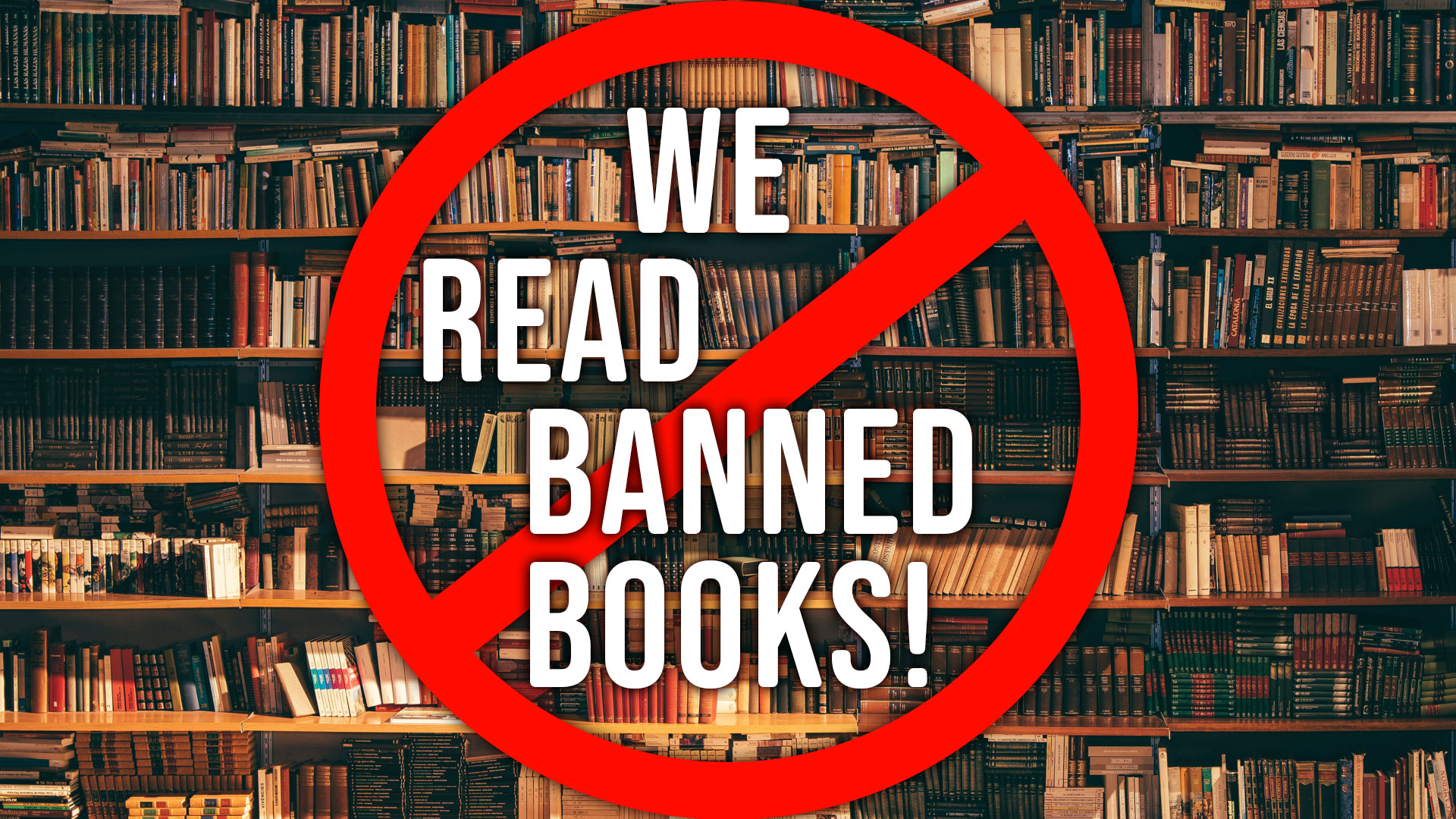
This op-ed penned by Michael Shaffer ought to anger you. Legislatures around the country, including the Indiana General Assembly, are jumping on the book-banning bandwagon in support of a minority of loud extremists who use threats, intimidation, and fear to force schools to bend to their will.

Not content with diverting billions of tax dollars to fund private and religious schools, the mob of book banners and their cronies in Republican-gerrymandered state legislatures want to limit the rights of (what is likely) the majority of parents who want their children to have access to accurate accounts of history and literature reflective of reality.

What constitutes "inappropriate?" The book banners want to decide for you.

From the Fort Wayne Journal Gazette**
...SB 12 (authored by Jim Tomes, R-Wadesville, to protect the “little tykes” and passed by the brain trust in the Senate) states, any teacher or school librarian who willingly subjects students – who include significantly more than “little tykes” – to material harmful to minors can be found guilty of a Level 6 felony and subject to 2 1/2 years in prison.

We would all agree with this, wouldn’t we? After all, who would want anything to happen to our school-age children that is harmful to them?

But wait, there’s more. It starts with a very carefully chosen word that has my blood boiling.

“Inappropriate.” Any parent or guardian can file a complaint against any book that a school has in its library or teacher has in their book collection that is inappropriate. Let that sink in.

Inappropriate? Not pornographic?

Just to be clear, we are not talking about taking Playboy or Hustler magazine off the shelves of your local high school library periodical sections. The bill specifically uses the word “inappropriate” and applies to any public school K-12 classroom or library in Indiana.

I am not in favor of putting pornographic materials in the hands of kids. But that is not what this bill is talking about.

This bill comes straight from the hands of Purple for Parents and Moms for Liberty (a branch of the American Legislative Exchange Council), which have self-appointed their organizations as the guardians of purity and appropriateness for our children, all the while spewing hate speech and falsities as quickly as they can hurl invectives in their auctioneer-paced rampages.

It is only fair to point out that SB 12 only applies to traditional public schools and charter schools; voucher schools are not affected at all.

Apparently, the only Indiana teachers and librarians completely safe from felony prosecution are those who teach in voucher schools, as long as they practice the right religion...

Henry Louis Gates, Jr.: Whose Black History Will Be Taught?

The "war of northern aggression." That's what they called the Civil War.

Pretending that the Civil War and the Reconstruction amendments solved the problem of racism in the United States and neglecting to teach our children about our true history is educational malpractice.

From Diane Ravitch
Harvard professor Henry Louis Gates Jr. reviews the long debate about how to teach Black history in an article in the New York Times. The debate began as rationales by sympathizers of the Confederacy, who changed the Civil War into “The War Between the States.” In a visit to Charleston, South Carolina, not long ago, I heard the war described in a historic home as “The War of Northern Aggression.”

Dr. Gates writes:

Lurking behind the concerns of Ron DeSantis, the governor of Florida, over the content of a proposed high school course in African American studies, is a long and complex series of debates about the role of slavery and race in American classrooms.

Miami Herald: “Parental Rights” Is the Battle Cry of Extremists

Which parents get to choose the books to deny to everyone? Do the extremists speak for all parents? Not likely.

From Diane Ravitch
Their narrative goes that to be “pro-parent” you must not want your children exposed to topics like “critical race theory,” or you only support a whitewashed version of this country’s history of racism. Being pro-kid means you don’t want them to learn that there are men who date men, women who date women and people who don’t identify with the gender assigned to them at birth. It means you want school libraries sanitized from content that might offend your sensibilities.

It means that there’s one way to look at America and education and anyone with a different opinion be damned, called names like leftist, communist, anti-American.

It’s as if only groups like Moms for Liberty represent what parents want. The group seems more preoccupied with banning books than concerned that too many kids in our schools cannot read at grade level. The leader of its Miami chapter once called the protests after the death of George Floyd at the hands of police “race wars” and repeated QAnon conspiracy theories on Instagram, Politico reported.

To be a parent, under this definition, means to be a conservative in the most extreme sense of the word...

The Rev. Dr. Robin Meyers on Oklahoma’s State Superintendent: “I Alone Will Indoctrinate Your Children”

"Beware the zealot who is going to save you from something that may or may not exist and intends to burn down your house to do it."

From Diane Ravitch
Dr. Meyers writes:

Oklahoma’s new state schools superintendent is about to take a desperate situation and make it awful.

His plans for stamping out “wokeness,” critical race theory, and boys using the girl’s bathrooms sounds nothing like a plan to advance education, and more like a platform to become Ron DeSantis Jr. The irony of this culture war approach to education is transparently hypocritical. Walters claims to be all “for academics and against indoctrination,” while making it clear that he alone will decide who gets hired, who gets raises and what gets taught in our schools. That is the very definition of indoctrination.

Beware the zealot who is going to save you from something that may or may not exist and intends to burn down your house to do it. Beware the fearmonger who incites the masses to muzzle free and open discourse about dangerous ideas so that he can make duplicate zealots for even worse ideas. Beware the evangelist who rails against other people’s sins while lining his pocket from two jobs at taxpayers’ expense while vowing to cut wasteful government spending. Ryan Walters makes more than the governor.

FUNDING VOUCHERS, NOT TEXTBOOKS

Indiana House budget covers textbook fees at schools' expense

For years, parents of Indiana public school teachers have had to pay for their textbooks despite the Indiana Constitutional guarantee of "a general and uniform system of Common Schools, wherein tuition shall be without charge, and equally open to all."

The Indiana General Assembly now wants to put the burden of textbook fees on the local school systems, while increasing state money for private and religious schools.

From the Fort Wayne Journal Gazette**
The House plan enables lawmakers to claim a win for parents no longer facing textbook fees while touting increases in school funding. But a disproportionate part of the new money goes to expanding the voucher school program.

The Senate could provide true relief for the students attending public schools in our state by using some of the money carved out to grow the voucher system to cover the tab for books and other needed curriculum materials. The money is there. It’s just a question of priorities.

CHARTERS DRAIN REAL PUBLIC SCHOOLS

Charter schools win in proposed Indiana budget amid public advocacy campaign

As expected from the anti-public schools Republicans in the Indiana General Assembly, "[p]roperty tax losses could be in the cards for some traditional public schools"

From Indiana Capital Chronicle
Charter schools in Indiana could see big gains under the current draft of the next two-year state budget. But the deal could cause long-term losses for traditional public schools, some of which stand to lose millions of dollars needed for teacher raises and other non-classroom expenses.

A new funding stream carved into the House Republican budget would mandate the amount of funds every public school district and charter school receives for operations, which are collected through local property taxes.

Charter schools would still be unable to tap into local tax revenues, but instead would get $1,400 per student from state funds in 2024, and $1,500 in 2025, according to the draft budget. A current state grant offers charter schools $1,250 per student each school year...

...That would mean cuts to local operations funds at some schools — especially in districts with a large tax base such as Indianapolis. It’s still not clear how exactly individual school districts could be impacted, however. A fiscal impact statement says schools statewide could lose $87 million in 2025 and $177 million in 2026.
**Note: The Fort Wayne Journal Gazette is behind a paywall. Digital access, home delivery, or both are available with a subscription. Staying informed is important, and one way to do that is to support your local newspaper. For subscription information, go to fortwayne.com/subscriptions/ [NOTE: NEIFPE has no financial ties to the Fort Wayne Journal Gazette]

Note: NEIFPE's In Case You Missed It is posted by the end of the day every Monday except after holiday weekends or as otherwise noted.

###

Wednesday, August 4, 2021

Public Meetings on Redistricting Maps: This is Your Chance to Speak Up

The public is invited to attend meetings across the state to voice their thoughts on the redistricting process that will determine the boundaries of federal and state legislative districts for the next ten years. This is your opportunity to weigh in with legislators in person and tell them that you want to see a fair and bipartisan approach to redistricting that stops the out-of-control gerrymandering of our current district maps.
Meetings will be held across the state starting in Lafayette this Friday, August 6 and concluding with a final meeting at the Indiana Statehouse on Wednesday, August 11. The complete schedule of meetings is as follows:

North – Friday, Aug. 6 and Saturday, Aug. 7 at the following Ivy Tech campuses:
Lafayette | 10 a.m. to noon Friday, Aug. 6
Valparaiso | 3-5 p.m. CDT Friday, Aug. 6
Fort Wayne | 10 a.m. to noon Saturday, Aug. 7
Elkhart | 4-6 p.m. Saturday, Aug. 7

South – Friday, Aug. 6 and Saturday, Aug. 7 at the following Ivy Tech campuses:
Anderson | 10 a.m. to noon Friday, Aug. 6
Columbus | 4-6 p.m. Friday, Aug. 6
Evansville | 9-11 a.m. CDT Saturday, Aug. 7
Sellersburg | 4-6 p.m. Saturday, Aug. 7

Central – Wednesday, Aug. 11 at the Statehouse
Indianapolis | 1-3 p.m. Wednesday, Aug. 11 in the House Chamber at the Indiana Statehouse
If districts aren't fairly drawn, you will not be able to hold your politician accountable for their votes on issues that matter to you. Powerful special interests and big donors are the only ones who will count.

If you would like suggestions on what to say at the meetings, Common Cause Indiana released a report summarizing the public forums they hosted where Hoosiers weighed in on what they want to see from redistricting this year. The report provides a list of major concerns and district-by-district recommendations to achieve fair representation through the redistricting process.

Details on the room number for the above meetings and live streams of the events will be available online. Although room numbers are not yet posted, you will find that information at the link above when it is decided.
###

Monday, May 24, 2021

In Case You Missed It – May 24, 2021

Here are links to last week's articles receiving the most attention on NEIFPE's social media accounts. Keep up with what's going on, what's being discussed, and what's happening with public education.

Be sure to enter your email address in the new Follow Us By Email box in the right-hand column to be informed when our blog posts are published.
STUDENTS ARE MORE THAN TEST SCORES - EVEN IN PRE-K

Pre-K And The Importance Of Measuring The Right Things

Our legislators have shown themselves to be shortsighted when it comes to education policy. They don't seem to understand that the very real benefits of quality Pre-K programs can have a long-term positive impact on our students and society.

From Peter Greene in Forbes
..."Does high-quality preschool work?"

The answer—and this is important—depends on what you mean by "works."

Preschool had no real effect on test scores in the short term, and any effects had disappeared by later years. Preschool did not raise scores on the state's Big Standardized Test.

But—

Preschool reduced the likelihood that a student would get in trouble in high school or ever be jailed. And preschool increased the likelihood that students would graduate from high school and that they would go on to attend college.

These are good things, and if preschool done right can deliver these results, that's good news.

SACS PROVIDES STIPENDS FOR STAFF

SACS board signs off on one-time stipends

From the Fort Wayne Journal Gazette**
Southwest Allen County Schools put a price Tuesday on the extra work school employees performed this academic year.

The school board unanimously approved one-time stipends of 500 and 1,000 for part-time and full-time employees, respectively.

The five members also agreed the superintendent or designee has the discretion to increase any employee's stipend in recognition of an unusual increase in that employee's work time and responsibilities due to the pandemic. The total amount of additional stipends may not exceed $25,000.
THE BATTLE OVER CRITICAL RACE THEORY

Why is “Critical Race Theory” Controversial and What Is it?

There are those who believe that Critical Race Theory means that schools are going to teach students to "hate America." They apparently believe that the nation has been perfect since its inception and any history that says otherwise must be hidden and purged.

A must read!

From Diane Ravitch
In several states, the Governor and Legislature have denounced “critical race theory” and even (in Idaho and some other states) banned it from their schools. The controversy over teaching about race gained ground when former President Trump condemned CRT as divisive and launched his own quickie commission to teach “patriotic” education. The object seems to be to minimize or eliminate teaching about racism, past or present.

Retired teacher Nancy Flanagan dissected the controversy here, in one of the best-informed analyses.

THE MARCH TOWARDS PRIVATIZATION

Impoverished Pennsylvania District About to Be Fully Charterized, Despite Parent Opposition

School choice apparently doesn't apply to those parents who want to choose public schools. This is a travesty.

From Diane Ravitch
This is an important story, well told by this reporter. It follows the template for charterization: Underfund a predominately African-American school district for years, then have the state take control because of financial issues. Strip the school board of all power and appoint a single “receiver” to make all decisions. Begin the charterization process with as little transparency as possible knowing that parents and community do not want it. Put out RFPs to charter companies. Hold one meeting at which parents, educators and community make clear their opposition but feel that the fix is in despite their wishes. Receiver, who is not accountable to the community or the voters, makes his decision.
The movement to privatize public schools marches on during coronavirus pandemic

The move towards privatization of America's public schools continues...

From the Answer Sheet
...By Carol Burris

Legislatures in 35 states have proposed bills to enact or expand voucher programs or charter schools. A few have passed; others have failed. Still others are sitting on governors’ desks or are stalled in the state’s House or Senate. Several are obvious attempts to please right-wing donors with no chance of moving out of committee. So far, eight states have enacted one or more bills.

A flurry of proposed school privatization legislation appearing on state dockets has been the pattern for several years. What is different this year is their success, albeit limited. In prior years, few, if any, reached the finish line. So what is different about 2021?

**Note: The Fort Wayne Journal Gazette has changed its online access and is now behind a paywall. Digital access, home delivery, or both, are available with a subscription. Staying informed is important, and one way to do that is to support your local newspaper. For subscription information go to fortwayne.com/subscriptions/

###

Friday, March 5, 2021

Vic’s Statehouse Notes #353 – March 4, 2021

Dear Friends,

Milton Friedman, the famous economist who passed away in 2006, wanted to end public schools and get the government out of education. He proposed to just give tax money directly to parents to let them pay for their child’s education from vendors or schools in a competitive private marketplace.

He didn’t see public education as a public benefit to teach about democracy to each student in each new generation. He wrote in Free to Choose (1980):
  • “compulsory attendance laws are the justification for government control over the standards of private schools. But it is far from clear that there is any justification for the compulsory attendance laws themselves.” and
  • “The possibility exists that some public schools would be left with the dregs.”
Amazingly, Friedman’s stark view of parent-run schools has been approved for Indiana by the Indiana House in House Bill 1005 for 187,000 eligible students, about one in six Hoosier students. No supervision, no accountability, no community responsibility.

The parent grants to be given out through an online portal estimated to cost $5 million and run by the Indiana Treasurer are now called Education Scholarship Accounts (ESA’s).

Eligible students in House Bill 1005 include special education, activity military, and foster students. The real goal pursued for years by Friedman’s wealthy followers who have spread campaign cash across Indiana and the United States is to give ESA’s to all parents and to end public education.

In HB 1005, the ESA camel’s nose is under the tent.

The House Vote

The vote was 61-38. While 9 Republicans opposed this caucus-priority bill, it was not enough to stop it. The roll call is listed below. Now it must be stopped in the Senate.

Representative Behning, the author of HB 1005, cleverly mixed the radical Friedman plan into the bill alongside a “traditional” expansion of payments for current private school vouchers. Most of those who testified for the bill wanted to see bigger voucher payments, and that section of the bill is what the media has focused on. Bigger voucher payments would cost over $60 million over the next two years.

The real danger, though, is giving money to the parents of eligible students (approx. $7000 plus up to $9100 for special education students) with no regard to their support of extremist ideologies or their support of the U.S. Constitution. Parents can get these public funds simply by applying online but the flaws are obvious:
  • the parent “must agree that” they “will use part of the money” for the “student’s study in the subject of reading, grammar, mathematics, social studies, or science” or the student’s “individualized education program”. These quotes are directly from HB 1005.
  • That’s all! It’s the lowest standard imaginable, and no one will monitor even this parent responsibility because the bill specifically bans curriculum oversight by the state.
  • Criminal background checks, required for teachers, are not required for parents to get their ESA money. Parents with records of neglect or abuse or fraud are not excluded by HB 1005. No restrictions on parents are included in the bill!
HB 1005 carries the seeds of fraud and partisanship. Home schools using taxpayer funds to teach extremist ideology are an obvious possibility. Did the proponents really read this bill before approving it?

Bipartisan Opposition and Partisan Support

Those voting against HB 1005 in the House represented a bipartisan opposition:

Republicans Voting to Oppose HB 1005
Democrats Voting to Oppose HB 1005
Those voting to support HB 1005 in the House were all Republicans:
The 9 Republicans and 29 Democrats who opposed HB 1005 and stood up for public education deserve messages of thanks from public school advocates.

What Can You Do to Protect our Democracy from ESA’s in the Second Half of the General Assembly

Bills now switch Houses for consideration, so House Bill 1005 will be considered by the Senate. Write the Senators on the Senate Education Committee to let them know of your strong opposition to the flawed and dangerous threat to our democracy, House Bill 1005.

House Bill 1005 is not currently on the committee agenda for March 10th but could be heard in committee as early as Wednesday, March 17th.

Let the Senators on the committee know you oppose the dangerous concept of Education Scholarship Accounts and the expensive expansion of the current voucher system, especially when teacher pay has not been addressed. The committee members (click on the name for email addresses) are:

Senator Jeff Raatz
Senator Scott Baldwin
Senator Brian Buchanan
Senator John Crane
Senator Stacey Donato
Senator J.D. Ford
Senator Dennis Kruse
Senator Jean Leising
Senator Eddie Melton
Senator Fady Qaddoura
Senator Linda Rogers
Senator Kyle Walker
Senator Shelli Yoder

In the final days of the first half of the session, Senate Bill 412 was not passed out of committee. Senate Bill 413 was amended to reduce voucher expansion to only one element: foster students would become eligible for Choice Scholarships. It passed 32-15 and now goes to the House. Your messages certainly helped tamp down these flawed Senate bills.

Thank you for your active support of public education in Indiana!

Best wishes,

Vic Smith

“Vic’s Statehouse Notes” and ICPE received one of three Excellence in Media Awards presented by Delta Kappa Gamma Society International, an organization of over 85,000 women educators in seventeen countries. The award was presented on July 30, 2014 during the Delta Kappa Gamma International Convention held in Indianapolis. Thank you Delta Kappa Gamma!

ICPE has worked since 2011 to promote public education in the Statehouse and oppose the privatization of schools. We need your membership to help support ICPE lobbying efforts. As of July 1st, the start of our new membership year, it is time for all ICPE members to renew their membership.

Our lobbyist Joel Hand is again representing ICPE in the new budget session which began on January 3, 2017. We need your memberships and your support to continue his work. We welcome additional members and additional donations. We need your help and the help of your colleagues who support public education! Please pass the word!

Go to www.indianacoalitionforpubliced.org for membership and renewal information and for full information on ICPE efforts on behalf of public education. Thanks!

Some readers have asked about my background in Indiana public schools. Thanks for asking! Here is a brief bio:

I am a lifelong Hoosier and began teaching in 1969. I served as a social studies teacher, curriculum developer, state research and evaluation consultant, state social studies consultant, district social studies supervisor, assistant principal, principal, educational association staff member, and adjunct university professor. I worked for Garrett-Keyser-Butler Schools, the Indiana University Social Studies Development Center, the Indiana Department of Education, the Indianapolis Public Schools, IUPUI, and the Indiana Urban Schools Association, from which I retired as Associate Director in 2009. I hold three degrees: B.A. in Ed., Ball State University, 1969; M.S. in Ed., Indiana University, 1972; and Ed.D., Indiana University, 1977, along with a Teacher’s Life License and a Superintendent’s License, 1998. In 2013 I was honored to receive a Distinguished Alumni Award from the IU School of Education, and in 2014 I was honored to be named to the Teacher Education Hall of Fame by the Association for Teacher Education – Indiana. In April of 2018, I was honored to receive the 2018 Friend of Education Award from the Indiana State Teachers Association.

###