Showing posts with label NPE. Show all posts

Monday, November 18, 2024

In Case You Missed It – November 18, 2024

Here are links to last week's articles receiving the most attention on NEIFPE's social media accounts. Keep up with what's going on, what's being discussed, and what's happening with public education.

IMPORTANT CALENDAR NOTE: NEIFPE's In Case You Missed It is taking a vacation. We will return on December 9, 2024. In the meantime, follow us on Facebook, Threads (@NEIFPE), and Bluesky (@neifpe.bsky.social).

Be sure to enter your email address in the Follow Us By Email box in the right-hand column of our blog page to be informed when our blog posts are published.

QUOTE OF THE WEEK

"Most Americans want better public schools not a scattered approach of schools for the wealthy and schools for the poor, or to have their children facing computers all day. Let’s honor our students by providing them free quality democratic public schools that reject no one.

This needs to be a promise to our youngest children, that public schools will continue to be supported by Americans to work collectively with everyone."
-- Nancy Bailey in Will the Future Include Free Democratic Public Schools and Teachers?

PRESERVE PUBLIC EDUCATION

Will the Future Include Free Democratic Public Schools and Teachers?

At the end of this post there's a link to a page on the Network for Public Education's website. What can you do to help preserve public education?

From Nancy Bailey's Education Website
...according to the 2022 Kappan Gallup Poll, despite all the supposed anger surrounding COVID-19 and school closings, controversial books, CRT, gender identities, etc., Americans like their local public schools!

According to the results:
Americans’ ratings of their community’s public schools reached a new high dating back 48 years in this year’s PDK Poll of the Public’s Attitudes Toward the Public Schools,
Polls have shown this for years. Parents might believe other public schools aren’t good, due to what they hear, but they’re satisfied with their child’s local public school!

This is good news; it hardly seems like the end of public education or that Americans want school choice! Many Republican and Democratic parents share the hope of creating quality public schools for America!

But all is not well. The Poll also indicates that the public recognizes difficulties facing teachers.
. . .fewer than ever expressed interest in having their child work as a public school teacher.
This is serious since teachers are the backbone of a school...

WHAT DO WE DO IN AMERICA?

How Do German Schools Teach Their Political History?

The German's learned that history is important. They aren't restricting what their schools teach about their role in World War II, in fact, they require that student learn and understand what happened.

From Nancy Flanagan in Teacher in a Strange Land blog
I asked, as a teacher, what German schoolchildren were taught about Germany’s role in World War II. It was part of their national curriculum, he told us. They began with equity and community in early childhood, accepting differences and playing together. When students were 12, they read Anne Frank. Media literacy and logic and an intense focus on preparation for good, attainable, satisfying jobs were part of the program, in addition to history, economics and the predictable disciplines. We do not avoid our history, he said.

So what do you do in America, he asked?
Here's what some states are doing in America...

Department of Education reports near double increase in library book removals

From Florida Phoenix
During the 2023-2024 school year, Florida schools removed nearly twice as many books than the year before following challenges from parents and community members.

Schools removed 732 titles during the 2023-2024 school year, on top of 386 removed the year before.

Twenty-three districts contributed to the list, with Clay, Indian River, and Volusia counties making up significant portions.

The removals stem from state laws requiring school boards to adopt protocols for screening books deemed to be pornographic or contain sexual content.

Florida book removals have been the subject of lawsuits claiming censorship and limiting freedom of expression.

NEW RESEARCH, SAME AS THE OLD RESEARCH

Socioeconomic status explains most of the racial and ethnic achievement gaps in elementary school

We've known for years that poverty is the largest factor that explains America's achievement gaps. This report on recent research comes to the same conclusion and adds some important factors.

From Eric Hengyu Hu and Paul L. Morgan in The Conversation
For decades, white students have performed significantly better than Black and Hispanic students on tests of academic achievement. Explanations for these achievement gaps include poverty and systems that result in discrimination. Others cite struggles to learn English. And some folks believe that some groups simply don’t value education.

Our new report shows that gaps in achievement between white, Black and Hispanic students in elementary school are primarily explained by differences in family socioeconomic status. That is, kindergartners from families with similar economic resources and educational backgrounds – among other factors – later displayed similar levels of achievement. This was true regardless of their race or ethnicity.

POST-ELECTION COMMENTARY

The new Trump administration has some plans for public education in the United States.

Despite Positive Election Results for Public Education in Some States, Trump’s Federal Education Agenda Remains Scary

From Jan Resseger
At the federal level, however, based on President-Elect Donald Trump’s comments during the recent campaign, the planks in this year’s Republican Platform, and the educational goals outlined in the Heritage Foundation’s Project 2025, which has been presented as a blueprint for the incoming president’s reform of federal education policy, many seasoned education reporters are worried not only about a possible drop in the federal investment in U.S. public schools, but also about reduced protection of students’ civil rights, and about the disruption in schools and communities if Trump pursues his promised massive deportation of immigrants.

Project 2025 proposes block granting Title I dollars to states (without targeting the funds to schools serving impoverished students) and eventually phasing out the program, block granting IDEA dollars to states without required protection of services for disabled students, and eliminating Head Start for impoverished preschoolers. Just before the election, Education Week‘s Alyson Klein reviewed these proposals in the context of the record of the first Trump administration’s diminished support for public schooling: “Trump’s education secretary, Betsy DeVos, consolidated offices within the Education Department. And under Trump, staffing levels shrank significantly in the office of elementary and secondary education…. The office lost nearly 14 percent of its staff between the end of the Obama administration and the midpoint of the Trump administration at the start of 2019… In every budget request, Trump proposed deep cuts to the U.S. Department of Education’s bottom line, only to see them rejected by Congress.”

Closing the U.S. Department of Education: A LOSS for Children with Disabilities

From Nancy Bailey's Education Website
Donald Trump just proclaimed the Project 2025 agenda in 10 points about education. As expected, this includes dismantling the U.S. Department of Education (DOE), responsible for many federal laws protecting students.

This post will focus on the loss of the Individuals with Disabilities Education Act, or IDEA.

Many believe that states and local school districts can assimilate the laws or another department can take them over after a DOE closure, but this is a gamble. Transferring this legal responsibility to states or a department concentrating on other issues could mean the end of hard-fought, long-time laws that have benefited students.

To tamper with IDEA, a law that involved so much positive and critical change in the lives of students with disabilities, although imperfect, but a law just the same, would be terrible for the lives of these children and their families.

WHAT CAN YOU DO?

Protect Public Education: Here is What You Can Do

Click the link to see what you can do. What will you do?

From the Network for Public Education Action
NPE Needs Volunteers to Join the Fight for Public Schools and America’s Children.

From a mandate for prayer in public schools, threats to fire teachers and principals, and an embrace of vouchers, Donald Trump has revealed his 10-point plan of hostility toward public schools on X.

Our tiny staff and Board cannot wage this fight alone. We need your help. Since the election, friends of public schools have emailed the Network for Public Education asking what they can do.

If you would like to volunteer to help stop the destruction of public schools and protect America’s children and teachers, please go here and let us know. You will find a menu of ways to help. Present and future generations of children depend on us. This is our moment to stand up and fight for democratically governed schools that welcome ALL children.
Note: NEIFPE's In Case You Missed It is posted by the end of the day every Monday except after holiday weekends or as otherwise noted.

###

Monday, November 4, 2024

In Case You Missed It – November 4, 2024

Here are links to last week's articles receiving the most attention on NEIFPE's social media accounts. Keep up with what's going on, what's being discussed, and what's happening with public education.

Be sure to enter your email address in the Follow Us By Email box in the right-hand column of our blog page to be informed when our blog posts are published.
This week's post focuses on Tuesday's (November 5, 2024) election.

QUOTE OF THE WEEK

"Braun claims to want to raise teacher salaries, but he also wants tax cuts that will make that all but impossible. Look closely at his agenda, and you’ll see he wants to increase funding for some schools and teachers, those that he deems effective. In other words, teachers and public schools will fight each other – and private schools – for what money is available.

In his TV ads, Braun says he will “fix the schools” – an extraordinary admission that Indiana schools are broken after 14 years of Republican rule and one supposed fix after another."
-- Steve Hinnefeld in School Matters Blog post, Teachers should lead charge for McCormick, Wells

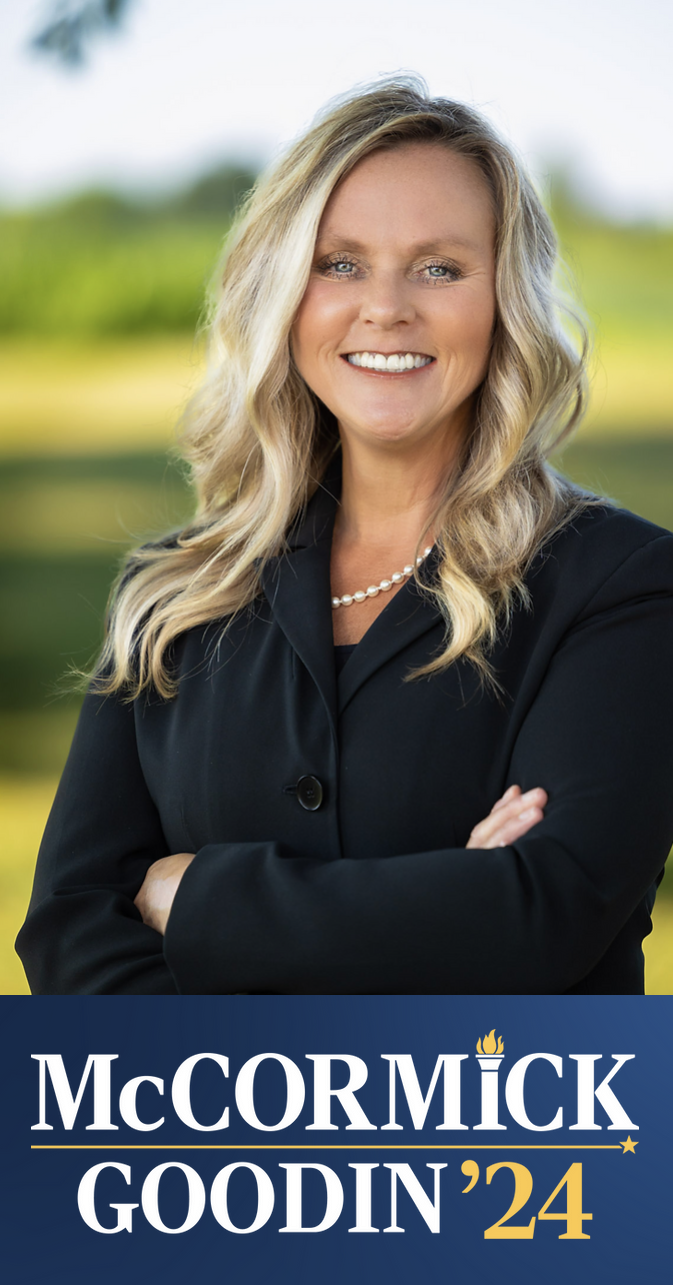
JENNIFER MCCORMICK FOR GOVERNOR

The 2024 election in Indiana will determine the direction of public education for the next two to four years. Republicans have controlled the governor's office and both of Indiana's legislative houses for the last two decades. Each election season they promise to "fix" the public schools with privatization schemes (vouchers and charters) and laws stripping autonomy and power from the state's experts in education -- its teachers.

It's ironic then, that Republican Gubernatorial candidate (and current U.S. Senator) Mike Braun is still talking about "fixing" the schools.

We have given the Republicans enough time. Give Democrats a chance at the Governor's office and legislature. Support public education in Indiana.

Teachers should lead charge for McCormick, Wells

From School Matters
Twelve years ago, Hoosier teachers and their families and friends rose up and got a Democrat elected to a state office, the last time that’s happened. Outraged at the policies and rhetoric of Republican Tony Bennett, Hoosiers ousted him as superintendent of public instruction and chose Glenda Ritz.

The same thing should happen on Nov. 5. Mike Braun, the GOP candidate for governor, and Todd Rokita, the Republican seeking re-election as attorney general, would be much worse for public schools and educators than Bennett ever was.

Braun, a current U.S. senator and former state legislator, just doesn’t seem interested in education. He’s outsourced his policy proposals to a political action committee headed by conservative super-lawyer Jim Bopp. His top plan is to “expand school choice,” extending public funding of private school tuition to the very wealthiest families.

Braun claims to want to raise teacher salaries, but he also wants tax cuts that will make that all but impossible. Look closely at his agenda, and you’ll see he wants to increase funding for some schools and teachers, those that he deems effective. In other words, teachers and public schools will fight each other – and private schools – for what money is available.

In his TV ads, Braun says he will “fix the schools” – an extraordinary admission that Indiana schools are broken after 14 years of Republican rule and one supposed fix after another.

The Indiana GOP's forgotten word

From John Crull in the Statehouse File dot com
At the last Indiana gubernatorial debate, Libertarian candidate Donald Rainwater made a telling point.

The Republican candidate, U.S. Sen. Mike Braun, R-Indiana, had tried to blame Hoosier Democrats—and Democratic standard-bearer Jennifer McCormick in particular—for the defects in state public policy.

Rainwater replied by saying, in effect, “That’s rich.”

Then he pointed out that Republicans such as Braun have occupied the governor’s office for the past 20 years. The GOP has owned a supermajority in the Indiana House of Representatives for the past decade and the same supremacy in the Indiana Senate for even longer.

NATIONAL ELECTION

On November 5, vote for the well-being of children

From the Network for Public Education
Earlier this year, the Board of Directors of the Network for Public Education Action endorsed Kamala Harris for President and Tim Walz for Vice President of the United States.

Our endorsement was as much a rejection of Donald J. Trump as it was an embrace of the Harris/Walz pro-public education ticket. There can be no romanticization of the Trump years. His choice of Betsy DeVos as Secretary of Education, a zealot for private school vouchers, damaged the public’s faith and allegiance to public schools. They sought to slash federal education funding in every budget proposal. Ms. DeVos has made it clear she would be eager to return to the job to dismantle the Department of Education and public education itself.

Brookings Institution: What Project 2025 Means for Education

Just say "NO!" to Project 2025.

From Diane Ravitch
A group of scholars at the Brookings Institution analyzed Project 2025’s proposals for education and their implications.

What struck me as most bizarre about Project 2025 was not its efforts to block-grant all federal funding of schools, nor its emphasis on privatization of K-12 schools. (Block-granting means assigning federal funding to states as a lump sum, no strings attached, no federal oversight).

No, what amazed me most was the split screen between the report’s desire to hand all power over education to states and communities, and the report’s insistence on preserving enough power to punish LGBT students, especially trans students and to impose other far-right mandates, like stamping out critical race theory. You know, either you let the states decide or you don’t. The report wants it both ways.

It’s also astonishing to realize that the insidious goal of the report is eventually abandon federal funding of education. That’s a huge step backward, taking us to 1965, before Congress passed the Elementary and Secondary Education Act, whose purpose was to raise spending in impoverished communities. I essence, P2025 says that decades of pursuing equitable funding “didn’t work,” so let’s abandon the goal and the spending.

LOCAL NEWS

Fort Wayne Community Schools board advances $12 million in various projects

From the Fort Wayne Journal Gazette**
About $12 million in various Fort Wayne Community Schools capital improvements – including upgrades at three high school auditoriums – advanced this week with board approval of the projects’ architect/engineer...

..The board didn’t elaborate Monday on the proposed work, which was described in meeting documents as eight projects addressing building envelopes, general building systems and mechanical and electrical needs, among others.

Together, the construction contracts are estimated to cost nearly $12 million, with individual projects ranging from $271,300 for flooring at unspecified locations to $2.48 million for heating, ventilation and air conditioning improvements at the Helen P. Brown Natatorium.
**Note: The Fort Wayne Journal Gazette is behind a paywall. Digital access, home delivery, or both are available with a subscription. Staying informed is essential; one way to do that is to support your local newspaper. For subscription information, go to fortwayne.com/subscriptions/ [NOTE: NEIFPE has no financial ties to the Fort Wayne Journal Gazette]

Note: NEIFPE's In Case You Missed It is posted by the end of the day every Monday except after holiday weekends or as otherwise noted.

###
Monday, September 30, 2024

In Case You Missed It – September 30, 2024

Here are links to last week's articles receiving the most attention on NEIFPE's social media accounts. Keep up with what's going on, what's being discussed, and what's happening with public education.

Be sure to enter your email address in the Follow Us By Email box in the right-hand column of our blog page to be informed when our blog posts are published.
QUOTE OF THE WEEK

"When lawmakers consider expanding or creating private school voucher programs, their projections often dramatically underestimate the actual costs. They sell a false promise that vouchers will save money, do not budget adequate funds, and then wind up with million dollar shortfalls, necessitating cuts from public education and even tax increases… First, it costs less than the average expenditure to educate some students...The students who are most expensive to educate...tend to remain in public schools, because they cannot find a private voucher school willing to accept them. Yet, because of the voucher program, the state now pays tuition for private school students who never attended public schools...This all adds up to more, not less spending." -- from the National Coalition for Public Education, quoted in Voucher Programs Prove Again and Again What We Already Know


THE COST OF VOUCHERS

Voucher Programs Prove Again and Again What We Already Know

Voucher costs in Indiana...two-thirds of which go to students who never attended public schools and who can afford the cost of a private education...are approaching half a billion dollars a year. That money goes to mostly religious schools even though the Indiana Constitution states (in Article 1, Section 6) that...

"No money shall be drawn from the treasury, for the benefit of any religious or theological institution."

Note also that the state allows voucher accepting schools to reject students on the basis of "religion, disability, sexual orientation, gender identity, or academic ability."

From Jan Resseger
As we all know, state legislators across the country originally justified passing small, experimental voucher programs as a way to help poor kids escape from their so-called “failing” public schools. A year ago, at the end of The School Voucher Illusion: Exposing the Pretense of Equity, an authoritative collection of essays by experts on school vouchers, here is what the editors conclude instead:

“As currently structured, voucher policies in the United States are unlikely to help the students they claim to support. Instead, these policies have often served as a facade for the far less popular reality of funding relatively advantaged (and largely White) families, many of whom already attended—or would attend—private schools without subsidies. Although vouchers are presented as helping parents choose schools, often the arrangements permit the private schools to do the choosing…


In states like Ohio, where the legislature made vouchers universal by raising the income eligibility level to 450 percent of the federal family poverty level (with partial vouchers for even wealthier families), the state simply started paying the private school tuition bills that families had been undertaking for generations. In other states like Arizona, the state has been awarding Education Savings Account vouchers for the private educational expenses of children who are not enrolled in public schools, whether to pay for private school tuition vouchers or homeschooling costs...Here is the primary fiscal problem of all these programs, according to Josh Cowen, a professor of education policy at Michigan State University: “It’s not that there is a mass exodus from public to private schools… (W)hat these states are doing is obligating themselves to expenditures that were previously borne by the private sector.”

Indiana is a classic example of a state that has made its old fashioned private school tuition voucher program universally available. This week for Chalkbeat Indiana, Aleksandra Appleton and Mia Hollie report: “Voucher use has soared in Indiana since lawmakers made nearly every student in the state eligible, with more than 90% of students at more than half of all participating schools using a voucher during the 2023-24 school year…. That was true in just 11% of private schools before lawmakers made the Indiana Choice Scholarship available to nearly every student in Indiana by relaxing income eligibility and removing other requirements to participate…. Since lawmakers approved the expansion last year, the number of schools where 100% of students receive a voucher rose from just one in 2022-23 to 28 in 2023-24. Last year, in 178 of the 349 private schools that accept vouchers, more than 90% of students enrolled use a voucher to pay for tuition.” The program cost the state of Indiana $439 million for the 2023-24 school year.

Peter Greene: Why Sex Scandals Matter

From Diane Ravitch
...How could someone who had inveighed against “the woke agenda” and urged the adoption of vouchers to escape that agenda have done what the rumors said? I didn’t think I would touch it with a ten-foot pole. I don’t care what others do in their private lives. I believe in Tim Walz’s credo: “Mind your own damn business.” But I was troubled by the hypocrisy.

Corey worked for Betsy DeVos and was her leading salesman for vouchers. DeVos and her family are rabidly anti-LGBT. For years, they have funded anti-LGBT organizations like the Family Research Council, Focus on the Family, and Alliance Defending Freedom. Yet the rumor was that Corey had performed in gay porn, and there were many videos online to prove it.

One of the alleged virtues of vouchers was that they enable students to escape pedophile teachers and to attend schools that ban LGBT students. I couldn’t make sense of these two lives.

Peter Greene wrote about Corey’s apparent double life.
NEWS FROM THE NETWORK FOR PUBLIC EDUCATION (NPE)

Network for Public Education launches the National Center for Charter School Accountability

The National Center for Charter School Accountability provides research and recommendations on increasing transparency and accountability for charter schools.

From The Network for Public Education and Diane Ravitch
Having spent years covering charter scandals and seeking accountability for charters, the Network for Public Education realized that it could not compete with the high-powered corporate public relations firms representing the charter school industry. So, we decided, the only way to get accountability is to do it ourselves.

So NPE established the National Center on Charter School Accountability, which will produce reviews of charter school performance.

Network for Public Education 2025 National Conference

From The Network for Public Education
Registration is now open for NPE/NPE Action’s 2025 national conference, Public Schools: Where All Students Are Welcome. We can’t wait to see you in Columbus, Ohio, on April 5-6!

Stay tuned for more info about keynote speakers and session topics.

BANNED BOOKS WEEK

Banned books week is over...but book banning continues.

It's Banned Books Week

NOTE: A Facebook account is required to access this article.

From Michael B. Shaffer on Facebook
So here we are in the third day of Banned Books Week 2024, and I want to give a huge shout-out to all of the great teachers in Indiana who have resisted the mandate to clear their shelves of books that one person might find objectionable, in favor of keeping the books that speak to the hearts of kids. What those who want to restrict access to the kinds of books students want, do not realize is that if we are serious about literacy, we must have the books that mean something, books that students want to read, books that students will read!

When we ban books, or sit still while it happens, we are not only giving up a precious freedom, we are also depriving our students the ability to do what my friend Alan Boyko, the retired President of Scholastic Book Fairs, used to say that students need the ability to "find themselves in a book, and then lose themselves in that book."

Banned Books Week

From American Library Association
In a time of deep political divides, library staff across the country are facing an overwhelming number of book ban attempts. In 2023 alone, the American Library Association's Office for Intellectual Freedom tracked 1,247 efforts to censor books and other resources in libraries—an increase of 65% from the year before. In total, 4,240 unique book titles were targeted, many of them representing LGBTQIA+ and BIPOC voices and experiences.

As we gear up for Banned Books Week 2024 (September 22-28), with the theme "Freed Between the Lines," we’re reminded how much is at stake. The freedom to explore new ideas and different perspectives is under threat, and book bans don’t just restrict access to stories—they undermine our rights. Now is the time to come together, celebrate the right to read, and find freedom in the pages of a book. Let’s be "Freed Between the Lines."

LOCAL NEWS

Wells County school district scores Red Wagon status

From the Fort Wayne Journal Gazette**
The Bluffton-Harrison Metropolitan School District has once again earned Red Wagon Corporation status for its fundraising efforts for Riley Hospital for Children, a news release said.

Districts receive this designation when their fundraising equals $1 per student per building in an academic year, the release said. State enrollment data shows Bluffton-Harrison had about 1,800 students last year – the year its recognition honors.

The Wells County school system has contributed more than $300,000 to the Indianapolis-based children’s hospital since 1993, the release said. It indicated each school annually hosts special events – including dress-up days, boat races and an auction – to support the cause.

Note: The Fort Wayne Journal Gazette is behind a paywall. Digital access, home delivery, or both are available with a subscription. Staying informed is essential; one way to do that is to support your local newspaper. For subscription information, go to fortwayne.com/subscriptions/ [NOTE: NEIFPE has no financial ties to the Fort Wayne Journal Gazette]

Note: NEIFPE's In Case You Missed It is posted by the end of the day every Monday except after holiday weekends or as otherwise noted.

###

Monday, September 23, 2024

In Case You Missed It – September 23, 2024

Here are links to last week's articles receiving the most attention on NEIFPE's social media accounts. Keep up with what's going on, what's being discussed, and what's happening with public education.

Be sure to enter your email address in the Follow Us By Email box in the right-hand column of our blog page to be informed when our blog posts are published.
QUOTE OF THE WEEK

"...the teacher pay penalty is one more symptom of two issues that are fundamental to so many of our education debates-- the desire to avoid paying one cent more than we absolutely have to for public school funding, and the desire not to pay taxes to educate Those Peoples' Children. Both of those desires are getting full expression in the privatization movement." -- Peter Greene in Does Teacher Pay Matter?

TEACHER PAY

Does Teacher Pay Matter?

It does. But teacher pay alone is not enough.

From Curmudgucation
...the teacher pay penalty-- the gap between teacher pay and pay for similarly-educated professionals-- has been growing over the last three decades to reach an all-time high. The gappage appears to have accelerated in the mid-90s.

Some, like the folks at Reason magazine...argue that it's not so bad because blah blah blah shuffling numbers around. But considering averages and other benefits does not improve the picture.

Fernandez also notes the other perennial argument against paying teachers well-- teachers don't care about money and they aren't motivated by it and boy do my old fart hackles raise at every similar argument posted by someone who also posts that damned stupid "Teachers do it for the outcome, not the income" meme.

Teaching is not supposed to be some act of self-sacrifice, immolating yourself so that you can illuminate the lives of students. For one thing, it's not sustainable. It's not even functional, because (as they don't tell you in teacher school), you can give every last atom of yourself and it won't be enough. You will burn out early, and--bitterest of ironies--you won't even be very good at it, because what can a person who has no life of their own teach students about life?

Don't get me wrong-- teaching is absolutely a noble and supremely worthwhile profession of service. But that doesn't mean teachers shouldn't be paid well.

DON'T ELIMINATE THE USDOE

Eliminating the Education Dept. Would Destroy Public Schools

Carol Corbett Burris is the Executive Director of the Network for Public Education.

From Carol Burris in The Daily Courier (Connellsville, PA)
Since President Jimmy Carter created the modern Department of Education in 1979, the department has faced continuous calls for its abolition. This threat has persisted through Republican administrations, from Ronald Reagan to Donald Trump.

Never following through on their campaign promises to abolish it, some presidents have often used the department to push agendas hostile to public schools. Reagan’s department brought exaggerated claims of doom and gloom in A Nation at Risk, denigrating our public schools with a still-existing narrative. And Trump’s secretary of education, Betsy DeVos, did little to hide her disdain for public schools, calling for abolishing the department she ran.

However, no matter how often presidents promise to ax it, ending the department would require an act of Congress. While there is little reason to believe that Congress would agree, given the volatility of government, one can never be sure. At the least, the promise to abolish the department is a rallying cry and a dominant feature of the right-wing agenda to end what it calls “government schools.”

That right-wing agenda, reflected in Project 2025 and to a more limited extent in the Republican platform, is to eliminate democratically governed public schools. It emanates from the vision of Milton Friedman, who believed that public school systems should be replaced by a patchwork of private, home school, religious and semi-public schools like charter schools. Parents would receive funds in a “savings account” to shop among them. Proposers of this voucher-like funding scheme know that public school systems could not survive without reliable systemic funding streams. The remnant of public schools would serve the children no private or charter school wants.
PRIVATIZATION

Why have vouchers "failed to improve test scores or educational outcomes?" Because the most pressing problem in the United States when it comes to education is child poverty.

“…we are likely to find that the problems of housing and education, instead of preceding the elimination of poverty, will themselves be affected if poverty is first abolished.” – Martin Luther King Jr., The Southern Christian Leadership Conference Presidential Address, 8/16/1967

Public School Successes

From Sheila Kennedy
...Some twenty or so years ago, privatization enthusiasts had a standard answer for every perceived government malfunction: let the private sector do it! This approach had multiple, significant drawbacks, and as those drawbacks became too obvious and costly to ignore, the early enthusiasm faded–except in education, where the “market can solve all problems” ideologues were joined by rightwing activists pursuing a vendetta against teachers’ unions, and by religious folks who chafed at separation of church and state and wanted a First Amendment “work-around.”

“How do you improve the performance of the nation’s public schools?” was–and remains– a fair question. Urban school districts, in particular, face multiple challenges, and when the question of how to meet those challenges became an everyday topic following publication of A Nation at Risk, political figures offered two wildly competing suggestions: “the market can solve everything” ideologues insisted that competition from private schools would incentivize public school improvement; supporters of public education lobbied for additional resources, to be deployed in line with reforms suggested by new academic research.

As we know, vouchers won the political debate. It was a disarmingly simple fix, championed by people who not-so-coincidentally stood to gain from it. Unfortunately, however, despite the promises, vouchers have failed to improve test scores or educational outcomes...

The fight over vouchers is an existential battle for America’s public schools

From Linda Blackford in The Charlotte Observer
Advocates of “school choice,” or using public funds to pay for private school, often call it the civil rights issue of our time.

That’s a special kind of gaslighting, not only because numerous studies have shown how little academic progress students make with school vouchers, but also because the school choice movement was actually born out of the horror that parents and politicians had toward the 1954 Brown v. Board decision that would end legal segregation in schools.

That resistance was bolstered by Nobel prize-winning economist Milton Friedman’s book “The Role of Government in Education,” which objected to any government oversight of any kind, and first suggested some kind of tax code changes to subsidize private education.

“It was this idea — what became school vouchers — that allowed segregationists to frame a racist response to the Court’s desegregation orders as an issue of markets and what we would call today parental choice,” writes Josh Cowen in his timely new book, “The Privateers: How Billionaires Created a Culture War and Sold School Vouchers.”

The book is a fascinating history of how the school choice movement began in segregation, then caught steam as a way to help poor and minority students in failing systems.

WHAT DO PARENTS KNOW?

What Do Parents Know About Public Education?

The most important facet of education is the relationship between the student and the teacher. The second most important is the relationship between the teacher and the student's parents/guardians. Communication is important.

From Nancy Flanagan in Teacher in a Strange Land
Kappan recently took a look at American adults’ knowledge of public schools:

Our findings shed light on a key question: What do adults know about U.S. education? Specifically, what do they know about what is taught, who makes decisions, the role of parents, and the belief systems driving education policy? Our results have important implications for how we might support children and improve the education system.

No kidding, Sherlock.

The survey results would come as no surprise to veteran public school educators: Half of adults don’t know what is/is not taught in their local school. Most are unsure about who’s making curricular decisions. Most are unclear on the impact of privatization on their public schools. Some of the surveyed issues (Critical Race Theory and learning loss) revealed a complete lack of understanding.

Least surprising finding: Adults’ perceptions of what’s happening in public schools mainly come from their own personal experiences (and this includes people with no K-12 children in the home). The percentage of people who read books or articles, watch cable news or videos, or listen to podcasts about education is small. People who get their education news from newspapers? Fifteen percent. Second highest source of ed news? Social media.

That’s a lot of guesswork, memes and faulty memories.

FORT WAYNE AND INDIANA

The challenge of chronic absenteeism

From the Fort Wayne Journal Gazette**
Indiana’s battle against chronic absenteeism mirrors a broader national trend that has proven difficult to reverse in the post-pandemic era. Chronic absenteeism is the rate of students absent from school for any reason for at least 10% of the school year.

While the Indiana Department of Education noted earlier this month that the state made progress last school year, with the absenteeism rate falling to 17.8%, the improvement still leaves more than 1 in 6 students habitually missing school.

Allen County’s chronic absentee rates are mixed. Southwest Allen County Schools, for example, posted an impressive absenteeism rate of less than 1%, the lowest the district has seen in more than a decade. By contrast, Fort Wayne Community Schools and East Allen County Schools struggled with rates higher than 20%. However, FWCS did see modest improvement.

Core change: With deadline looming, state must move rapidly on new diploma requirements

By Indiana State Representatives Phil GiaQuinta and Kyle Miller in the Fort Wayne Journal Gazette**
Indiana is in the middle of redesigning its high school diploma requirements. Given the importance of getting this right, the Indiana State Board of Education and Department of Education are required to engage in a public comment period to hear from Hoosiers about their feedback on the proposal.

When the first draft came out earlier this year, there was widespread outcry from parents, educators and our state universities about how the proposal focused too much on nebulous work-based learning and external internship requirements and would not adequately prepare students to meet admissions requirements to Purdue, Indiana University and other in-state institutions.

Thankfully, the department of education and board of education heard our concerns, and the second draft, which has been unveiled but not yet fleshed out in the form of a draft agency “rule,” is a marked improvement. However, we believe it can improve more.

That’s why we hosted a town hall on the redesign this week and invited local education leaders to join us to discuss the plan’s promises, pitfalls and remaining questions.


JOIN US

An Evening with Jennifer McCormick

NEIFPE is proud to co-sponsor this event featuring Jennifer McCormick, candidate for Governor of Indiana. We hope you can attend.

Click HERE to register for the September 25th event:


**Note: The Fort Wayne Journal Gazette is behind a paywall. Digital access, home delivery, or both are available with a subscription. Staying informed is essential; one way to do that is to support your local newspaper. For subscription information, go to fortwayne.com/subscriptions/ [NOTE: NEIFPE has no financial ties to the Fort Wayne Journal Gazette]

Note: NEIFPE's In Case You Missed It is posted by the end of the day every Monday except after holiday weekends or as otherwise noted.

###

Monday, January 29, 2024

In Case You Missed It – January 29, 2024

Here are links to last week's articles receiving the most attention on NEIFPE's social media accounts. Keep up with what's going on, what's being discussed, and what's happening with public education.

Be sure to enter your email address in the Follow Us By Email box in the right-hand column of our blog page to be informed when our blog posts are published.
QUOTE OF THE WEEK

"'The primary role of chaplains is to provide pastoral or religious counseling to people in spiritual need,' the American Civil Liberties Union of Indiana said in a statement. 'Allowing them to assume official positions — whether paid or voluntary — in public schools will create an environment ripe for religious coercion and indoctrination of students.'

"...Chaplains are trained and certified to provide spiritual and emotional support. Lawmakers should leave mental health care services to the professional school counselors qualified to do that job."
-- Editorial in the Fort Wayne Journal Gazette**

SCHOOL CHAPLAINS INSTEAD OF COUNSELORS?

Not content with diverting tax dollars meant for public schools to religious and private schools, Indiana Republicans are now trying to open the door to religious proselytization in public schools. Write or call your local legislators and tell them NO! to chaplains in public schools.

Bills to employ school chaplains, allow religious instruction move forward in Indiana legislature

From Indiana Capital Chronicle
Lines between church and state blurred at the Indiana Statehouse on Wednesday as lawmakers gave the go-ahead for two education bills that seek to increase students’ access to faith leaders and religious instruction.

One proposal, House Bill 1137, would require schools to approve parental requests for students to leave school during the day for religious instruction. A separate measure, Senate Bill 50, could bring paid chaplains into Indiana’s public schools. Both bills advanced from their assigned committees and now head to the respective chambers for further consideration.

Faith-based school chaplains would test First Amendment

From the Fort Wayne Journal Gazette**
Indiana’s student-to-counselor ratio ranks worst in the nation, according to the 2023 State of the Indiana Girl Report published in September.

Two bills introduced in the General Assembly — one in the House, the other in the Senate — seek to fill the counselor void, but critics say their solution is unconstitutional and could end up further harming some children’s emotional and mental health.

House Bill 1192 and Senate Bill 50 would allow public and charter schools to employ chaplains, or approve them as volunteers, to counsel students and staff. Though school chaplains wouldn’t be required to divulge privileged or confidential communications, the bills are written to invite skepticism as to the ultimate goal of allowing pastoral care.

The Senate version, authored by Sen. Stacey Donato, R-Logansport, says a chaplain may only provide secular assistance, unless the student (or their parent or guardian) gives consent for religious advice, guidance and support services. The House proposal of Rep. Doug Miller, R-Elkhart, does not include such language.

“The primary role of chaplains is to provide pastoral or religious counseling to people in spiritual need,” the American Civil Liberties Union of Indiana said in a statement. “Allowing them to assume official positions — whether paid or voluntary — in public schools will create an environment ripe for religious coercion and indoctrination of students.”

Without any oversight to prevent chaplains from imposing their own religious viewpoint on the children they counsel, HB 1192 and SB 50 could undermine the religious freedom of students of all faiths and no faith.

KINDERGARTEN FOR KINDERGARTENERS!

Nancy Bailey: It’s Time to Take Back Kindergarten!

Play is children's work...for better health, better learning, and happier children!

From Diane Ravitch
Nancy Bailey is a retired educator who has seen the damage wrought by No Child Left Behind, Race to the Top, and the nonsensical grandchild called Every Student Succeeds Act. We can say now with hindsight that many children were left behind, we did not make it to the Top, and every student is not succeeding.

Nancy knows that the greatest casualty of these ruinous federal laws and programs are young children. Instead of playing, instead of socializing, instead of living their best lives as children, they are being prepared to take tests. This is nuts!

Nancy explains in this post (originally from 2021 but nothing has changed) why the status quo is harmful to small children and how it should change...
INDIANA POLITICS

NPE Action endorses Jennifer McCormick for Governor of Indiana.

Jennifer McCormick, former Indiana State Superintendent of Public Instruction, gets NPE-Action's endorsement for Indiana Governor.

From the Network for Public Education Action
The Network for Public Education Action gives its strongest endorsement to Jennifer McCormick for Governor of Indiana. Jennifer is a lifelong educator and native of Indiana. 

Jennifer is a former teacher, principal and school superintendent. She served as State Superintendent of Public Instruction from 2017 to 2021. During that time she took on the legislature, eventually changing political parties. 

Jennifer told us that as governor, she “will focus on aggressively funding the expansion of quality and affordable childcare as well as universal PreK so all children have the foundational skills necessary to succeed in the K12 environment. She said she “will appoint a Secretary of Education and members of the state board of education that understand the ever-evolving needs of Indiana students and implement programs that develop the skills critical to thrive in a changing world and prepare Hoosier kids for careers, college, and life after high school.”

FORT WAYNE AREA NEWS

We have lots of news from Allen County and Fort Wayne this week. See the link to subscribe to the Fort Wayne Journal Gazette at the end of this post.

Implications are imposing for education overhaul bills

From the Fort Wayne Journal Gazette**
Lawmakers are throwing everything at the wall to see what sticks in their quest to educate more Hoosiers — whether through job training or traditional college.

But some of the discussions carry concerning consequences. Two major proposals this year deserve in-depth examination that a short session likely can’t provide.

First up is an effort by House Republicans to allow key higher education scholarships and grants to be used for job training instead of toward full-time college credits.

The legislation impacts the 21st Century Scholars program, Freedom of Choice Grant and the Higher Education Award. Collectively, the current budget includes about $330 million annually in state funding for that aid.

Each program has slightly different rules, but generally there are GPA and credit completion requirements. And all specify that students must be attending a two-year or four-year program on a full-time basis...

...The second major proposal is Senate Bill 8, which will blur the line between two- and four-year degree institutions that was set up 20 years ago.

At that time, under Gov. Mitch Daniels, a study by the Government Efficiency Commission recommended establishing Ivy Tech as a true community college system, and phasing out associate degree programs at other campuses.

That’s because it would be cheaper to earn an associate degree at Ivy Tech the first two years then transfer to a traditional four-year school for bachelor’s and graduate degrees.

Indiana education secretary says schools can get started on proposed literacy initiatives

From the Fort Wayne Journal Gazette**
Will Hoosier schools have the funds to launch new literacy mandates proposed by state lawmakers? Indiana Secretary of Education Katie Jenner this week maintained they do – at least for now.

She said Thursday the Indiana Department of Education has enough holdover dollars to roll out additional reading tests and expanded summer school options laid out in Senate Bill 1, which is under consideration at the Statehouse.

And more state funds are expected to be requested in the 2025 budget session.
FWCS to offer employees child care stipend with $750,000 grant

From the Fort Wayne Journal Gazette**
Fort Wayne Community Schools will use $750,000 in state funding to help employees pay for child care.

The program’s implementation should provide the district with information it doesn’t have about its 4,050 workers, said Mitch Sheppard, philanthropy director.

“If you were to say, ‘What do our employees need? How severe is the child care need?’ We really don’t know,” she told the school board Monday.

The one-time grant from the Family and Social Services Administration will be distributed on a reimbursement basis to employees using state-licensed child care facilities. The program will launch as soon as possible, Sheppard said.

Remote learning challenges: What school officials in Allen County are considering

From WANE.com
Area school district officials told WANE 15 Tuesday they are learning as they go as winter weather challenges have led to more remote learning days.

WANE 15 spoke with Mark Daniel, superintendent of Fort Wayne Community Schools (FWCS), and Park Ginder, superintendent of Southwest Allen County Schools (SACS), and Tamyra Kelly, the Public Information Officer at East Allen County Schools (EACS) to see how remote learning days have gone so far...

...At FWCS, Daniel said there’s a lot of room for improvement. He said they want students more engaged and interactive.

“Remote learning days are not the same as being in school in person,” Daniel said. “So we know that we’re trying to be flexible, but at the same time, we need our students and our parents and our staff to fully engage.”

Each school year, each district gets 3 e-learning days where students work independently, but remote learning days that require students to Zoom with a teacher are unlimited.

Daniel said if things don’t improve, there could be changes.

Northwest Allen County Schools sees challenges due to property tax cap

From WANE.com
Northwest Allen County Schools (NACS) is seeing the effects of a property tax cap passed by the Indiana General Assembly in 2023.

House Bill 1499 capped property taxes at 4% to provide relief for homeowners as home values were skyrocketing over the past few years. That cap has resulted in less money than anticipated being funneled into Indiana schools. Most districts are faring well because their growth in student population is stable. But NACS is an outlier, said Superintendent Wayne Barker.

According to Barker, the rapidly growing district is losing out on around $1.2 million in tax money over two years due to this cap. As the more people move into the district limits, the district needs more buses, drivers, faculty and staff. All of that requires money. This means other projects will have to wait, Barker said.

FWCS board accepts $500,000 for $14.7 million early learning center, more fundraising expected

From the Fort Wayne Journal Gazette**
A formal campaign should be announced soon for a $14.7 million early learning center benefiting teen parents in Fort Wayne Community Schools, the district’s philanthropy director said.

About $4 million in contracts and soft commitments has been raised so far, Mitch Sheppard told the school board Monday while presenting a $500,000 Early Learning Indiana grant for approval.

“We’re bringing this one forward because the donor has asked us to get the grant on the books,” she said. “You’ll be hearing a lot more about (the project) soon as we’ll have some donations of land and significant additional fundraising to back it up.”

Southwest Allen County Schools receives Juul settlement payments

From the Fort Wayne Journal Gazette**
Southwest Allen County Schools’ participation in a nationwide lawsuit against electronic cigarette giant Juul Labs Inc. has started paying off.

The district’s nine traditional schools received a collective $43,193 boost from the settlement’s first installment. The school board approved the distributions Tuesday as part of its consent agenda.

SACS, Fort Wayne Community Schools, East Allen County Schools and Northwest Allen County Schools were among entities nationwide that accused Juul of designing and marketing its products to appeal to youth.

Fort Wayne Community Schools to limit students' access to cellphones

From the Fort Wayne Journal Gazette**
Fort Wayne Community Schools leaders agreed Monday to spend $120,864 on equipment limiting students’ access to their cellphones during the school day.

The district will pilot the use of magnetic lock-and-release student phone pouches at four middle and high schools beginning this academic year, although the exact timing is unknown, said Jack Byrd, chief systems officer.

The sealed magnetic devices will allow students to keep their phones in their possession throughout the school day, but the phones will be inaccessible until they can be unlocked by specialized magnets.

**Note: The Fort Wayne Journal Gazette is behind a paywall. Digital access, home delivery, or both are available with a subscription. Staying informed is essential; one way to do that is to support your local newspaper. For subscription information, go to fortwayne.com/subscriptions/ [NOTE: NEIFPE has no financial ties to the Fort Wayne Journal Gazette]

Note: NEIFPE's In Case You Missed It is posted by the end of the day every Monday except after holiday weekends or as otherwise noted.

###

Monday, January 8, 2024

In Case You Missed It – January 8, 2024

Here are links to last week's articles receiving the most attention on NEIFPE's social media accounts. Keep up with what's going on, what's being discussed, and what's happening with public education.

Be sure to enter your email address in the Follow Us By Email box in the right-hand column of our blog page to be informed when our blog posts are published.

Happy New Year! and welcome back to NEIFPE's In Case You Missed It. This week we bring you more than a dozen articles that received wide attention on our social media platforms over the recent winter holidays. Note that the source for more than half the articles is the Fort Wayne Journal Gazette. To support this vital source of local news see the link at the end of this post.
QUOTE OF THE WEEK

"Universal ESA vouchers threaten to accomplish in Arizona exactly what they were designed to do: dismantle public education. Arizona would be wise to follow the nation in learning from our mistakes — before it’s too late." -- Beth Lewis and Dr. Sharon Kirsch in One year in, Arizona’s universal school vouchers are a cautionary tale for the rest of the nation.

VOUCHERS

Josh Cowen: 2023 Was a Banner Year for Vouchers, Censorship, and Attacks on LGBT Kids

From Diane Ravitch
Writing in the Washington Spectator, veteran voucher researcher Josh Cowen reports that 2023 was a good year for some very bad ideas, many supported by prominent rightwingers and Dark Money, whose sources are hidden.

#SCHOOLVOUCHERSCAM$

The Network for Public Education's School Voucher Scam$ page, which began in September of 2023 in response to the recent flood of irresponsible universal voucher programs includes a sorting feature that allows you to search charter scandals by state and by 12 categories. You can also search by keyword.

From the Network for Public Education


One More Time…

From Sheila Kennedy
Arizona, like Indiana, has a legislature dominated by Republicans, and those legislators sold the concept of universal vouchers by insisting (as they did in Indiana) that it would help low-income students. They also insisted that the additional cost to the state would be negligible.

As the paper reports, just one year into what it calls “this failed experiment,” it has become apparent that universal ESA vouchers are welfare for the wealthy. They are also on a path that will “devastate the state’s budget and lead to school closures, teacher layoffs, and eventually cuts to services like firefighters, health care, roads and more.”

CHARTERS

South Carolina: Moms for Liberty Will Open Their Own Charter School in Affluent Neighborhood

From Diane Ravitch
Steve Bailey, an opinion writer for the Charleston Post and Courier, wrote recently about the new charter school that will open in an affluent neighborhood in Charleston. It will use the Hillsdale College curriculum. The Moms predict it will be the highest performing school in the area. With the freedom to choose its students and to oust the ones who are problematic, it’s sure to get high gest scores.

INDIANA NEWS

Indiana public schools' learning loss recovery slow, uneven: study

From the Fort Wayne Journal Gazette**
Indiana’s public schools continue to experience the effects of pandemic-related learning loss, with recovery happening at a slow and uneven pace, according to a new study by Ball State University researchers.

“We were surprised at the persistence of learning loss since COVID,” researcher Michael Hicks said in a statement. “Recovery in test scores has been modest across the state, with little to suggest a full recovery is on the way.”

Indiana joins new summer food program for school children

From the Fort Wayne Journal Gazette**
Last month, the Indiana Family and Social Services Administration’s Division of Family Resources notified the federal Department of Agriculture of its intent to participate in the 2024 Summer Electronic Benefits Transfer for Children program.

'23 graduation rate is a testament to resilience in youth

From the Fort Wayne Journal Gazette**
As the Indiana General Assembly seeks to remake Hoosier high schools, it would be good to listen closely to educators on what’s promoting or hindering success then work toward prompting holistic strategies rather than punitive policy.

As for the graduates of 2023 — with a nod to educators and families — here’s a belated congratulations on showing perseverance during a highly anxious time in history.

These are the major education topics Indiana lawmakers expect to focus on in 2024

Topics include improving third-grade literacy, tackling chronic absenteeism, revisiting career readiness, targeting cell phones, and cracking down on antisemitism.

From the Indiana Capital Chronicle
Although Indiana lawmakers maintain the 2024 legislative session will be quicker, quieter and “noncontroversial,” there’s no shortage of critical — even touchy — education-related topics expected to be prioritized in the coming months.

Jim Banks And The GOP War On Education…

From Sheila Kennedy
Jim Banks–aka “Focus on the Family’s Man in Washington“–wants to be the next U.S. Senator from Indiana. During his tenure in the House, he has made most of his agenda very, very clear: a federal ban on abortion with no exceptions; no recognition of, or help for, trans children; no restrictions on gun ownership; no affirmative action or other recognition of the effects of racial disparities (he wants to ban DEI programs); no funding for Ukraine, and–as this last bit of news confirms– a constant war on education.

Why aren’t Hoosier kids showing up to school — and what can Indiana lawmakers do to help?

From the Indiana Capital Chronicle
Indiana lawmakers are adamant that moving bills to help improve student literacy and bolster career readiness is high-priority in the upcoming legislative session. But their efforts could end up fruitless if the state can’t solve another issue plaguing schools: Hoosier kids aren’t showing up to the classroom.

FORT WAYNE AREA NEWS

550 Whitley County children sign up for free books through expanding program

From the Fort Wayne Journal Gazette**
More than 500 Whitley County children will receive a book every month until they turn 5 through a program that’s expanding statewide, the United Way of Whitley & Kosciusko Counties announced in a news release Wednesday.

The organization is an affiliate for Dolly Parton’s Imagination Library, a book-gifting program for children younger than 5, regardless of family income. The release said the books grow with the child, progressing from board books to picture books to full-length stories.

Fort Wayne Community Schools prepares for next major renovation

From the Fort Wayne Journal Gazette**
Fort Wayne Community Schools recently checked off an initial step toward its 25th major renovation.

SACS considers hiring speaker to advance work in creating culture of belonging, understanding

From the Fort Wayne Journal Gazette**
Southwest Allen County Schools’ relationship with the Foundation Against Intolerance and Racism might continue, pending board approval to spend $10,000 to host the nonpartisan group’s leader early next year.

Allen County school districts find remedies for bus driver shortage

From the Fort Wayne Journal Gazette**
When East Allen County Schools is short on bus drivers, Charles Ward is among the first to pick up an additional route to ensure students arrive to school and return home.

...This practice is among the solutions Allen County school districts have used when they lack bus drivers. Other remedies include asking transportation office staff to drive and shifting schools to e-learning, something Fort Wayne Community Schools used once this fall when a significant number of drivers were absent because of personal or family sickness.

Northwest Allen County Schools busing changes 'LEAD' to benefits

From the Fort Wayne Journal Gazette**
The Northwest Allen County Schools transportation department has never been busier hiring drivers.

The district, which has about 6,300 bus riders, welcomed 15 drivers this calendar year – a record high based on the documents available to Natalie Hoffman, transportation director.

**Note: The Fort Wayne Journal Gazette is behind a paywall. Digital access, home delivery, or both are available with a subscription. Staying informed is essential; one way to do that is to support your local newspaper. For subscription information, go to fortwayne.com/subscriptions/ [NOTE: NEIFPE has no financial ties to the Fort Wayne Journal Gazette]

Note: NEIFPE's In Case You Missed It is posted by the end of the day every Monday except after holiday weekends or as otherwise noted.

###