Showing posts with label Public Education. Show all posts

Monday, December 16, 2024

In Case You Missed It – December 16, 2024

Here are links to last week's† articles receiving the most attention on NEIFPE's social media accounts. Keep up with what's going on, what's being discussed, and what's happening with public education.

Be sure to enter your email address in the Follow Us By Email box in the right-hand column of our blog page to be informed when our blog posts are published.

QUOTE OF THE WEEK

"Consider the first sentence of this San Diego Union-Tribune, typical of school reporting: Unified finds literacy gaps in kindergarten and middle school:
Many San Diego Unified kindergartners are already arriving at school behind grade level in reading, and reading scores take a hit when students reach middle school, district testing data show.
How can kindergartners be behind when they haven’t started formal schooling?"
-- Nancy Bailey in How Assessment and Data are Used to Stigmatize Children as Failing

WHAT'S THE ALTERNATIVE TO TESTING

How Assessment and Data are Used to Stigmatize Children as Failing

We haven't escaped from the damage done by No Child Left Behind. We're still overusing and misusing tests.

From Nancy Bailey's Education Website
School districts continue to purchase high-cost commercialized tests that depersonalize teaching, stigmatize children and schools as failing, and build public distrust.

Assessment should inform educators and parents about where children are academically and behaviorally, but it doesn’t appear to improve learning.

Current tests appear to primarily be used to collect data, invading a child’s and family’s privacy. Such tests often stigmatize children as failing, and there are so many tests.

Aren’t there less costly methods that help teachers and parents understand how a child is doing that don’t share a child’s personal information, tests that lift children instead of disparaging them?

THE COMING ANTI-PUBLIC EDUCATION STORM

How will the Trump administration's education policies impact public education?

Will Trump Really End The Department Of Education

The plans are to leave schools alone and to micromanage them at the same time.

From Peter Greene in Forbes
The list of goals may or may not be current, but it underlines a basic contradiction at the heart of Trump’s education plans. The various goals can be boiled down to two overall objectives:

1) To end all federal involvement and oversight of local schools

2) To exert tight federal control over local schools

Trump has promised that schools will not teach “political indoctrination,” that they will teach students to be “love their country,” that there will be school prayer, that students will “have access to” project-based learning, and that schools will expel students who harm teachers or other students. He has also proposed stripping money from colleges and universities that indoctrinate students and using the money to set up a free of charge “world class education” system.

Above all, he has promised that he “will be closing up” the Department of Education. Of course, he said that in 2016 with control of both houses of Congress and it did not happen.

What Should We Be Watching For if Linda McMahon Is Confirmed as Education Secretary?

Do Republicans care about public education?

From Jan Resseger
...We ought to consider the implications when “outsiders” are appointed to manage the federal department which administers the myriad federal programs that shape opportunities for vulnerable students in public schools across the 50 states. At the center of every town and suburb and urban neighborhood, public schools are among our society’s most central and important civic and social institutions. Developed over the past two centuries, public schools are universally available and accessible, and they are institutions which, by law, must serve each child’s academic needs and must protect all students’ rights. In public schools our children come together to think, learn, and listen respectfully to others in schools served by credentialed professionals.

Trump and McMahon’s America First Agenda

Click this link to contact your legislators.

From Network for Public Education Action
Linda McMahon, Trump’s nominee for Secretary of Education, is the Board Chair of America First, which has an agenda for K-12 schools. It is filled with a subtle plan to defund public schools while exerting Soviet-style surveillance over what our teachers teach and students learn. Watch the video to learn more.

TEACHER SUES OVER LGBTQ+ BOOKS

Teacher Sues After Being Suspended for Having Books With LGBTQ+ Characters in Her Classroom

An Ohio teacher sues their school district.

From Religion Clause blog
A third-grade teacher in the southern Ohio village of New Richmond filed suit last week in an Ohio federal district court seeking damages for the 3-day suspension imposed on her for having four books in her classroom's book collection that have LGBTQ+ characters in them. The school claimed that the books violated the District's Policy 2240 on Controversial Issues in the Classroom.

GIFTS FOR TEACHER

Gifts of Christmas Past

"Teaching offers many very rewarding experiences, but it’s not and never has been about the great swag."

From Teacher in a Strange Land
In a holiday-themed archetype of legislative overreach, Alabama passed an ethics law back in 2011, forbidding K-12 school teachers from accepting expensive presents. Previous legislation set a $100 limit on individual gifts to public workers, but the 2011 law specified that gifts to teachers be limited to those of nominal value. The stated purpose: to reinforce ethical practices by state employees.

This was such a big deal that the AL Ethics Commission was receiving about 25 calls a day from parents who didn’t want to get their children’s teachers in trouble. The Ethics Commission released a detailed report, letting parents know that cookies, hand lotion and mugs are OK. What I found interesting was what was forbidden. Four examples: hams, turkeys, cash and “anything a teacher could re-sell.”

I was a classroom teacher for more than 30 years. I received hundreds of Christmas and end-of-year gifts over that time. And I never got a turkey or a ham. Maybe that’s an Alabama thing?

ALLEN COUNTY WELCOMES DOLLY PARTON'S IMAGINATION LIBRARY

ACPL launches Dolly Parton’s Imagination Library

Dolly Parton's Imagination Library comes to Allen County.

From 21 Alive News
The Allen County Public Library has officially launched Dolly Parton’s Imagination Library.

The program provides free, age-appropriate books to local children from birth to age five.

Officials from Dolly Parton’s Imagination Library of Indiana say Allen County experienced the second-highest registration numbers in the country in its first month of signing children up for the program.

Those interested in signing a child up for the program can do so here. It takes about eight to 12 weeks from enrollment for children to receive their first book, which they then receive monthly.

There is no cost to families.

†Note: NEIFPE's In Case You Missed It is posted by the end of the day every Monday except after holiday weekends or as otherwise noted.

###

Monday, December 9, 2024

In Case You Missed It – December 9, 2024

Here are links to articles from the last three weeks† receiving the most attention on NEIFPE's social media accounts. Keep up with what's going on, what's being discussed, and what's happening with public education.

Be sure to enter your email address in the Follow Us By Email box in the right-hand column of our blog page to be informed when our blog posts are published.

There are quite a few articles in this issue...presented to you with a minimum of quoting and no comments.

QUOTE OF THE WEEK

"...I want us to move beyond the last two decades of teach-to-the-test, which almost all of my students saw as a sign of disrespect, treating them like a test score. We all need to participate in cross-generational conversations on how we can do both – defeat the attempts by Ryan Walters to impose rightwing ideologies on our students, and build on their strengths and moral compass in order to prepare our kids for the 21stcentury." -- John Thompson in Will We Ever Get Free of NCLB’s Mandates and Let Teachers Teach?

POLITICS

Heather Cox Richardson: Eliminating the Department of Education?

From Diane Ravitch
Trump has promised to eliminate the U.S. Department of Education. He needs Congressional approval to do it.

Tell Your Senators to Vote "No" for Linda McMahon for Secretary of Education

From Diane Ravitch
The Network for Public Education Action strongly opposes the nomination of Linda McMahon as U.S. Secretary of Education. Ms. McMahon is unqualified and inexperienced in school governance. She has demonstrated little interest in children or schools outside of a short, politically appointed stint on the Connecticut Board of Education.

What Trump 2.0 Could Mean for Public Education

From the Texas Observer
Houston native and education expert Diane Ravitch urges a fight for "the future of Texas, and for the future of the children" under Trump's proposed reforms.

Trump’s Threatened Immigration Deportations Would Traumatize Students and Disrupt Public Schools

From Jan Resseger
...Chalkbeat‘s Kalyn Belsha explores some recent history to remind readers about what happens when massive raids disrupt public schools and terrify children and adolescents: “When immigration agents raided chicken processing plants in central Mississippi in 2019, they arrested nearly 700 undocumented workers—many of them parents of children enrolled in local schools. Teens got frantic texts to leave class and find their younger siblings. Unfamiliar faces whose names weren’t on the pick-up list showed up to take children home. School staff scrambled to make sure no child went home to an empty house, while the owner of a local gym threw together a temporary shelter for kids with nowhere else to go. In the Scott County School District, a quarter of the district’s Latino students, around 150 children, were absent from school the next day. When dozens of kids continued to miss school, staff packed onto school buses and went door to door with food, trying to reassure families that it was safe for their children to return. Academics were on hold for weeks, said Tony McGee, the district’s superintendent at the time. “We went into kind of a Mom and Dad mode and just cared for kids,” McGee said. While some children bounced back quickly, others were shaken for months. “You could tell there was still some worry on kids’ hearts.”

Public Education: The Bully and the Dream

From Teacher in a Strange Land
...If all we’re doing right now (guiltily raising hand) is re-posting that video clip of Linda McMahon getting body-slammed, we’re not helping preserve, let alone improve, public education. When our focus is on fighting bad policy, especially policy that hasn’t yet been enacted, we need to have better ideas—dreams, if you will—about what public education should look like in our back pocket.

INDIANA NEWS

Braun education panel lacks educators

From School Matters
Something is missing from the education transition council that Indiana Gov.-elect Mike Braun appointed recently. Several things, actually.

It includes no teachers.
Indiana charter group to push for property tax revenue sharing

From the Fort Wayne Journal Gazette**
A recently formed group representing Indiana’s growing public charter school sector says it’ll push lawmakers to make traditional public schools share local property tax revenue.

Indiana Charter Innovation Center President and CEO Scott Bess said his group’s request starts with the core principle underlying Indiana’s approach to funding education: money follows the student.

OHIO NEWS

Ohio’s Legislators Focus on Culture Wars & Private School Vouchers. In Next Session, Will Legislators Fully Fund Public Schools?

From Jan Resseger
As the 135th Ohio General Assembly winds down its lame-duck session at the end of 2024, there is not a lot off cheerful and exciting news for the state’s public schools.

Ohio lawmakers move to override local control and mandate mix of religion with public school time

From Ohio Capital Journal
Funny how Republicans running red states have done a 180 on indoctrination of students in public schools — as long as it’s Bible-based indoctrination. Ohio appears on the verge of following Oklahoma, Texas, Louisiana, Florida, and others in turning public schools into officially sanctioned Sunday schools with religious messages and mandates. The intensifying GOP push to incorporate more religion in public education is clearly an effort to indoctrinate students with preeminently Christian beliefs.

POST SECONDARY EDUCATION

Hechinger Report: Rural Students Lose Options, as Universities Cut Majors

From Diane Ravitch
A team of reporters at The Hechinger Report describe the damages of budget cuts at rural universities. The universities respond to declining enrollments and declining revenues by eliminating majors; students who want those majors are left in the lurch. Chemistry, science, math, foreign languages, philosophy, physics—Almost everything is on the chopping block somewhere.

LET TEACHERS TEACH

John Thompson: Will We Ever Get Free of NCLB’s Mandates and Let Teachers Teach?

From Diane Ravitch
John Thompson, historian and retired teacher in Oklahoma, wonders if the days of authentic teaching and learning will ever return. After a quarter-century of NCLB mandates, are there still teachers who remember what it was like in the pre-NCLB days. John does.
**Note: The Fort Wayne Journal Gazette is behind a paywall. Digital access, home delivery, or both are available with a subscription. Staying informed is essential; one way to do that is to support your local newspaper. For subscription information, go to fortwayne.com/subscriptions/ [NOTE: NEIFPE has no financial ties to the Fort Wayne Journal Gazette]

†Note: NEIFPE's In Case You Missed It is posted by the end of the day every Monday except after holiday weekends or as otherwise noted.

###

Monday, November 18, 2024

In Case You Missed It – November 18, 2024

Here are links to last week's† articles receiving the most attention on NEIFPE's social media accounts. Keep up with what's going on, what's being discussed, and what's happening with public education.

IMPORTANT CALENDAR NOTE: NEIFPE's In Case You Missed It is taking a vacation. We will return on December 9, 2024. In the meantime, follow us on Facebook, Threads (@NEIFPE), and Bluesky (@neifpe.bsky.social).

Be sure to enter your email address in the Follow Us By Email box in the right-hand column of our blog page to be informed when our blog posts are published.

QUOTE OF THE WEEK

"Most Americans want better public schools not a scattered approach of schools for the wealthy and schools for the poor, or to have their children facing computers all day. Let’s honor our students by providing them free quality democratic public schools that reject no one.

This needs to be a promise to our youngest children, that public schools will continue to be supported by Americans to work collectively with everyone."
-- Nancy Bailey in Will the Future Include Free Democratic Public Schools and Teachers?

PRESERVE PUBLIC EDUCATION

Will the Future Include Free Democratic Public Schools and Teachers?

At the end of this post there's a link to a page on the Network for Public Education's website. What can you do to help preserve public education?

From Nancy Bailey's Education Website
...according to the 2022 Kappan Gallup Poll, despite all the supposed anger surrounding COVID-19 and school closings, controversial books, CRT, gender identities, etc., Americans like their local public schools!

According to the results:
Americans’ ratings of their community’s public schools reached a new high dating back 48 years in this year’s PDK Poll of the Public’s Attitudes Toward the Public Schools,
Polls have shown this for years. Parents might believe other public schools aren’t good, due to what they hear, but they’re satisfied with their child’s local public school!

This is good news; it hardly seems like the end of public education or that Americans want school choice! Many Republican and Democratic parents share the hope of creating quality public schools for America!

But all is not well. The Poll also indicates that the public recognizes difficulties facing teachers.
. . .fewer than ever expressed interest in having their child work as a public school teacher.
This is serious since teachers are the backbone of a school...

WHAT DO WE DO IN AMERICA?

How Do German Schools Teach Their Political History?

The German's learned that history is important. They aren't restricting what their schools teach about their role in World War II, in fact, they require that student learn and understand what happened.

From Nancy Flanagan in Teacher in a Strange Land blog
I asked, as a teacher, what German schoolchildren were taught about Germany’s role in World War II. It was part of their national curriculum, he told us. They began with equity and community in early childhood, accepting differences and playing together. When students were 12, they read Anne Frank. Media literacy and logic and an intense focus on preparation for good, attainable, satisfying jobs were part of the program, in addition to history, economics and the predictable disciplines. We do not avoid our history, he said.

So what do you do in America, he asked?
Here's what some states are doing in America...

Department of Education reports near double increase in library book removals

From Florida Phoenix
During the 2023-2024 school year, Florida schools removed nearly twice as many books than the year before following challenges from parents and community members.

Schools removed 732 titles during the 2023-2024 school year, on top of 386 removed the year before.

Twenty-three districts contributed to the list, with Clay, Indian River, and Volusia counties making up significant portions.

The removals stem from state laws requiring school boards to adopt protocols for screening books deemed to be pornographic or contain sexual content.

Florida book removals have been the subject of lawsuits claiming censorship and limiting freedom of expression.

NEW RESEARCH, SAME AS THE OLD RESEARCH

Socioeconomic status explains most of the racial and ethnic achievement gaps in elementary school

We've known for years that poverty is the largest factor that explains America's achievement gaps. This report on recent research comes to the same conclusion and adds some important factors.

From Eric Hengyu Hu and Paul L. Morgan in The Conversation
For decades, white students have performed significantly better than Black and Hispanic students on tests of academic achievement. Explanations for these achievement gaps include poverty and systems that result in discrimination. Others cite struggles to learn English. And some folks believe that some groups simply don’t value education.

Our new report shows that gaps in achievement between white, Black and Hispanic students in elementary school are primarily explained by differences in family socioeconomic status. That is, kindergartners from families with similar economic resources and educational backgrounds – among other factors – later displayed similar levels of achievement. This was true regardless of their race or ethnicity.

POST-ELECTION COMMENTARY

The new Trump administration has some plans for public education in the United States.

Despite Positive Election Results for Public Education in Some States, Trump’s Federal Education Agenda Remains Scary

From Jan Resseger
At the federal level, however, based on President-Elect Donald Trump’s comments during the recent campaign, the planks in this year’s Republican Platform, and the educational goals outlined in the Heritage Foundation’s Project 2025, which has been presented as a blueprint for the incoming president’s reform of federal education policy, many seasoned education reporters are worried not only about a possible drop in the federal investment in U.S. public schools, but also about reduced protection of students’ civil rights, and about the disruption in schools and communities if Trump pursues his promised massive deportation of immigrants.

Project 2025 proposes block granting Title I dollars to states (without targeting the funds to schools serving impoverished students) and eventually phasing out the program, block granting IDEA dollars to states without required protection of services for disabled students, and eliminating Head Start for impoverished preschoolers. Just before the election, Education Week‘s Alyson Klein reviewed these proposals in the context of the record of the first Trump administration’s diminished support for public schooling: “Trump’s education secretary, Betsy DeVos, consolidated offices within the Education Department. And under Trump, staffing levels shrank significantly in the office of elementary and secondary education…. The office lost nearly 14 percent of its staff between the end of the Obama administration and the midpoint of the Trump administration at the start of 2019… In every budget request, Trump proposed deep cuts to the U.S. Department of Education’s bottom line, only to see them rejected by Congress.”

Closing the U.S. Department of Education: A LOSS for Children with Disabilities

From Nancy Bailey's Education Website
Donald Trump just proclaimed the Project 2025 agenda in 10 points about education. As expected, this includes dismantling the U.S. Department of Education (DOE), responsible for many federal laws protecting students.

This post will focus on the loss of the Individuals with Disabilities Education Act, or IDEA.

Many believe that states and local school districts can assimilate the laws or another department can take them over after a DOE closure, but this is a gamble. Transferring this legal responsibility to states or a department concentrating on other issues could mean the end of hard-fought, long-time laws that have benefited students.

To tamper with IDEA, a law that involved so much positive and critical change in the lives of students with disabilities, although imperfect, but a law just the same, would be terrible for the lives of these children and their families.

WHAT CAN YOU DO?

Protect Public Education: Here is What You Can Do

Click the link to see what you can do. What will you do?

From the Network for Public Education Action
NPE Needs Volunteers to Join the Fight for Public Schools and America’s Children.

From a mandate for prayer in public schools, threats to fire teachers and principals, and an embrace of vouchers, Donald Trump has revealed his 10-point plan of hostility toward public schools on X.

Our tiny staff and Board cannot wage this fight alone. We need your help. Since the election, friends of public schools have emailed the Network for Public Education asking what they can do.

If you would like to volunteer to help stop the destruction of public schools and protect America’s children and teachers, please go here and let us know. You will find a menu of ways to help. Present and future generations of children depend on us. This is our moment to stand up and fight for democratically governed schools that welcome ALL children.
†Note: NEIFPE's In Case You Missed It is posted by the end of the day every Monday except after holiday weekends or as otherwise noted.

###
Monday, September 23, 2024

In Case You Missed It – September 23, 2024

Here are links to last week's† articles receiving the most attention on NEIFPE's social media accounts. Keep up with what's going on, what's being discussed, and what's happening with public education.

Be sure to enter your email address in the Follow Us By Email box in the right-hand column of our blog page to be informed when our blog posts are published.
QUOTE OF THE WEEK

"...the teacher pay penalty is one more symptom of two issues that are fundamental to so many of our education debates-- the desire to avoid paying one cent more than we absolutely have to for public school funding, and the desire not to pay taxes to educate Those Peoples' Children. Both of those desires are getting full expression in the privatization movement." -- Peter Greene in Does Teacher Pay Matter?

TEACHER PAY

Does Teacher Pay Matter?

It does. But teacher pay alone is not enough.

From Curmudgucation
...the teacher pay penalty-- the gap between teacher pay and pay for similarly-educated professionals-- has been growing over the last three decades to reach an all-time high. The gappage appears to have accelerated in the mid-90s.

Some, like the folks at Reason magazine...argue that it's not so bad because blah blah blah shuffling numbers around. But considering averages and other benefits does not improve the picture.

Fernandez also notes the other perennial argument against paying teachers well-- teachers don't care about money and they aren't motivated by it and boy do my old fart hackles raise at every similar argument posted by someone who also posts that damned stupid "Teachers do it for the outcome, not the income" meme.

Teaching is not supposed to be some act of self-sacrifice, immolating yourself so that you can illuminate the lives of students. For one thing, it's not sustainable. It's not even functional, because (as they don't tell you in teacher school), you can give every last atom of yourself and it won't be enough. You will burn out early, and--bitterest of ironies--you won't even be very good at it, because what can a person who has no life of their own teach students about life?

Don't get me wrong-- teaching is absolutely a noble and supremely worthwhile profession of service. But that doesn't mean teachers shouldn't be paid well.

DON'T ELIMINATE THE USDOE

Eliminating the Education Dept. Would Destroy Public Schools

Carol Corbett Burris is the Executive Director of the Network for Public Education.

From Carol Burris in The Daily Courier (Connellsville, PA)
Since President Jimmy Carter created the modern Department of Education in 1979, the department has faced continuous calls for its abolition. This threat has persisted through Republican administrations, from Ronald Reagan to Donald Trump.

Never following through on their campaign promises to abolish it, some presidents have often used the department to push agendas hostile to public schools. Reagan’s department brought exaggerated claims of doom and gloom in A Nation at Risk, denigrating our public schools with a still-existing narrative. And Trump’s secretary of education, Betsy DeVos, did little to hide her disdain for public schools, calling for abolishing the department she ran.

However, no matter how often presidents promise to ax it, ending the department would require an act of Congress. While there is little reason to believe that Congress would agree, given the volatility of government, one can never be sure. At the least, the promise to abolish the department is a rallying cry and a dominant feature of the right-wing agenda to end what it calls “government schools.”

That right-wing agenda, reflected in Project 2025 and to a more limited extent in the Republican platform, is to eliminate democratically governed public schools. It emanates from the vision of Milton Friedman, who believed that public school systems should be replaced by a patchwork of private, home school, religious and semi-public schools like charter schools. Parents would receive funds in a “savings account” to shop among them. Proposers of this voucher-like funding scheme know that public school systems could not survive without reliable systemic funding streams. The remnant of public schools would serve the children no private or charter school wants.
PRIVATIZATION

Why have vouchers "failed to improve test scores or educational outcomes?" Because the most pressing problem in the United States when it comes to education is child poverty.

“…we are likely to find that the problems of housing and education, instead of preceding the elimination of poverty, will themselves be affected if poverty is first abolished.” – Martin Luther King Jr., The Southern Christian Leadership Conference Presidential Address, 8/16/1967

Public School Successes

From Sheila Kennedy
...Some twenty or so years ago, privatization enthusiasts had a standard answer for every perceived government malfunction: let the private sector do it! This approach had multiple, significant drawbacks, and as those drawbacks became too obvious and costly to ignore, the early enthusiasm faded–except in education, where the “market can solve all problems” ideologues were joined by rightwing activists pursuing a vendetta against teachers’ unions, and by religious folks who chafed at separation of church and state and wanted a First Amendment “work-around.”

“How do you improve the performance of the nation’s public schools?” was–and remains– a fair question. Urban school districts, in particular, face multiple challenges, and when the question of how to meet those challenges became an everyday topic following publication of A Nation at Risk, political figures offered two wildly competing suggestions: “the market can solve everything” ideologues insisted that competition from private schools would incentivize public school improvement; supporters of public education lobbied for additional resources, to be deployed in line with reforms suggested by new academic research.

As we know, vouchers won the political debate. It was a disarmingly simple fix, championed by people who not-so-coincidentally stood to gain from it. Unfortunately, however, despite the promises, vouchers have failed to improve test scores or educational outcomes...

The fight over vouchers is an existential battle for America’s public schools

From Linda Blackford in The Charlotte Observer
Advocates of “school choice,” or using public funds to pay for private school, often call it the civil rights issue of our time.

That’s a special kind of gaslighting, not only because numerous studies have shown how little academic progress students make with school vouchers, but also because the school choice movement was actually born out of the horror that parents and politicians had toward the 1954 Brown v. Board decision that would end legal segregation in schools.

That resistance was bolstered by Nobel prize-winning economist Milton Friedman’s book “The Role of Government in Education,” which objected to any government oversight of any kind, and first suggested some kind of tax code changes to subsidize private education.

“It was this idea — what became school vouchers — that allowed segregationists to frame a racist response to the Court’s desegregation orders as an issue of markets and what we would call today parental choice,” writes Josh Cowen in his timely new book, “The Privateers: How Billionaires Created a Culture War and Sold School Vouchers.”

The book is a fascinating history of how the school choice movement began in segregation, then caught steam as a way to help poor and minority students in failing systems.

WHAT DO PARENTS KNOW?

What Do Parents Know About Public Education?

The most important facet of education is the relationship between the student and the teacher. The second most important is the relationship between the teacher and the student's parents/guardians. Communication is important.

From Nancy Flanagan in Teacher in a Strange Land
Kappan recently took a look at American adults’ knowledge of public schools:

Our findings shed light on a key question: What do adults know about U.S. education? Specifically, what do they know about what is taught, who makes decisions, the role of parents, and the belief systems driving education policy? Our results have important implications for how we might support children and improve the education system.

No kidding, Sherlock.

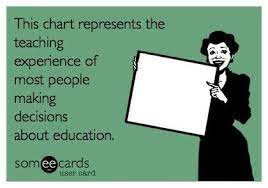
The survey results would come as no surprise to veteran public school educators: Half of adults don’t know what is/is not taught in their local school. Most are unsure about who’s making curricular decisions. Most are unclear on the impact of privatization on their public schools. Some of the surveyed issues (Critical Race Theory and learning loss) revealed a complete lack of understanding.

Least surprising finding: Adults’ perceptions of what’s happening in public schools mainly come from their own personal experiences (and this includes people with no K-12 children in the home). The percentage of people who read books or articles, watch cable news or videos, or listen to podcasts about education is small. People who get their education news from newspapers? Fifteen percent. Second highest source of ed news? Social media.

That’s a lot of guesswork, memes and faulty memories.

FORT WAYNE AND INDIANA

The challenge of chronic absenteeism

From the Fort Wayne Journal Gazette**
Indiana’s battle against chronic absenteeism mirrors a broader national trend that has proven difficult to reverse in the post-pandemic era. Chronic absenteeism is the rate of students absent from school for any reason for at least 10% of the school year.

While the Indiana Department of Education noted earlier this month that the state made progress last school year, with the absenteeism rate falling to 17.8%, the improvement still leaves more than 1 in 6 students habitually missing school.

Allen County’s chronic absentee rates are mixed. Southwest Allen County Schools, for example, posted an impressive absenteeism rate of less than 1%, the lowest the district has seen in more than a decade. By contrast, Fort Wayne Community Schools and East Allen County Schools struggled with rates higher than 20%. However, FWCS did see modest improvement.

Core change: With deadline looming, state must move rapidly on new diploma requirements

By Indiana State Representatives Phil GiaQuinta and Kyle Miller in the Fort Wayne Journal Gazette**
Indiana is in the middle of redesigning its high school diploma requirements. Given the importance of getting this right, the Indiana State Board of Education and Department of Education are required to engage in a public comment period to hear from Hoosiers about their feedback on the proposal.

When the first draft came out earlier this year, there was widespread outcry from parents, educators and our state universities about how the proposal focused too much on nebulous work-based learning and external internship requirements and would not adequately prepare students to meet admissions requirements to Purdue, Indiana University and other in-state institutions.

Thankfully, the department of education and board of education heard our concerns, and the second draft, which has been unveiled but not yet fleshed out in the form of a draft agency “rule,” is a marked improvement. However, we believe it can improve more.

That’s why we hosted a town hall on the redesign this week and invited local education leaders to join us to discuss the plan’s promises, pitfalls and remaining questions.


JOIN US

An Evening with Jennifer McCormick

NEIFPE is proud to co-sponsor this event featuring Jennifer McCormick, candidate for Governor of Indiana. We hope you can attend.

Click HERE to register for the September 25th event:


**Note: The Fort Wayne Journal Gazette is behind a paywall. Digital access, home delivery, or both are available with a subscription. Staying informed is essential; one way to do that is to support your local newspaper. For subscription information, go to fortwayne.com/subscriptions/ [NOTE: NEIFPE has no financial ties to the Fort Wayne Journal Gazette]

†Note: NEIFPE's In Case You Missed It is posted by the end of the day every Monday except after holiday weekends or as otherwise noted.

###

Monday, September 16, 2024

In Case You Missed It – September 16, 2024

Here are links to last week's† articles receiving the most attention on NEIFPE's social media accounts. Keep up with what's going on, what's being discussed, and what's happening with public education.

Be sure to enter your email address in the Follow Us By Email box in the right-hand column of our blog page to be informed when our blog posts are published.
QUOTE OF THE WEEK

"Fourteen states and counting have now passed legislation creating voucher (or education savings account) programs that share some key properties. They are universal (or nearly universal), meaning that all families are eligible. They involve no meaningful public accountability or way to judge their success. They allow private schools to charge tuition over and above the voucher amount. And, finally, they are flexible in that funds can be used even to cover homeschooling expenses and other educational goods and services, such as computers and tutoring." -- in The new and radical school voucher push is quietly unwinding two centuries of U.S. education tradition by Douglas N. Harris at the Brookings Institute.

VOUCHERS HURT PUBLIC SCHOOLS

The Evidence Continues To Mount

"[The] majority of the families in the Indiana voucher program today were previously paying for private school on their own...Yet the state stepped in to offer a financial subsidy to parents who didn’t need it ― a costly decision critics say is hurting public schools, which educate more than 90% of the approximately one million K-12 students in Indiana."

From Sheila Kennedy
Inequality.org recently took an in-depth look at the Right-wing’s increasingly successful effort to destroy public education. In an article titled “Private Fortunes Vs. Public Education,” the article began
The United States essentially invented public education. Back in the 1780s, notes the Center on Education Policy, federal legislation “granted federal lands to new states and set aside a portion of those lands to be used to fund public schools.” By the 18th century’s close, most Americans had embraced the notion of “using public funds to support public schooling for the common good.”

In the mid-20th century, amid growing levels of economic equality, that public financial support for public schools would expand mightily. The results would be impressive. By 1970, graduation rates from American high schools — institutions, notes historian Claudia Goldin, themselves “rooted in egalitarianism” — had quadrupled over 1920 levels.

But that era of growing equality and expanding public education would start fading in the 1970s. Over recent years, a new U.S. Senate report makes clear, that fade has only intensified.
The article went on to report that, during the last decade, funding for the nation’s public schools has “barely increased,” while “state spending on tax breaks and subsidies for private schools has skyrocketed by 408 percent.”

A report from the Brookings Institution found that universal voucher programs “are unwinding two centuries of tradition in U.S. public education” and that the programs “violate basic traditions of church-state separation, anti-discrimination, and public accountability.” As the researcher concluded, even if the courts -ignoring over fifty years of precedents–rule that these voucher programs are constitutionally permissible, “we should assess them against our principles as a nation.”

HOW MUCH DID VOUCHERS HURT YOUR PUBLIC SCHOOL?

Voucher Cost to Local Public School Districts

How much money has your local school district missed out on because of vouchers?

From the Indiana Coalition for Public Education
Indiana is a radical state when it comes to education funding. It now offers a handful of different types of K-12 education vouchers. The Indiana Choice Scholarship—a subsidy for families by which they use public funds to help pay for private school tuition—is the largest and oldest voucher in the state (existing since 2011).

IF the state K-12 funding had remained the same and IF this large voucher program didn’t exist, how much additional funding would your community school district have had?

FEDERAL ROLE IN PUBLIC EDUCATION

In 2020, President Trump Set Out to Impose His Own Preferred U.S. History Curriculum on All U.S. Public Schools

Can a President who tried to rewrite the public school history curriculum can be trusted today to avoid adopting Project 2025’s radical destruction of the federal role in education?

From Jan Resseger
In a blockbuster story last week, the Washington Post’s Laura Meckler recounts how Donald Trump’s anger about Nikole Hannah-Jones’ 1619 Project—emphasizing the history of slavery as part of the nation’s founding—grew into Trump’s infatuation with the political possibility of appointing his own commission to develop the kind of national public school history curriculum Trump believed his supporters would prefer. This is clear case of a politician creating public policy as an ideological reaction to our society’s growing acceptance of our nation’s diversity.

Meckler quotes Trump in a pre-July 4th speech in 2020, lashing out at the way public schools were teaching American history: “Our nation is witnessing a merciless campaign to wipe out our history, defame our heroes, erase our values and indoctrinate our children… Children are taught in school to hate their own country and to believe the men and women who built it were not heroes but… villains.”

Meckler reports: “During most of his presidency, Trump had showed little interest in education, but now, as he campaigned for a second term, he cast the movement (spawned by the 1619 Project and the reaction to George Floyd’s murder in Minnesota) as something sinister infecting American education. He began to describe schools as ground zero in the fight over how to see America and its history.” Meckler adds that in the fall of 2020, Trump appointed his own 1776 Commission, declaring: “Many of America’s schoolchildren are tragically being taught to hate our founding, hate our history and hate our country. This must stop… The 1776 Commission will help ensure that every American child learns that they live in the greatest and most exceptional nation in the history of the world.”

Trump’s Secretary of Education, Betsy DeVos, disdained by public school supporters for her devotion to and massive personal investment in promoting school privatization, stood behind the principle that public schools are established in the state constitutions and operated by locally elected school boards, and that the President and the federal government cannot impose a national curriculum. Meckler quotes Betsy DeVos recounting her conversation with Trump in the summer of 2020: “I had to remind him that the United States does not have a national curriculum, and for good reason… The federal government can’t ban the 1619 Project.”

THE THEORY IS SCIENCE

Teaching evolution is still constitutional in Indiana

What is a theory?

"...A theory is a well-substantiated explanation of an aspect of the natural world that can incorporate laws, hypotheses and facts. The theory of gravitation, for instance, explains why apples fall from trees and astronauts float in space. Similarly, the theory of evolution explains why so many plants and animals—some very similar and some very different—exist on Earth now and in the past, as revealed by the fossil record."

From the National Center for Science Education
The plaintiffs contended that the district schools teach "the state-sponsored, atheistic, religious Theory of Evolution ... under the guise that that it is 'science,'" that what they regard as various components of evolutionary theory have been scientifically disproven, and that "the atheistic Theory of Evolution specially attacks the Judeo-Christian origin story."

...The court found that the plaintiffs failed to allege an Establishment Clause violation because, in the words of McLean v. Arkansas (1982), "it is clearly established in the case law, and perhaps also in common sense, that evolution is not a religion and that teaching evolution does not violate the Establishment Clause."

ABSENTEE RATES ARE IMPROVING

Indiana officials say chronic absenteeism rates are improving, but there’s still more work ahead

From the Capital Chronicle
Indiana’s top education officials applauded the state’s improved chronic absenteeism rates on Wednesday but conceded that too many Hoosier students are still missing a “significant” number of school days.

The latest attendance numbers released by the Indiana Department of Education reported that 17.8% of K-12 students — roughly 219,00 kids — were “chronically absent” during the most recent 2023-24 school year, meaning they missed at least 18 days.

It’s the second year in a row that the number of chronically absent students went down, dropping from 19.2% in 2023, and 21.1% in 2022.

“It’s an improvement — and we always want to celebrate improvements and data moving in the right direction— but we still have some work to do,” said John Keller, IDOE’s chief information officer, during Wednesday’s State Board of Education meeting.

LEGISLATORS AND CONSTITUENTS MUST COMMUNICATE

Education policy is missing feedback and collaboration

Educator and former State Representative Melanie Write explains how basic communication skills are missing between our legislators and constituents.

From Melanie Wright in the Capital Chronicle
Meaningful dialogue with education experts: superintendents, administrators and educators is essential to identifying issues that should be addressed in schools. Fewer debates and forums occur during the election process. Once elected officials are established, they are hesitant to meet with educators due to contentious bill policy. Bills tend to be passed in Indiana before input is sought. When the Indiana State Board of Education attempts to implement policy, stakeholders testify with concerns. By no longer having an elected Superintendent of Public Instruction, the Department of Education struggles to find neutrality while navigating proposed legislation and what will truly benefit our students.

The Science of Reading was recently passed as a method to ensure that Indiana students could be kept on grade level. After a drastic and last-minute strategy, it was set to roll out this past summer. Without input from stakeholders, the various course offerings were put into place. Many educators had to readjust summer plans to acquire the training, some needed to complete the training for financial and/or licensure opportunities and some were so frustrated by this that they opted to wait and see if it would change, as education policy does so often.

Simple conversations within House and Senate districts could have prevented such turmoil. Instead, schools are once again greeted with the implementation of new laws, but very little guidance on how to achieve such.


JOIN US

An Evening with Jennifer McCormick

NEIFPE is proud to co-sponsor this event featuring Jennifer McCormick, candidate for Governor of Indiana. We hope you can attend.

Click HERE to register for the September 25th event:


†Note: NEIFPE's In Case You Missed It is posted by the end of the day every Monday except after holiday weekends or as otherwise noted.

###

Monday, July 8, 2024

In Case You Missed It – July 8, 2024

Here are links to last week's† articles receiving the most attention on NEIFPE's social media accounts. Keep up with what's going on, what's being discussed, and what's happening with public education.

Be sure to enter your email address in the Follow Us By Email box in the right-hand column of our blog page to be informed when our blog posts are published.
QUOTE OF THE WEEK

"The assault on public education has displayed the fundamental disconnect between the civic purposes of education and citizens who see education as just another private, consumer good–skills to be acquired (by those who can afford it) in order to enhance the ability of one’s children to succeed in the marketplace." -- Sheila Kennedy in The MAGA Vendetta Against Arts And Education.

PROJECT 2025

The MAGA Vendetta Against Arts And Education

Former Republican Sheila Kennedy writes about politics in Indiana. In this article, she explains an imminent threat to public education.

From Sheila Kennedy
I forget who first popularized the phrase “you ain’t seen nothin’ yet,” but if Trump should win in November, Project 2025 has outlined policies that would dramatically escalate the attack on public education.

Here are some of the elements of what I can only describe as an assault on steroids:
  • Title I, the $18 billion federal fund that supports low-income students, would disappear in a decade.
  • Federal special education funds would flow to school districts as block grants with no strings attached, or even to savings accounts for parents to use on private school or other education expenses.
  • The U.S. Department of Education would be eliminated.
  • The federal government’s ability to enforce civil rights laws in schools would be scaled back.
The proposals are contained in a comprehensive policy agenda that’s part of a Heritage Foundation-led initiative called Project 2025: Presidential Transition Project, which includes nearly 900 pages of detailed plans for virtually every corner of the federal government and a database of potential staffers for a conservative administration. It will also feature a playbook for the first 180 days of a new term.

Project 2025 was devised by several former Trump administration officials and allies, working with dozens of aligned advocacy organizations (misnamed “think tanks.”) including Moms for Liberty. You will recall that Moms for Liberty is the organization that fought school boards over COVID-19 safety protocols, advocates for censorship of books in school libraries, and endorses far-right school board candidates.

THE EDUCATION WARS

The Education Wars Provides A Guide For Supporters Of Public Education

The podcasters at Have You Heard provide a playbook to defend public education.
"If we are to preserve our schools, it must be clear that public education is for all of us. We must win the peace.

"If we fail at that, we will lose our schools. And if we lose them, they won’t come back."
From Peter Greene at Forbes
In their 2020 book, A Wolf at the Schoolhouse Door, Jack Schneider and Jennifer Berkshire sounded the alarm:
The threat to public education...is grave. A radical vision for unmaking the very idea of public schools has moved from the realm of ideological pipe dream to legitimate policy.
In their new book The Education Wars (out this week), Schneider and Berkshire update us on how that radical vision, now fueled by the culture wars, is faring.

The culture wars—roaring debates over what schools are for, what they should teach, who should decide— are not new. But the writers note that “this time it’s different.” This time, the questions under debate include the question of whether public schools should exist at all.
CHOICE

Debunking the School Choice Movement’s Top Evangelist

Corey DeAngelis is on a mission to demonize public schools—and promote voucher programs that benefit his wealthy backers.

From Peter Greene at The Progressive
Corey DeAngelis is an influential, if not the most influential, voice in the rightwing campaign to demonize public schools and privatize public education. The guy’s résumé hits all the bases in the libertarian gameplan. After earning a doctorate at the University of Arkansas’s education reform program (funded by the pro-school choice Walton family), DeAngelis helped found the Education Freedom Institute, became a senior fellow at the Reason Foundation, worked as an adjunct scholar at the CATO Institute, took up an appointment as a senior fellow at the Hoover Institution, and was hired on as a senior fellow at Betsy DeVos’s American Federation for Children.

He still holds all of those jobs, but his more common title is “school choice evangelist.” As the recent school voucher wave has surged in state after state, DeAngelis has been there to spread the word. While on tour in support of his new book, he distills the current pro-voucher argument.

In a recent talk at the Heritage Foundation, DeAngelis touched on most of the main arguments for vouchers (many of them false) and revealed a few truths about the pro-voucher strategy.

1. The Evil Unions and COVID...

LOCAL NEWS

Imagine if every child has a library of their own

Dolly Parton's Imagination Library is a free children's book gifting program that she started in 1995. The program began by offering every child in Sevier County, Tennessee, the area where Dolly was born and raised, a free age-appropriate book each month in the mail until the age of five, regardless of family income. In 2000, the Imagination Library became so popular that Dolly announced that she wanted to make the program available to any community that would partner with her and support it locally. The program has expanded and is currently located in 1,800 local communities in the US, Canada, Australia, Ireland, and the United Kingdom.

Now, the Imagination Library is coming to Fort Wayne.

From the Fort Wayne Journal Gazette**
Dolly Parton’s Imagination Library is a pathway to bridging the reading gap between low-income families and their wealthier counterparts. But most of all, the library is fun for children and families.

Inspired by Parton’s favorite children’s book, “The Little Engine That Could,” Allen County Public Library staff has launched a spirited $100,000 fundraising campaign with the Allen County Public Library Foundation to bring Dolly Parton’s Imagination Library to local children. The program gives children one free book each month from birth to age 5.

The enthusiasm is palpable, with nearly 900 Allen County families eager to enroll their children — a testament to the community’s belief in the power of early literacy.

**Note: The Fort Wayne Journal Gazette is behind a paywall. Digital access, home delivery, or both are available with a subscription. Staying informed is essential; one way to do that is to support your local newspaper. For subscription information, go to fortwayne.com/subscriptions/ [NOTE: NEIFPE has no financial ties to the Fort Wayne Journal Gazette]

†Note: NEIFPE's In Case You Missed It is posted by the end of the day every Monday except after holiday weekends or as otherwise noted.

###

Monday, July 1, 2024

In Case You Missed It – July 1, 2024

Here are links to last week's† articles receiving the most attention on NEIFPE's social media accounts. Keep up with what's going on, what's being discussed, and what's happening with public education.

Be sure to enter your email address in the Follow Us By Email box in the right-hand column of our blog page to be informed when our blog posts are published.
QUOTE OF THE WEEK

"Imagine there is no public schooling and a candidate in 2024 runs on a great new idea: “Let’s provide universal free K-12 for all students and tax ourselves to pay for it!” What was established 150 years ago would seem outrageous today, especially in an environment strongly influenced by wealthy donors who want to do away with public programs. We take for granted the fact that in all of our communities, we have tuition-free schools that welcome all of our children—it’s a natural feature of the landscape. The system isn’t perfect and often disappoints us. But we need to remember that the core features of this system—that it is publicly governed, taxpayer-supported, open access, and used to advance the common good—are actually pretty remarkable. Moreover, our public education system has made our country far more equal than it was in the past. If we dismantle public education, it would be difficult if not impossible to bring it back." -- from NEA Today, What do Book Bans and Vouchers Have in Common?

THE WAR AGAINST PUBLIC SCHOOLS

What do Book Bans and Vouchers Have in Common?

A new book from the Have You Heard podcasters...coming on July 2.

From NEA Today
In their latest book The Education Wars, journalist Jennifer Berkshire and education scholar Jack Schneider explain the sudden obsession with race and gender in schools and the ascendancy of book bans. It offers analysis of school vouchers and the impact they’ll have on school finances and explores the movement for “parents’ rights,” explaining the rights that students and taxpayers also have.

NEA Today spoke to Berkshire and Schneider about the new book and some of the alarming findings. We also asked about the path forward...

...Can a family with an LGBTQ+ student attend private school with a voucher? What about students with disabilities?...

JB and JS: LGBTQ+ students would be embraced by a Quaker school, but those are a small percentage of the faith-based schools that dominate the private sector. Most LGBTQ+ students would face resistance at a religious private school or, worse, intolerance and exclusion. So vouchers may offer options, but they don’t protect students’ rights. They can deny admission and equal treatment based on their “religious freedom.”

Students with disabilities will face similar obstacles. We recently did a podcast on threats to special education in a voucher system. A mother of a student with disabilities from Tennessee read 20 different rejection letters she got from 20 different schools. In a privatized system, a school can say “no, we don’t have the facilities or the personnel to accommodate your child.” And there will be no incentive to do so. The Individuals with Disabilities Education Act (IDEA), which turns 50 next year, would not apply as it does in our public school system. Again, vouchers provide some options, but no rights, which leaves a large population with no options.

READING WARS

The Comprehension Problem with New Reading Programs: Ignoring the Books Children LIKE to Read!

The Science of Reading leaves out one essential aspect...the joy of reading.

From Nancy Bailey's Education Website
I’m not a gambler, but if I were, I’d bet that a lot of parents whose elementary school-age children are getting explicit phonics instruction, memorizing rules, and who can define words like diphthong and schwa will be disappointed when their children get to high school and couldn’t care less about reading.

New reading programs promising the Science of Reading don’t cover what children need to become good readers. What’s missing are reading comprehension and the incentive to read because it’s fun and interesting.

When critics of public schools and teachers debate how to teach reading comprehension today, they chatter about knowledge building (of course, previous knowledge is important) and raise questions like, should you teach a child about the main idea? (of course, you should), as if teachers haven’t taught children to read (and write) in the past.

The difference is that, today, they often ignore the main star: books children like to read.

VIRTUAL CHARTER REPORT

New Indiana virtual charter school report shows $60M in funding for 2022-23

The annual report also gives other data on class sizes and teacher-student ratios across the state’s seven virtual charters.

From the Indiana Capital Chronicle
More than $60 million in state tuition funding went to Indiana’s virtual schools during the 2022-23 academic year, according to a new report.

In all, those dollars covered roughly 8,500 students — a majority of those attending a handful of virtual charter schools operating in the state.

Each year, virtual charter schools are required by law to submit data to the Indiana Department of Education (IDOE) with the number of student-teacher meetings conducted in-person or via video conference, classroom size, the ratio of teachers per class, as well as state funding totals.

The newest numbers were submitted to the Indiana State Budget Committee last week.

POLITICS AND EDUCATION

New Hampshire: Why the GOP Is Determined to Destroy Public Schools

This is an important article for everyone to read, no matter where you live. It explains succinctly the true goals of the privatization movement.

From Diane Ravitch
A responsible citizen is an informed citizen, and that appears to be the problem today. Too many people interested in power instead of governing don’t want a truly informed public. Instead, they want enough of the public spoon fed “alternative facts,” conspiracy theories, and outright lies to ensure they retain power although they have views that are both harmful to the majority of citizens and allow the tyranny of the minority to overturn the will of the majority.

At the heart of the minority’s transformation plan is the destruction of the public school system.

Indiana’s attempt to take shortcuts on education is costing us.

It’s time for the State to stop trying to privatize schools and start investing in our public school system.

From Masson's Blog: A Citizen's Guide to Indiana
Ball State economist, Michael Hicks, has a column about Democratic run areas of the country getting richer while Republican run areas are getting poorer. He notes that the U.S. is seeing its best economic performance in the last half century but the benefits are not being distributed uniformly. He doesn’t lay the blame on one party or another because some of the underlying reasons were a long time in the making. But he does underscore the significance of educational attainment in the dynamic.
It is difficult to lay the blame for worsening economic conditions at the feet of one party or the other. For the past 50 years, there was considerable overlap in state policies, so conservative Democratic states behaved a lot like more progressive Republican states in tax, education and economic development policy.

...The 15 states that have seen the biggest relative drop in educational attainment are all solidly Republican states—and poor. Indiana ranks 10th on this list...
LOCAL NEWS

FWCS board unanimously approves $55M loan for Snider stadium

From WANE.com
At Monday’s meeting, the Fort Wayne Community Schools Board welcomed a new member and approved financing of the upcoming Snider football stadium.

The FWCS Board unanimously approved the financing of the new Snider Stadium alongside other improvements in the district. The cost will come as a loan of $55,650,000 from general obligation bonds and building corporation property tax first mortgage bonds.

FWCS Board President Maria Norman assures that the project will not raise property taxes.

Snider’s new 4,000-seat stadium will utilize a large portion of the loan. The remaining money will be used to update athletic equipment, scoreboards, and other FWCS facilities such as restrooms and offices.

†Note: NEIFPE's In Case You Missed It is posted by the end of the day every Monday except after holiday weekends or as otherwise noted.

###